
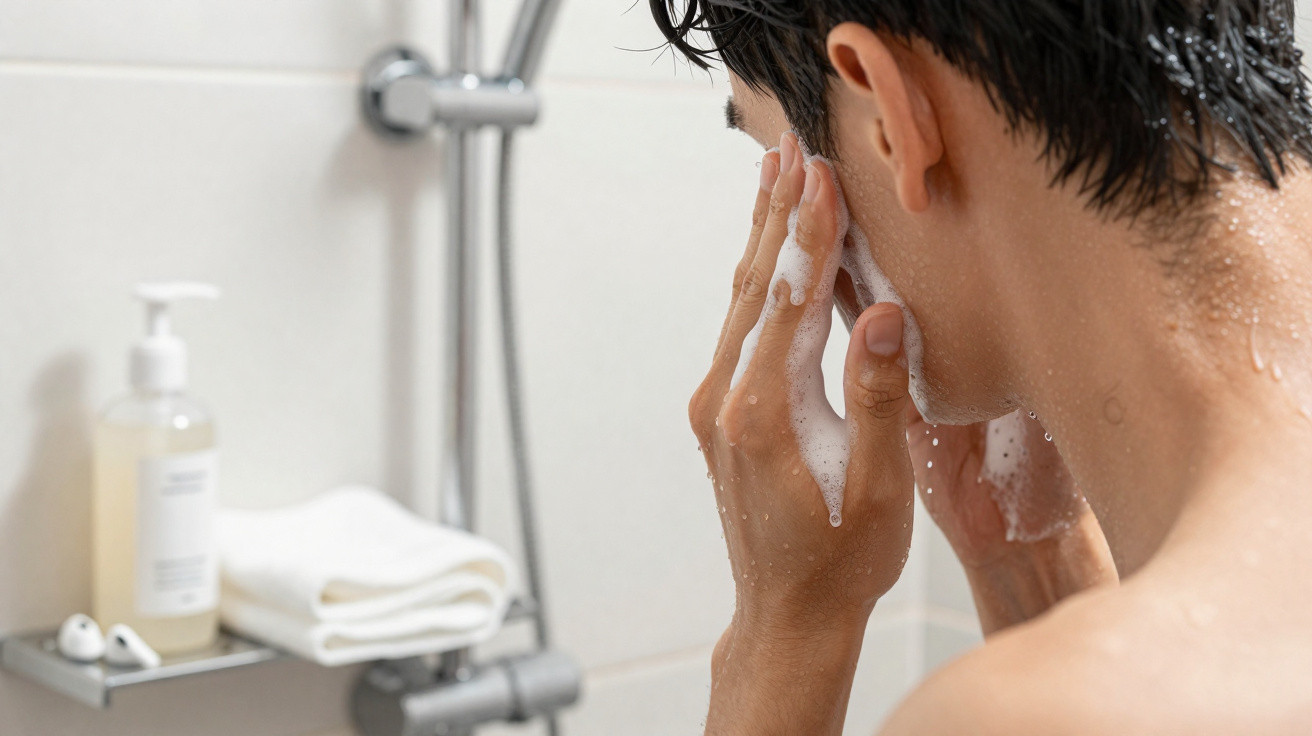
In the United States, a doctor has highlighted an unobtrusive part of the body that is often missed during everyday washing.
Published on 3 June 2025, the source article shares advice from Dr Roger Kapoor, a physician at Beloit Health System, a healthcare provider in Wisconsin. His advice concerns a straightforward shower habit: remembering the folds behind the ears, where sweat, sebum, dust and dead skin cells may build up.
A shower involves more than the most visible areas
Showering is among the daily routines most firmly established in everyday life. It meets a need for cleanliness, while also bringing comfort after a hot day, exercise or commuting. However, this routine can sometimes overlook areas that are hard to see or reach.
Hair, the face, underarms, hands and feet usually receive the most attention. Skin folds also require particular care, as they can retain moisture and bodily residue more easily than areas exposed to the air.
The fold behind the ear is one of those areas that often falls outside the usual washing routine.
The skin naturally produces sebum, an oily substance that helps to protect it. It also constantly sheds dead skin cells. When combined with perspiration, dust or residue from hair products, these substances can create a build-up in skin folds.
This does not mean that a problem will necessarily occur. Rather, it underlines the importance of careful, gentle washing suited to the sensitivity of this area, which is close to both the face and scalp.
Why the area behind the ears needs special attention
According to Dr Roger Kapoor, the folds behind the ears are among the body parts people most commonly neglect. For many people, the area is concealed by their hair. It can also be difficult to see in a mirror while showering.
The doctor quoted in the article lists several things that can collect there:
- sweat;
- dead skin cells;
- sebum;
- dust;
- traces of shampoo, conditioner or styling products.
Earphones, glasses arms, hats, helmets and mobile phones may also regularly come into contact with the area around the ears. While they are not a guaranteed cause of discomfort, these items may contribute to residue building up if they are not cleaned routinely.
Irritated skin can become uncomfortable. Redness, itching, an unusual smell, scabs or weeping should prompt someone to seek advice from a healthcare professional. Such signs can have several causes and are not, on their own, enough to establish a diagnosis.
Extra care for compromised skin
Dr Kapoor particularly warns about the risk of infection when the skin has a wound. A scratch, irritation or a recent piercing therefore needs appropriate care. Rubbing damaged skin vigorously may aggravate the irritation.
If there is an open wound or a recent piercing, it is best to follow the instructions given by the professional providing follow-up care.
The outer ear and the skin around it should not be confused with the ear canal. Cotton buds or other objects should not be inserted into the ear in an attempt to clean it. The ear canal has its own cleaning mechanism and can be injured by actions that go too deep.
The right shower routine, according to the doctor
The advice relayed by the US article is simple: spend a few seconds washing the folds behind each ear, then rinse them thoroughly. Shampoo running over this area may not always remove accumulated deposits.
A gentle approach can be used:
- wet the area with lukewarm water;
- gently run clean fingers behind the ear;
- use a mild cleansing product suitable for the skin if necessary;
- rinse thoroughly, leaving no foam or residue behind;
- dry carefully using a clean towel, without rubbing harshly.
Drying matters just as much as washing. Moisture that remains in a skin fold can contribute to discomfort and irritation. A soft towel can be used to pat the skin dry, including behind the ears, at the hairline and in other folds of the body.
People with dry, reactive or eczema-prone skin may benefit from avoiding harsh products and repeated rubbing. If a cleanser causes burning, tightness or lasting redness, it may be preferable to stop using it and seek medical or pharmacy advice.
What this means for washing routines in the United Kingdom
In the United Kingdom, the principle is the same: personal hygiene relies on regular washing adapted to each person's age, skin type, activity level and health. There is no single washing frequency that suits everyone. Very frequent or lengthy washing, particularly with harsh products, can weaken the skin's natural protective barrier.
For a problem localised behind the ear, a GP, dermatologist or pharmacist can advise the person concerned. A consultation becomes helpful if pain develops, the area swells or feels hot, it bleeds, pus is visible, or symptoms continue despite gentle washing.
For children, this area can easily be missed during a bath or shower. An adult can gently check that shampoo has been rinsed away from the nape of the neck, the ears and the hairline. The aim is not to use more products, but to prevent residue from remaining in the folds.
Remember the items that touch the ears
Skin care can be complemented by a few practical measures. Glasses arms can be cleaned in line with the manufacturer's recommendations. Earphones and headphones, which are often worn for hours at a time, should also be kept clean without becoming excessively damp.
After sport, heavy sweating or prolonged helmet use, washing and drying the area behind the ears can be a useful precaution. This naturally fits alongside cleansing the face, neck and hair.
It only takes a few seconds in the shower. Giving attention to this discreet part of the body mainly makes it possible to spot irritation, a small wound or an unusual skin reaction sooner.






Comments
No comments yet. Be the first to comment!
Leave a Comment