
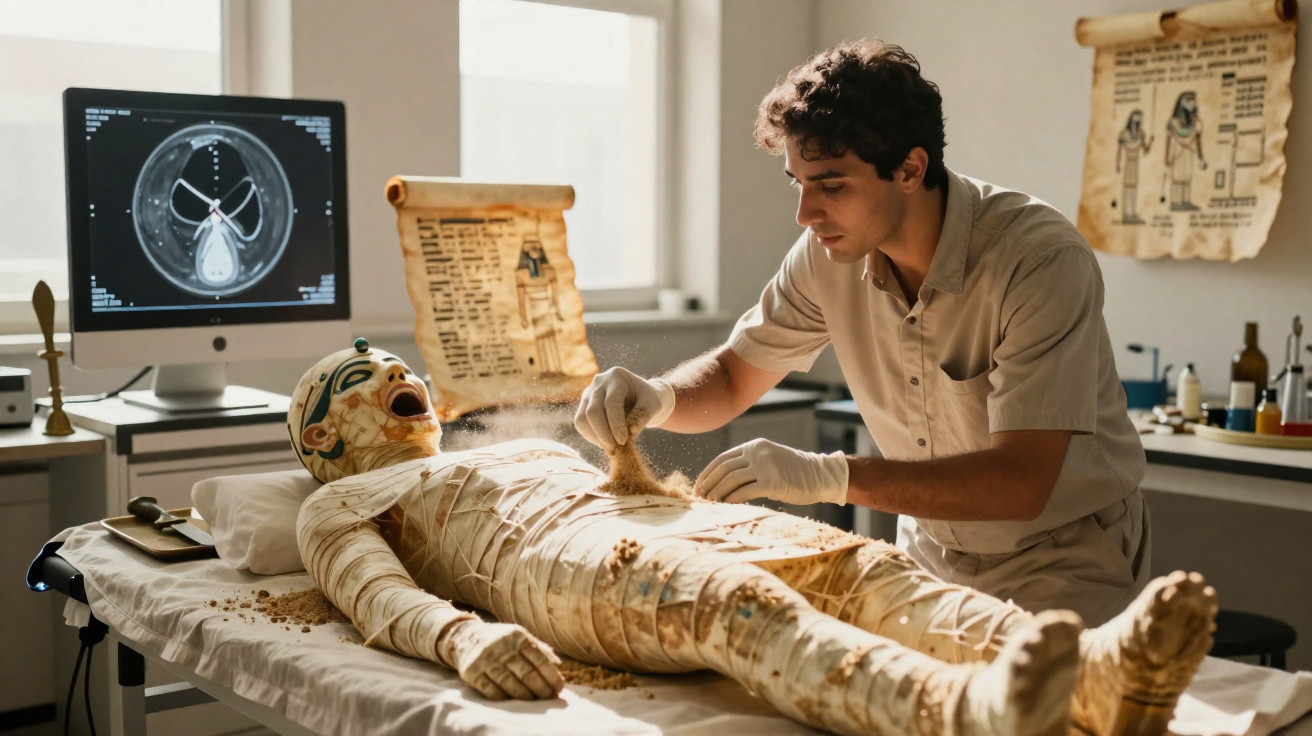
The mystery surrounding the murder of a pharaoh remained unresolved for more than three millennia. The discovery of a mummy frozen in agony exposed a dark conspiracy within the royal court of fascinating Ancient Egypt.
How was the screaming mummy discovered in Egypt?
During archaeological excavations in the nineteenth century, researchers uncovered a secret cache containing mummified bodies. Within this sacred site, a plain sarcophagus held male remains whose mouth was open in an unmistakable expression of profound despair, puzzling scientists.
Unlike elite burials, which were furnished with lavish ornaments and fine fabrics, this body had been wrapped in sheepskin. In Egyptian tradition, this custom denoted severe ritual impurity, indicating a harsh punishment inflicted on the unidentified individual.
What caused the expression of eternal pain on the Egyptian mummy?
The embalmed body, prepared without the sacred rites, retained disturbing signs of a violent death caused by… Read more
What conspiracy threatened the life of Pharaoh Ramesses III?
Accounts preserved in judicial papyri recorded a bold plot devised inside the palace quarters to overthrow the monarch. The secondary queen Tiye arranged the scheme to place her son on the throne, persuading several officials and servants to betray the ruler.
Prince Pentawere agreed to take part in the violent attempt on his own father's life. The coup shook the kingdom's political stability and prompted a severe legal process that tried every member implicated in the palace attack.
Below is a video from the Arquivo Egípcio YouTube channel, which explores the points discussed in this topic in greater depth:
What did forensic examinations reveal about the crime?
For a long time, it was believed that the monarch had survived the attempted regicide and later died peacefully. Modern CT scans, however, revealed a deep cut across the king's throat, confirming that the pharaoh was murdered with extreme violence.
Furthermore, advanced genetic analysis compared tissue samples from the two mummies found at the site. The findings established their direct relationship, confirming that the anguished man was the rebellious son who had plotted his father's death.
Evidence of the Royal Crime
Key Forensic Evidence
Scientific analyses revealed decisive facts about the death of Ramesses III:
- 1
A deep neck wound concealed by bandages and protective amulets; - 2
Genetic tests proving a first-degree relationship between the pharaoh and Pentawere; - 3
A dishonourable burial wrapped in impure sheepskin, without sacred rites.
Why did the conspiring prince receive this eternal punishment?
For Egyptian civilisation, life after death depended on proper preservation of the body and sacred prayers. Priests withheld these rites from the conspirator, imposing a spiritual sentence intended to erase his existence and deny his soul eternity.
The condemned man was probably compelled to take his own life, a method of execution reserved for royalty. His body was mummified without the customary removal of internal organs, undergoing an accelerated process that fixed his torment within a humiliating burial.
Archaeological investigations set out the principal elements that defined this historic penalty:
- The complete absence of sacred amulets and protective invocations in the funeral wrappings;
- The deliberate use of spiritually impure sheepskin to cover the corpse;
- The omission of the conspirator's name, intended to prevent his identification and remembrance in the afterlife.
How did the discovery transform the archaeology of Ancient Egypt?
Advances in scientific tools made it possible to solve a historical enigma that had remained untouched for millennia. Combining CT examinations with genetic analyses transformed understanding of the power struggles that weakened the ancient empire of the pharaohs.
Today, these archaeological remains show that family intrigues shaped the fate of entire dynasties. The painful figure preserved through time remains a disturbing testimony to the consequences of political betrayal in the fascinating history of humanity.






Comments
No comments yet. Be the first to comment!
Leave a Comment