
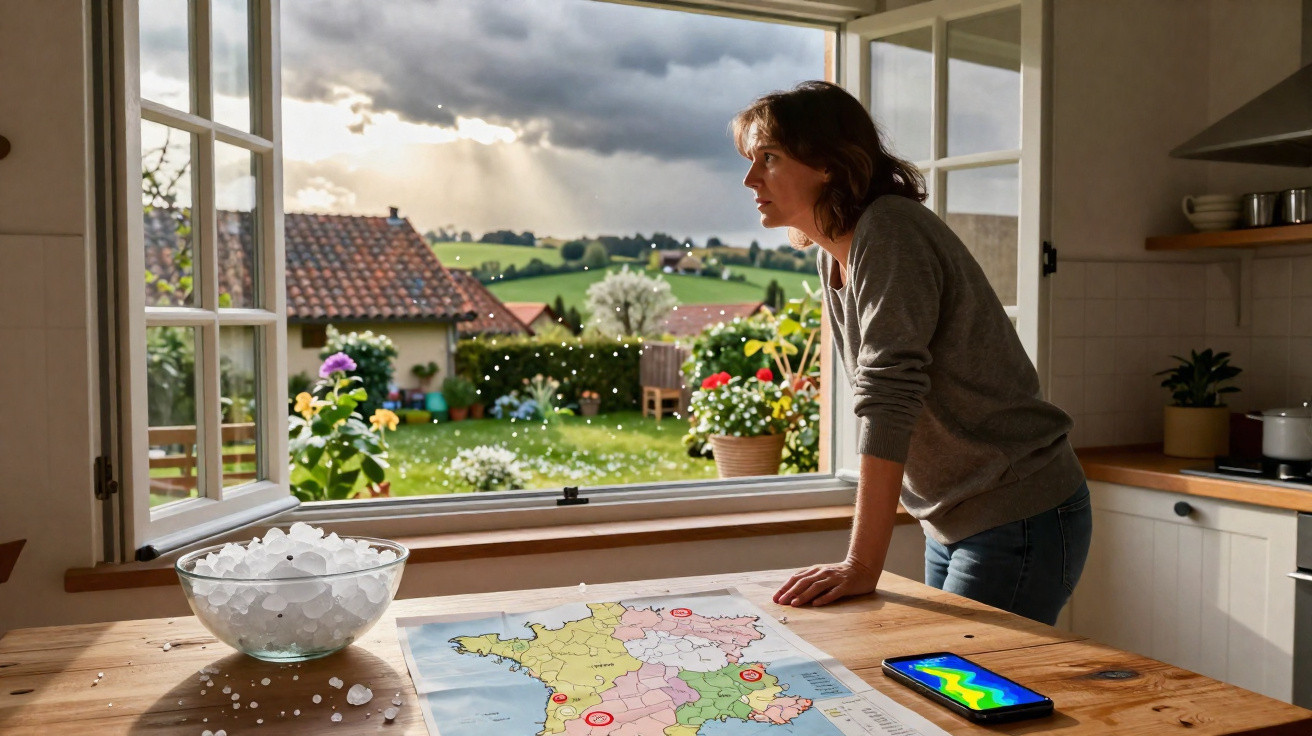
Only minutes earlier, the sky had been clear. Then the first pellets of ice began hammering the shutters with startling force. In villages and housing estates alike, people react in much the same way: they rush towards the car, check the flattened plants and listen out, hoping it will soon pass. In spring, hailstorms can appear to arrive without warning, wedged between two mild days when coats had already seemed unnecessary. Their damage does not vanish when the sun returns: dented bodywork, weakened roofs, battered vines and ruined gardens remain. Much of southern and central-eastern France regularly lies in the path of these storm cells, with some areas being hit far more often than others.
These 11 French departments where hail strikes most often in spring
A map of spring hail events reveals a particularly clear corridor. It begins in south-western France, crosses Occitanie and, in places, extends northwards towards the Rhône valley. The departments most consistently exposed are Haute-Garonne, Gers, Tarn, Tarn-et-Garonne, Lot-et-Garonne, Dordogne, Gironde, Landes, Aude, Hérault and Drôme. This pattern is far from coincidental: these are the areas where warm, humid, unstable air meets cooler air masses at higher altitude.
In Gers and Tarn-et-Garonne, residents are familiar with that sharp sound on roof tiles-the sound that makes them look up even before the rain has properly begun. During spring 2022, and again through several storm waves in the following years, entire communities saw crops and vehicles damaged within a matter of tens of minutes. Hailstones measuring two or three centimetres may look small in the palm of a hand, but driven by gusts, they can crack a skylight or turn a windscreen into a spider’s web.
The process is caused by the highly violent workings of cumulonimbus clouds: huge thunderclouds that can rise to more than ten kilometres above the ground. Powerful updraughts lift water droplets, which freeze, fall, rise again and continue growing before finally dropping as hailstones. Spring often creates the ideal combination: warmth at ground level and cold air aloft. Hail does not affect every town within a department equally, but these eleven areas are among the most exposed during the major events recorded in recent years.
The hail map to bear in mind before the first hot weather
When thunderstorms are forecast, the most effective action is also the simplest: shelter vulnerable belongings before the sky turns dark. Parking a car under cover, moving pots close to a wall, covering garden furniture or closing shutters can prevent some unpleasant surprises. Météo-France warnings, local weather apps and rainfall radar make it possible to follow a storm cell’s progress almost live. Acting early is essential, because once the first impacts can be heard, it is often already too late.
Many people feel that a few dark clouds are not enough reason to move the car or protect the patio. That is understandable: everyone knows the moment of assuming the storm will probably pass a little further away. Let us be honest: hardly anyone really does this every day. Yet in Haute-Garonne, Gers and Drôme, taking five minutes before a forecast event can save hundreds, and sometimes thousands, of euros in repair bills.
Hurrying after hail has fallen can also prove expensive. Climbing onto a slippery roof, throwing away a damaged item before photographing it, or accepting a quotation too quickly are all common mistakes. It is better to record the damage calmly, retain useful evidence and inform the insurer within the time limits set out in the policy.
“Hail is precipitation made up of grains of ice, generally associated with thunderstorms.” - Météo-France
- Haute-Garonne: a department highly exposed to violent thunderstorms over the plains.
- Gers: farms in this area are especially alert during spring.
- Tarn: storm cells here can move quickly and become extremely intense in localised areas.
- Tarn-et-Garonne: an area frequently affected by events arriving from the south-west.
- Lot-et-Garonne: its orchards and crops make hail especially feared.
- Dordogne: spring thunderstorms can move up from the Aquitaine basin.
- Gironde: hail threatens homes as well as wine-growing areas.
- Landes: contrasting air masses along the Atlantic coast can sometimes encourage powerful thunderstorms.
- Aude: warm Mediterranean air moving northwards can feed active storm cells.
- Hérault: thunderstorms can be brief here, but exceptionally violent.
- Drôme: the Rhône valley remains a vulnerable area during spring weather deterioration.
After the storm, the real assessment often unfolds in the following hours
A hail map never tells the whole story. It identifies departments with greater exposure, but cannot forecast which street, village or roof will be hit by the next thunderstorm. Over a distance of only a few kilometres, one neighbourhood may escape untouched while another is pelted with hailstones as large as ping-pong balls. This can feel deeply unfair, particularly when the damage affects a vegetable garden tended for weeks or a recently purchased car.
People living in the hardest-hit areas often develop an almost instinctive sense of vigilance. They watch the sky’s colour, the heaviness in the air and the wind that suddenly drops. Such experience is valuable, although it does not replace official warnings or insurers’ advice. Sharing a time-stamped photograph, alerting an absent neighbour or reporting a blocked road after a storm can also make a genuine difference. Hail remains unpredictable, but a few collective habits can make its consequences less severe.
| Key point | Detail | Benefit for the reader |
|---|---|---|
| Most exposed area | South-western France, Occitanie and the Rhône valley account for many spring events. | Identifying the periods and areas where greater vigilance is needed. |
| The 11 departments to watch | Haute-Garonne, Gers, Tarn, Tarn-et-Garonne, Lot-et-Garonne, Dordogne, Gironde, Landes, Aude, Hérault and Drôme. | Better understanding the areas regularly affected by hailstorms. |
| Useful action | Shelter vehicles and outdoor belongings before the storm cell arrives. | Reducing material damage in just a few minutes. |





Comments
No comments yet. Be the first to comment!
Leave a Comment