
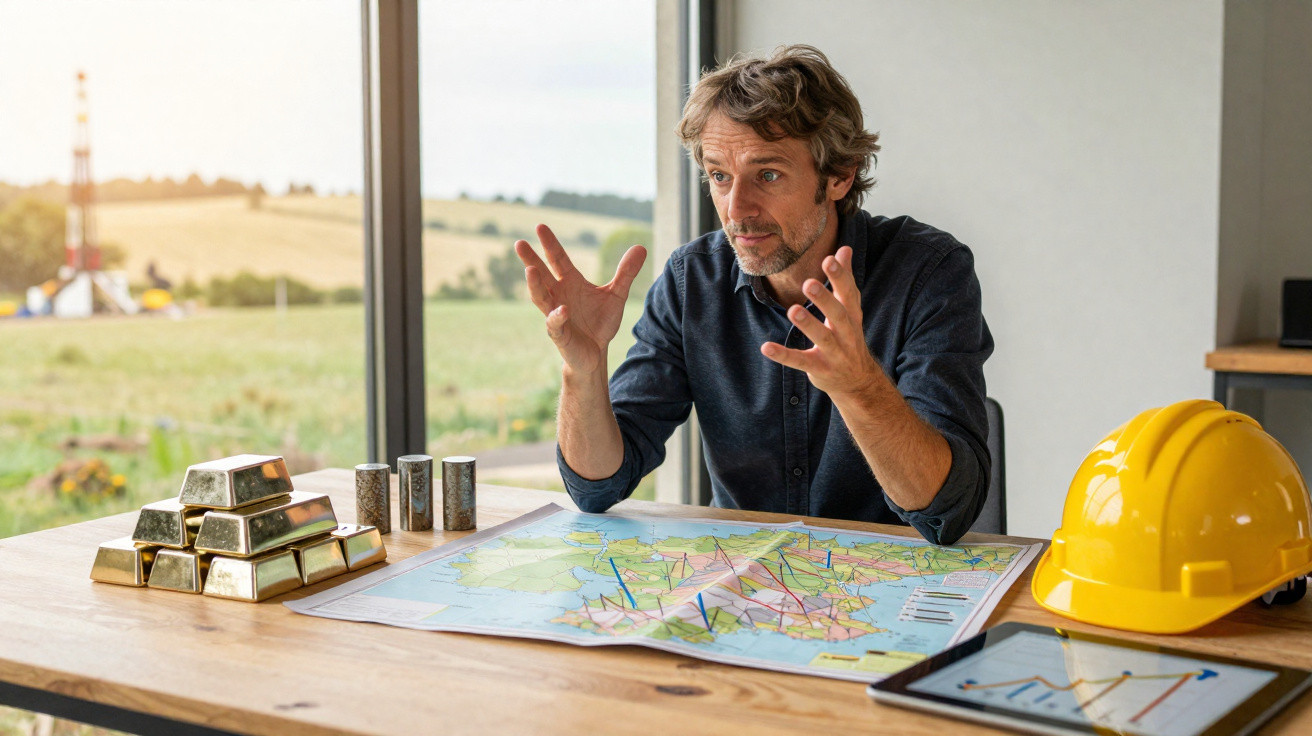
A single figure was enough to make people look up: 60 million tonnes of tin, right beneath our feet, on French soil. In cafés across former mining towns, local online groups and even family conversations, the prospect of a hidden treasure has revived an old fascination. People are already picturing jobs, lorries, workshops and perhaps even a kind of industrial comeback. Yet there is a vast gap between an exciting announcement and geological reality. A deposit can never be reduced to one striking number printed in large type. It is essential to understand what that figure measures, what it genuinely contains and what it could alter. The promise is dizzying; the need for caution is just as great.
The 60 million tonnes figure that inspires dreams - and needs decoding
We all know the feeling when a piece of news seems almost too good to be true, yet is intensely tempting to believe. Tin is far from an insignificant metal: it is used in electronic solder, packaging, some renewable technologies and countless everyday items we no longer even notice. A major discovery in France would therefore carry national, almost personal, significance. However, the phrase “60 million tonnes of tin” can refer to several very different geological realities.
In mining terminology, 60 million tonnes may describe the total volume of mineralised rock, rather than 60 million tonnes of pure metal. That distinction is substantial. At a grade of 0.1%, a body containing 60 million tonnes of ore would hold roughly 60,000 tonnes of tin before losses from extraction and processing are even considered. At 1%, the potential rises, but the operation becomes an entirely different undertaking. A single zero can change the whole story.
France already has a history of tin mining, particularly in Brittany and the Massif Central, where granite veins attracted prospectors and operators for many years. Geologists assess a resource by examining its grade, depth, ore continuity, access to water and available energy. A headline figure does not establish whether a mine can be worked. Nor does it reveal whether the resource is classified, certified or simply inferred from historical indications.
Questions to ask before the celebrations begin
When faced with such a dramatic announcement, the most useful first step is to request the original document: a geological study, exploration permit, company statement, public report or independent estimate. The precise unit used must then be checked. Does it refer to tonnes of rock, ore, concentrate or contained tin metal? This may seem rather unromantic while excitement is building, but it prevents misunderstandings that often leave a bitter aftertaste.
A common mistake is to assume that an identified resource automatically becomes a mine. In truth, no one really does that every day. More than a decade can pass between the first drilling campaign and potential production, involving environmental assessments, local consultations, technical works and enormous funding requirements. Residents are right to welcome the prospect of renewal, but they are equally entitled to clear answers about water, noise, landscapes and local benefits.
A credible project is recognised less by grand claims than by the accuracy of its data and its ability to address everyday concerns. As a phrase often heard among underground-resource professionals puts it: “A resource becomes a reserve when geology, technology, economics and local acceptance come together.”
“The ground beneath us may offer an opportunity, but it never signs the contract with a community on its own.”
- Check the announced average tin grade.
- Establish the depth and actual area affected.
- Ask whether the estimate has been audited by an independent body.
- Compare the promised jobs with infrastructure and water requirements.
A huge industrial opportunity, provided a dream is not sold too soon
If a large-scale tin resource were confirmed in France and proved workable, its impact could be considerable. Europe is seeking to reduce its reliance on imports of strategic metals in a market largely dominated by Asia and several producer countries. A French supply chain could secure part of the supply, create skilled jobs and restore lost industrial expertise. The stakes extend far beyond the mine itself. Recycling, metallurgy, transport and training would also be affected.
Yet a modern mine can no longer proceed as it did in the last century, asking the local area to adapt in silence. Neighbours expect measurable commitments: groundwater protection, dust monitoring, site restoration and a genuine share in the value created. Money, jobs and promises are not enough to ease legitimate concerns. A family living near a future industrial site will first think about the school, the garden, their children’s sleep and the quality of water from the tap.
This rumour or announcement concerning 60 million tonnes has at least one benefit: it puts France’s underground resources back at the heart of the debate. Should more be produced locally to avoid importing metals extracted elsewhere under conditions that can sometimes lack transparency? Can mining activity be revived without repeating past mistakes? The answer lies neither in instant enthusiasm nor automatic rejection. It must be built through comprehensible figures, public debate and time. A great deal of time.
| Key point | Detail | Value for the reader |
|---|---|---|
| The “60 million tonnes” | The figure may refer to ore rather than pure tin. | Avoid confusing the volume of rock with the metal that can actually be recovered. |
| A discovery is not a mine | Drilling, studies, permissions and funding are still required. | Understand the timescales and uncertainties of a mining project. |
| Local impact | Jobs, water, transport, biodiversity and restoration are interconnected. | Ask the right questions before supporting or opposing the project. |
FAQ
- Is 60 million tonnes of tin credible? A figure on this scale must be read carefully. It may concern 60 million tonnes of rock containing a small proportion of tin, rather than 60 million tonnes of pure metal. Grade is the decisive information.
- Why has tin become so strategic? Tin is essential for solder used in electronics, alloys and certain industrial processes. As demand for digital and energy equipment grows, securing supplies is of major interest to European countries.
- Does France already have areas known for tin? Yes. Brittany in particular has a long history linked to tin ores associated with certain granite massifs. Occurrences also exist in other regions, but every site has its own geology and economic viability.
- How long does it take to open a mine? It often takes several years, and sometimes more than a decade. Exploration must be followed by technical, environmental and financial studies, as well as consultation and authorisation procedures.
- What should affected residents ask for? They can call for the publication of studies, details of grades, predicted effects on water and transport, and restoration guarantees. Accessible information is the minimum requirement for an honest local debate.


Comments
No comments yet. Be the first to comment!
Leave a Comment