
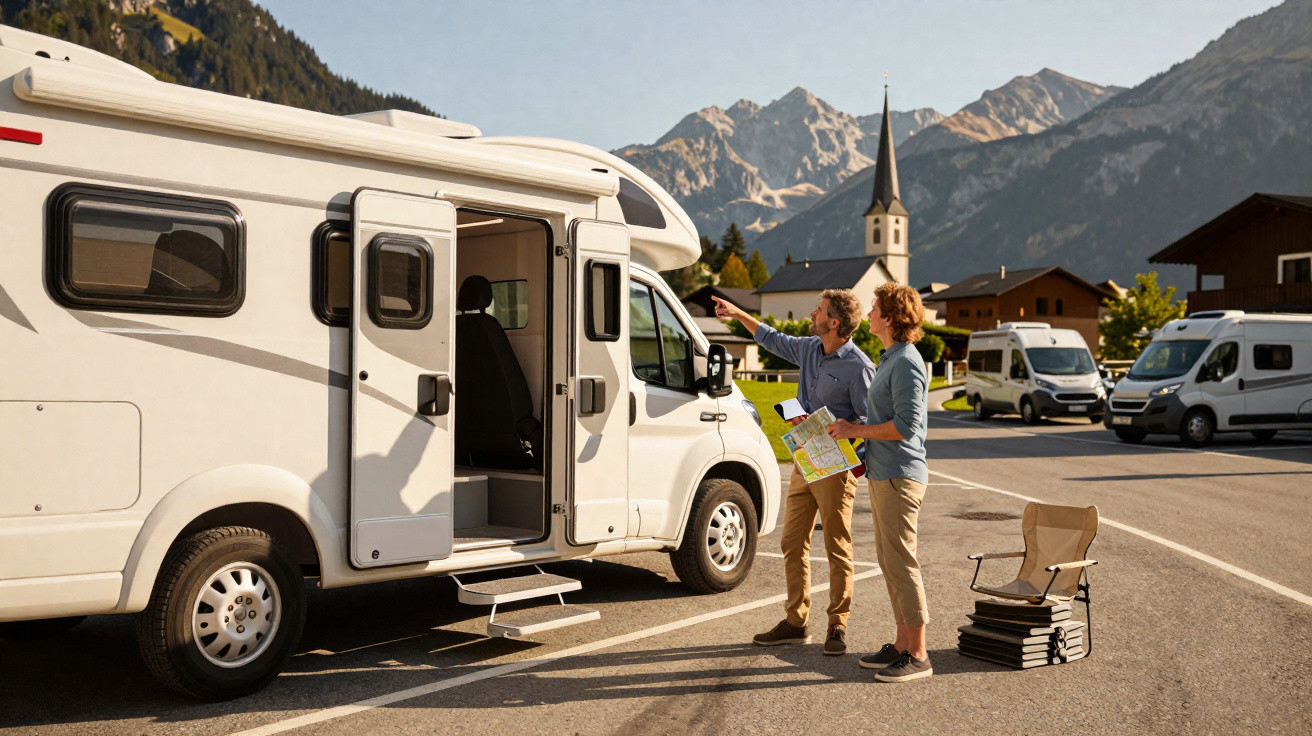
As dusk falls, the sliding doors of the motorhomes close one after another at the Cluses motorhome area. An impatient dog can be heard, along with a kettle whistling behind a steamed-up window, before the steady sound of traffic serves as a reminder that the mountains are never far away, yet the town is very much present.
Two months after opening, the site is already attracting firmly divided views. Some travellers see it as a practical, almost obvious stopping point on the Alpine route. Others feel its promise is more limited: one night, and no more. That short remark raises the wider question of stopover tourism in Cluses. And the discussion is only just beginning.
A motorhome area designed for a stopover, not a long holiday
The first thing that becomes clear as visitors arrive is that the motorhome area mainly draws people who are on the move. Couples heading down towards Italy, families travelling back after a few days in Savoie, and retired travellers keen to avoid major roads too late in the day all use it. They need somewhere straightforward, easy to understand and accessible, where they can park without spending twenty minutes circling an unfamiliar area.
In Cluses, these visitors do not necessarily arrive with a list of activities to tick off. They often need a shower, somewhere to stock up, a quick meal or a walk before setting off again. A motorhome area is not an outdoor hotel: it meets a more spontaneous need, sometimes decided only a few hours before arrival.
The statement, “We will not stay for more than one night”, may sound harsh, but it is not necessarily a rejection. It also reflects the reality of transit parking. Motorhome owners travel with their home, but seldom without a next destination. Cluses lies on a route between the valley, ski resorts and borders, giving it a natural role as a stopover.
That is the challenge: making a functional halt into a pleasant experience, without trying to turn the motorhome area into something it is not. One night can be enough to leave a positive impression, provided arrival is smooth, facilities work properly and visitors can quickly see what is within walking distance. Let us be honest: after ten hours on the road, nobody really wants to spend every day hunting for a local market or an unfamiliar terrace.
What the early feedback can teach Cluses
For municipal teams and local traders alike, the first few weeks deserve close attention. The sensible approach is to focus on practical details: arrival times, average stay lengths, recurring requests and the places where travellers hesitate. Clear signs towards the town centre, a map of useful services and a few pointers to walking routes may matter far more than a major tourism slogan.
Many visitors have never heard of Cluses before stopping there. They may pass a bakery, restaurant or shop without realising it is only five minutes away. A common mistake would be to assume that simply providing a pitch automatically creates economic benefits. A motorhome traveller in a hurry will not always decide on an outing, particularly in wet weather, when children are tired or when the vehicle must leave early the following morning.
Discovery therefore needs to feel almost instinctive, without putting pressure on visitors. A well-positioned sign, displayed opening times, information about toilets, and a simple solution for waste or water are all reassuring. Comfort often begins before the engine is even switched off. When the experience is straightforward, travellers are more likely to save the address on their phone for a future journey.
The comment heard about the motorhome area should also be taken seriously:
“We will not stay for more than one night, but we would like a good reason to come back.”
- clean services that are immediately easy to understand;
- a visible pedestrian route to shops and the town centre;
- ideas for short outings suited to late afternoon;
- honest information about what the motorhome area genuinely offers.
There is nothing excessive about this expectation. Travellers are not asking for constant entertainment or a manufactured postcard scene. They simply want to avoid feeling as though they are merely being tolerated in an anonymous car park. A good welcome can sometimes come down to very little: a working service point, clear directions, considerate neighbours and the chance to feel, however briefly, that they belong there.
In Cluses, the issue goes beyond the number of overnight stays
Two months is still too short a period to reach a final verdict. Opening a motorhome area requires time for adjustments, particularly in a town whose tourism economy does not rely solely on extended stays. The seasons will change, as will visitor flows: departures for the resorts, fine-weather weekends, school holidays and routes to Italy will not bring the same type of traveller.
The initial assessment should therefore not be confined to the number of vehicles parked each evening. It should also consider what those stopovers reveal: did visitors spend money in local shops? Did they find their way easily? Do they want to recommend the stop? A motorhome area occupied for a single night may be more valuable than a place used for longer but disconnected from local life.
Cluses may have an opportunity in this discreet economy of brief stops that make little noise but leave behind a few euros and, sometimes, a lasting impression. Motorhome travellers talk to one another: on apps, in travel groups and over coffee. A poor experience spreads quickly; so does a thoughtfully planned stopover.
The real aim, then, is not to persuade every visitor to stay for three days. It is to fully embrace this stopover role while offering enough reasons for people to look beyond the windscreen. A restaurant open late, a peaceful walk, a local product bought before departure or simply a hassle-free welcome can change perceptions.
In time, the Cluses motorhome area could become a small observatory of contemporary travel habits: mobile visitors who watch their budgets, are highly connected, yet still value simple gestures. They are not asking to be kept there at all costs. Above all, they want to leave feeling that the stop was worthwhile, even for just one night.
| Key point | Detail | Added value for the reader |
|---|---|---|
| A transit stopover | The motorhome area primarily meets the needs of travellers passing through. | Understand why short stays are not necessarily a failure. |
| Clear facilities | Signage, cleanliness, water access and local information shape the experience. | Know what can practically improve the welcome. |
| An opportunity for the town centre | Visitors can become customers of local businesses and ambassadors for the destination. | Measure the tourism value beyond simple parking. |



Comments
No comments yet. Be the first to comment!
Leave a Comment