
+ ADD ZONA MILITAR TO YOUR GOOGLE FEED
Why add us? Get the latest updates from Zona Militar in your Google feed.
JOIN THE WHATSAPP CHANNEL
Join our official WhatsApp channel and receive the news as it happens.
The potential full transfer of Avibras to J&F Group places one of Brazil’s leading defence-industry companies before a change that reaches far beyond its shareholder structure. The transaction, which remains subject to review by the Administrative Council for Economic Defence (CADE), comes just as the company is beginning to rebuild its industrial operations after years of crisis, stoppages and uncertainty.
👉 Read also: Navantia UK has laid the keel for the first of the Royal Fleet Auxiliary’s new logistics ships
According to the arrangement disclosed by the company itself, Globe Investimentos S.A., which is controlled by J&F Group, is expected to purchase every share in Nova AVB S.A., the holding company that wholly controls Avibras Aeroespacial. This is therefore neither a minority strategic stake nor a one-off capital injection: if authorised and completed, the deal will give the group full control of the Brazilian manufacturer’s corporate structure.
Avibras recovery and industrial expertise
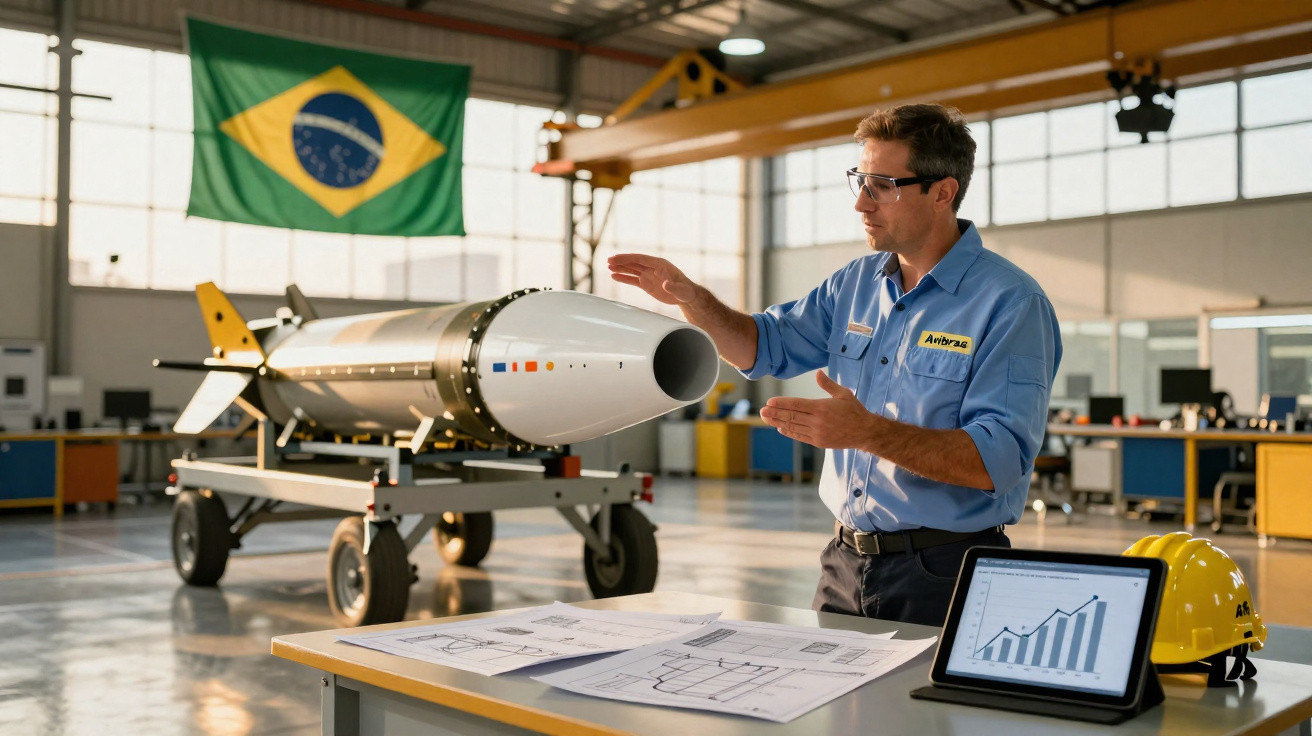
The timing of this transaction is especially significant. Avibras entered judicial recovery proceedings in 2022 and, for years, its industrial capacity was severely constrained. Resuming production in May 2026 meant more than reopening its production lines in that context: it preserved a technological capability that had come close to being lost.
📌 You may also be interested in:
- Leonardo received the first contract for serial production of the Brazilian Army’s 98 new Centauro II 8×8 VBCs
- The British aircraft carrier HMS Queen Elizabeth returns to service to lead a three-month deployment in Northern Europe
This capability is precisely what sets Avibras apart from an ordinary industrial company. Over several decades, it has built expertise in rocket systems, artillery, missiles, propulsion and systems integration. A substantial part of this asset base is embodied in its specialists’ knowledge, engineering processes and accumulated experience from military programmes. A factory can be restored; rebuilding a knowledge base of this standard is a far longer and more expensive undertaking.
For J&F, a potential purchase consequently presents a challenge unlike that involved in a conventional corporate transaction. The defence sector demands patient capital, long-term planning and the ability to endure development cycles that may last years before delivering commercial returns. Avibras’s sustainability will depend on whether its new controller can turn the business back into a development and production platform, rather than merely an industrial structure brought back into operation.
J&F, the Brazilian State and market demand
There is also a second factor that will not be controlled solely by the new owner: the market. In Brazil, the State itself is the dominant buyer of defence systems, while strategic programmes depend on budgetary decisions, military priorities and administrative continuity. Without predictable demand, the restored production capability risks once again operating below its potential.
This issue is particularly significant for Avibras because its products hold strategic value for the country, yet may not necessarily have markets large enough to support a complex industrial structure through domestic sales alone. International expansion is therefore likely to be essential. Achieving it will require a combination of technological competitiveness, financial capacity, defence diplomacy and a commercial strategy able to compete for overseas markets.
The Brazilian Government’s role also becomes important in this setting. President Luiz Inácio Lula da Silva’s visit to the Jacareí facilities in July demonstrated the political importance attached to the company’s recovery. Yet, for a company of this nature, the key issue is not institutional support alone, but the availability of mechanisms that can convert that support into demand, technological funding and continuity for defence programmes.
Avibras’s long-term defence-industry challenge
In this respect, J&F’s potential arrival could create an opportunity to reorganise Avibras on a different footing from that which existed before the crisis. Even so, the transaction does not remove the risks. The company will need to rebuild its teams, increase investment, restore its supplier network, secure new contracts and, above all, convert its recovered industrial capacity into a product portfolio capable of sustaining the business over the long term.
Should the transaction be approved by CADE and ultimately completed, Avibras will begin a new chapter in its history. The real challenge, however, will not lie in the change of owner, but in establishing whether the new controller, alongside the Brazilian State, can transform a company that survived its greatest crisis into an industry once again able to develop technology, manufacture at scale and compete in the international defence market.
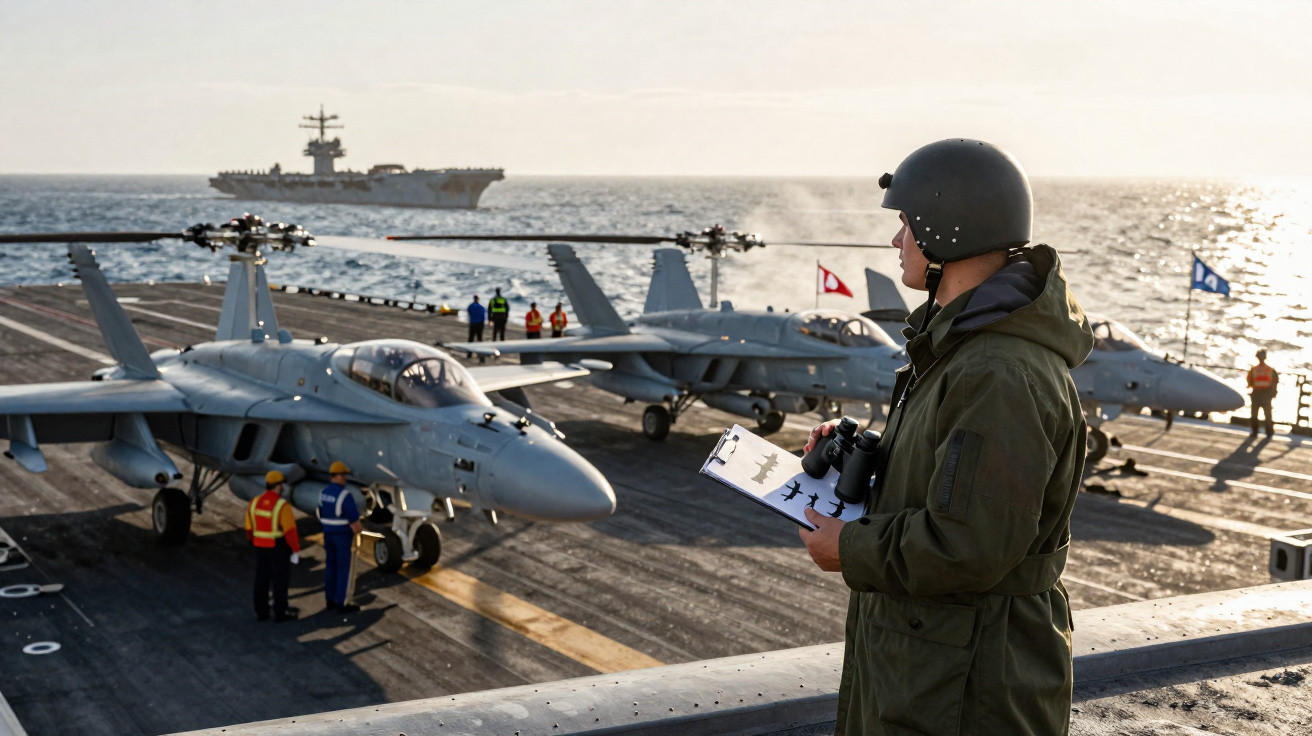
Photographs used for illustrative purposes.


Comments
No comments yet. Be the first to comment!
Leave a Comment