
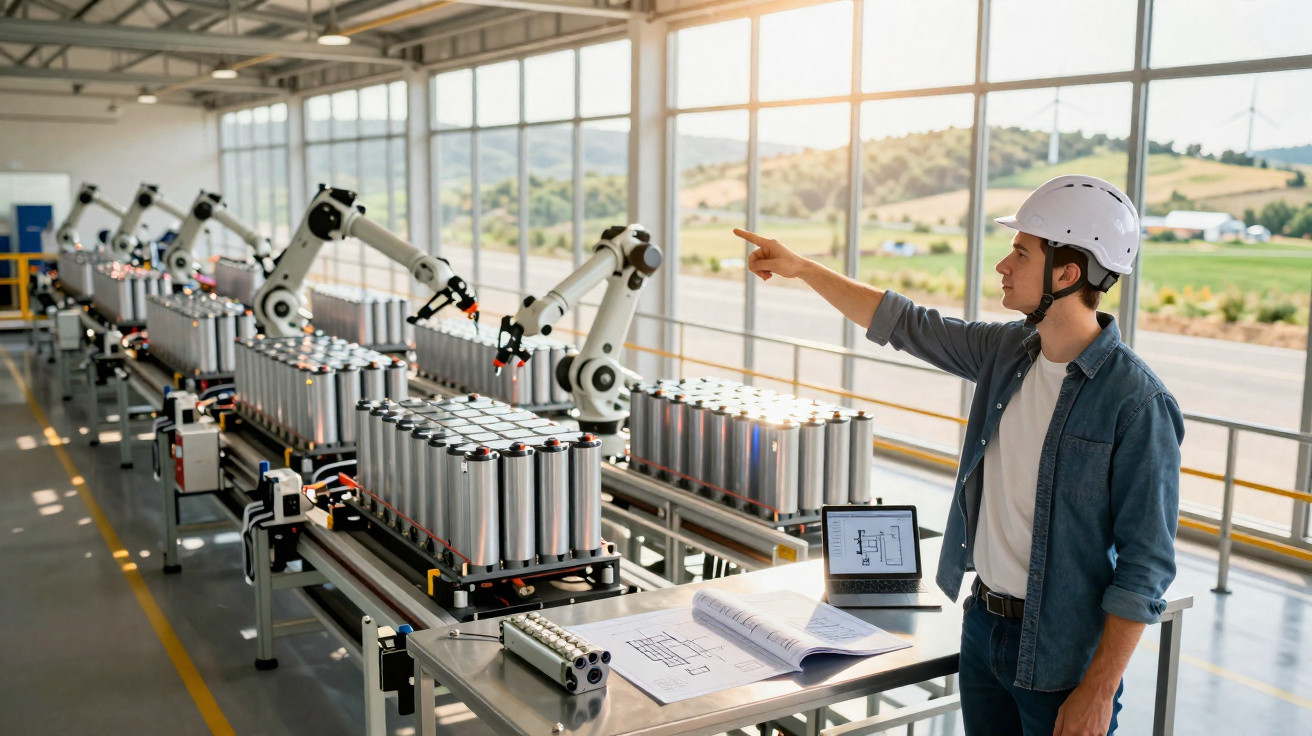
To supply the production of fully electric vehicles at the Martorell and Pamplona plants - with no electrification plans in place for the Autoeuropa production line - Volkswagen this month began work on what will become its second battery factory in Europe, from a total of six planned sites.
Situated 30 kilometres from Valencia on a plot covering more than 130 hectares, the production facility will be run by PowerCo, the newly created Volkswagen Group company responsible for the German giant’s battery factories.
Portugal was among the countries seeking to attract this investment. However, both France and Portugal lost out to Spain.
€10 billion investment
Overall, the factory represents a €10 billion investment in electrification. One share will be funded by Volkswagen, while the remainder will come from the PETRE programme (Strategic Projects for Economic Recovery and Transformation), Spain’s equivalent of Portugal’s PRR (Recovery and Resilience Plan).
The plans for the new Valencia battery factory envisage an annual combined capacity of 40 GWh.
This figure could rise to 60 GWh in a second phase.
Battery factory and economic driver
Volkswagen’s new Spanish battery factory will join two other facilities from the German group in Europe. The first, in Salzgitter, Germany, is already being built and is expected to begin operating in 2025. A third site is planned for Skelleftea, Sweden.
According to forecasts from the German brand and the Spanish government, the new battery factory will directly create more than 3000 jobs. Plans also include a 250-hectare solar and wind power generation park.
Autoeuropa left out of electrification
The Valencia battery factory is expected to manufacture prismatic cells. These cells will mainly be used in vehicles built on the production lines at the Pamplona plant and SEAT’s Martorell factory.
For now, Autoeuropa is the only German group factory on the Iberian Peninsula to remain outside this strategy.
The two Spanish factories already have plans to convert their production lines to fully electric models. Autoeuropa does not.
The most recent plan announced for the Portuguese facility provided for an investment of just €500 million by 2025 - thought to be partly intended for production of the second-generation T-Roc.
As for the models, these Spanish factories will build the Volkswagen Group’s forthcoming compact electric vehicles: the Volkswagen ID. 2All, the CUPRA UrbanRebel and an equivalent Skoda model, which may be called Elroq.




Comments
No comments yet. Be the first to comment!
Leave a Comment