
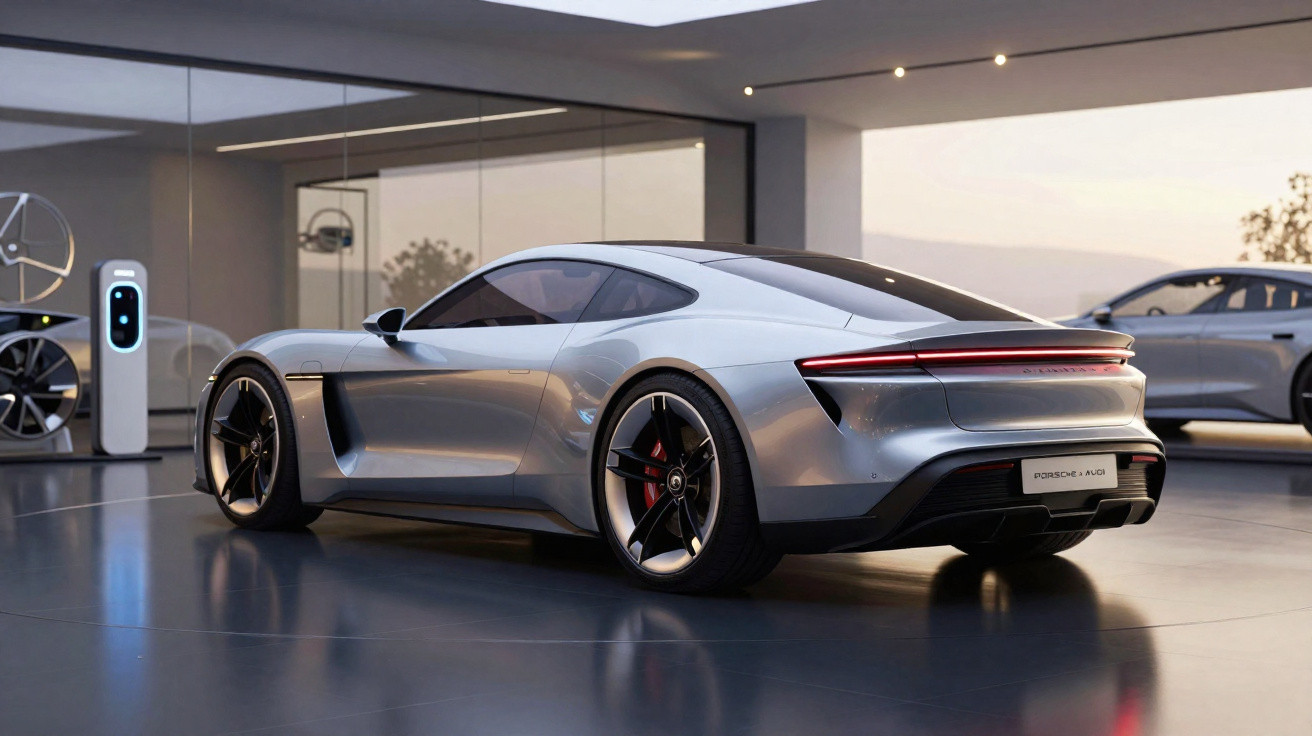
Porsche and Audi may have no alternative but to join forces. The two brands that previously made the biggest contribution to Volkswagen Group profits are facing several challenges at once, all of which have hurt their financial performance: falling sales in China, US tariffs and an electrification strategy that has not delivered the anticipated returns.
According to Automotive News, Porsche chief executive Michael Leiters and Audi chief executive Gernot Döllner met at the start of the year to discuss a possible closer relationship that could make greater use of the shared potential between the two manufacturers.
“Audi is a key partner for us. We want to make even greater use of the potential we share,” said Michael Leiters, Porsche’s chief executive.
The two car makers are not starting from scratch, having already worked together on a number of projects. These include the shared MLB platform used by the Q5/Macan and Q7/Cayenne, as well as the adaptation of the Porsche Taycan’s J1 platform for the Audi e-tron GT.
More recently, the manufacturers jointly developed the Premium Platform Electric (PPE), which underpins the electric Porsche Macan and the Audi Q6 e-tron and A6 e-tron. Oliver Blume, then Porsche’s CEO, previously said that co-developing PPE would reduce costs by up to 30%.
A year to forget
For both brands, 2025 will go down as an especially challenging year, albeit for different reasons. Porsche’s position is the more worrying of the two. Its profits fell by 92.7%, owing to the decline in Chinese sales (-26%), the impact of US tariffs and, naturally, its electrification push, which failed to generate the expected results.
In response, Michael Leiters, who took up the role on 1 January, set out the Strategy 2035 plan. It reverses the previous direction, placing exclusivity ahead of volume and promising stronger cash flow and margins worthy of the marque’s historic reputation.
Audi’s circumstances differ, but they also demand attention. While revenue increased by 1.5% to €65.5 billion, profitability was affected by global trade tensions: operating profit dropped by 13.6%, chiefly due to US tariffs.
Porsche and Audi face a shared platform challenge
The pressure facing both brands makes their established technical links increasingly important. Their cooperation already spans shared platforms and components, and future projects are set to extend that approach across both combustion-engined and electric models.
Is strategic cooperation an option or an obligation?
A source close to the process aptly captured the internal mood: “They have no choice; costs need to be cut significantly.”
For the Volkswagen Group, closer collaboration between the two brands is no longer simply a strategic matter, but one of financial survival. The combined pressure of a shrinking Chinese market, international trade barriers and abrupt shifts in consumer preferences is making cooperation almost unavoidable.
This is already becoming apparent at Porsche, where the reversal of its electric vehicle plans and renewed focus on combustion-engined models will rely heavily on Audi architectures. The successor to the combustion-engined Porsche Macan - expected to take a different name - will share much of its hardware with the Audi Q5, in a similar way to the first Macan.
The K1 project, initially envisaged as a three-row electric SUV positioned above the Cayenne, will be reworked into a combustion-engined SUV, while retaining three rows of seats. It will be derived from the all-new Audi Q9, which is due to be unveiled this year.
For Audi, the partnership also reaches electric models, taking shape in the Concept C planned for 2027, which will share its platform with Porsche’s new electric 718 Boxster and Cayman.




Comments
No comments yet. Be the first to comment!
Leave a Comment