
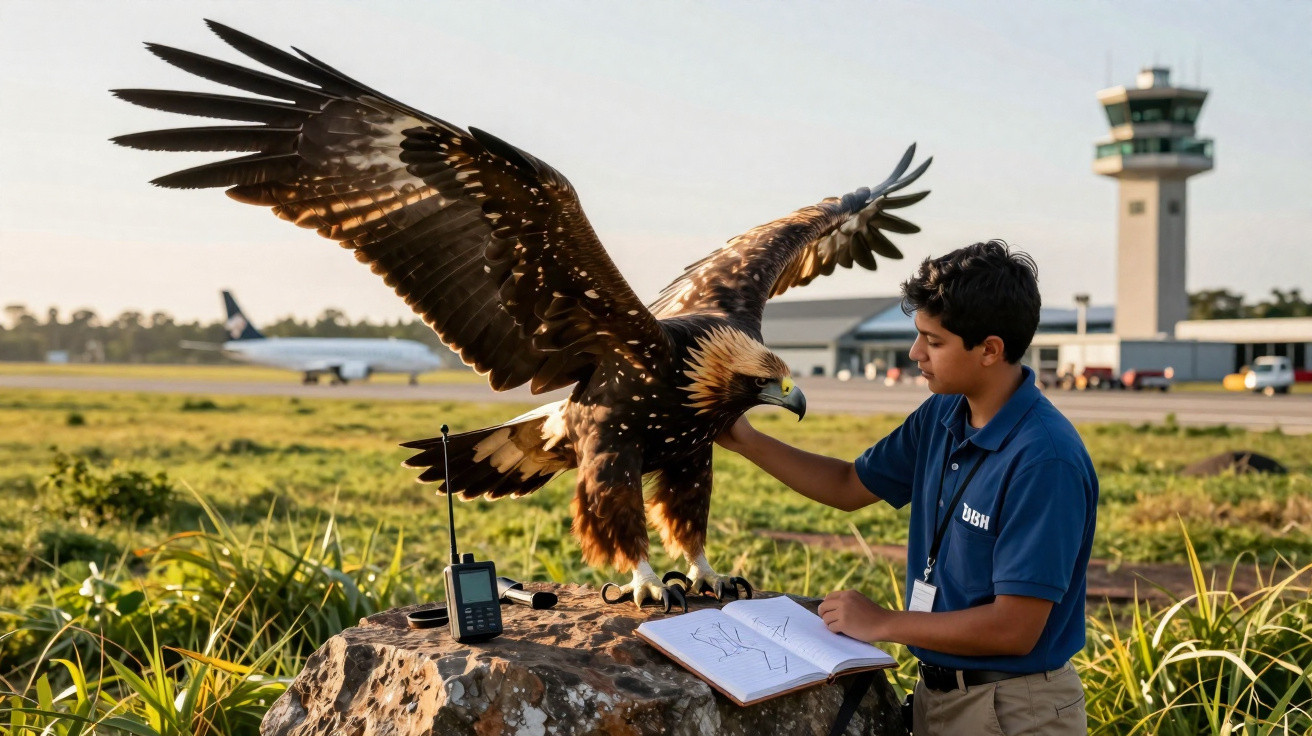
On World Environment Day, BH Airport in Belo Horizonte celebrates the presence and monitoring of the Chilean eagle, one of South America’s largest birds of prey, with a wingspan of more than 1.5 metres.
This species, rarely seen in urban areas, has been tracked using GPS technology, strengthening responsible wildlife-management measures and biodiversity protection around the airport.
Also known as the mountain eagle, this bird sits at the top of the food chain and plays a vital role in maintaining the balance of local ecosystems.
Chilean eagle GPS monitoring at BH Airport
GPS tracking makes it possible to gather information on its habitat use, movement patterns and behaviour. These findings are essential to future conservation and environmental-management strategies.
According to BH Airport’s Infrastructure and Environment Manager, Emerson Chaves, “technology helps us track the species accurately, supporting decisions that promote operational safety and reduce the risk of bird-aircraft collisions”.
The Chilean eagle was detected during ongoing monitoring carried out by Linha Ambiental, the company responsible for wildlife management at the airport. Following clinical and biological assessments, the bird was fitted with a GPS device and released into an environmentally suitable area.
This large predator, which belongs to the Accipitridae family, is distinguished by its black, white and grey plumage, broad wings and short tail. Adapted for soaring over open and mountainous landscapes, it uses its powerful talons to catch prey such as small mammals, birds and reptiles. By feeding on carcasses, it also contributes to environmental clean-up.
In Brazil, the species is found mainly in the South, South-East and Central-West regions, including mountainous areas such as the Espinhaço and Mantiqueira ranges.
BH Airport Environmental Analyst Evandro Amato points out that, although the Chilean eagle is not currently threatened, conserving it is crucial to sustaining biodiversity and ecological balance, as apex predators serve as bioindicators of environmental quality.
Biodiversity conservation in the Lagoa Santa Karst APA
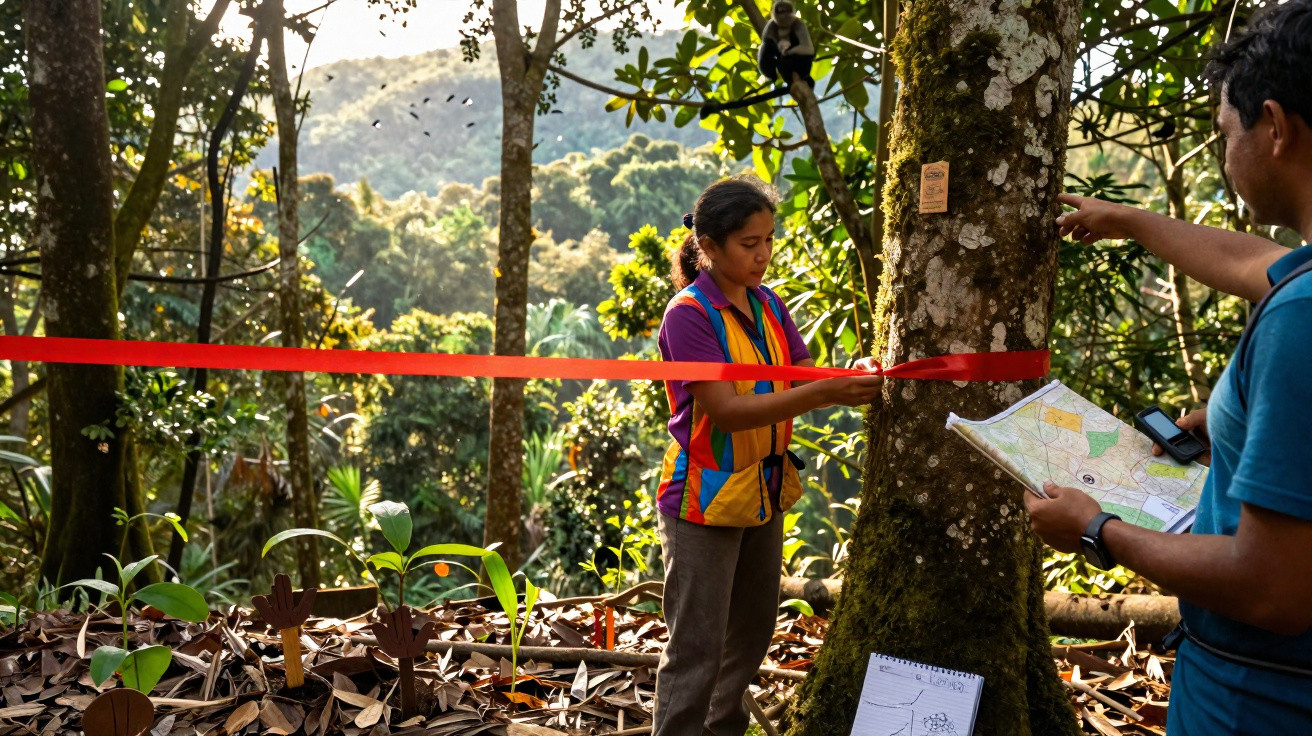
Beyond eagle monitoring, BH Airport manages environmental matters within the Lagoa Santa Karst Environmental Protection Area (APA), home to karst formations, caves and aquifers that are vital to biodiversity and the region’s water supply.
The airport protects hundreds of hectares of native vegetation and permanent preservation areas, reinforcing its commitment to conservation and the sustainable use of the land.
Wildlife crossing reduces roadkill
Among its key initiatives is the Wildlife Crossing beneath the LMG-800 road, which links forest fragments and enables wild animals to cross safely. Since 2023, camera traps have recorded 16 species using the corridor, including the southern tamandua, brown brocket deer, ocelot and capybara, among others.
Over its first two years of operation, the structure helped cut animal roadkill along the road by around 83%, demonstrating its importance in protecting wildlife and maintaining environmental connectivity.
The Wildlife Crossing project earned BH Airport international recognition as a Green Airport from Airports Council International Latin America & Caribbean (ACI-LAC), an award received for the fifth consecutive year.





Comments
No comments yet. Be the first to comment!
Leave a Comment