
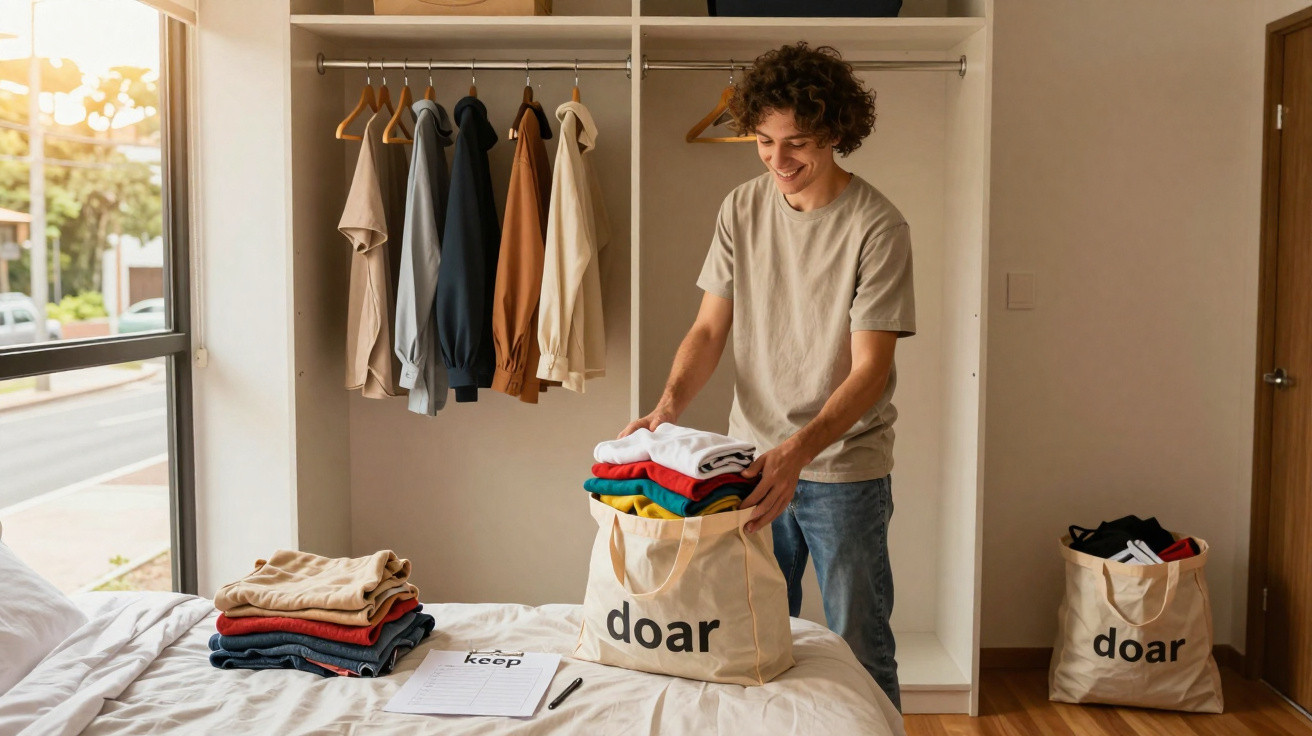
Hangers crammed together scrape and whisper, sleeves knot into one another, labels remain uncut, and colours you adored for precisely five minutes on Instagram fill the rail. You are running late, your coffee is going cold on the kitchen worktop, yet you are standing still before a thicket of clothes, convinced you have “nothing to wear”.
Beyond the bedroom, life carries on: children hunt for their PE kit, your partner wants to know where their keys are, and unread emails accumulate behind muted notifications. In the wardrobe, a denim jacket from another chapter of your life rests beside a dress bought for a wedding you never attended.
Once again, you reach for the black jeans. The same T-shirt follows. Everything else stays hidden in the dimness.
And some of those forgotten clothes could be genuinely useful to somebody else.
Why donating your clothes makes mornings lighter
Your wardrobe is more than a piece of furniture; it is a machine for making daily choices. The more crowded it becomes, the more it holds you up. Visual clutter functions like background noise, obscuring what you truly enjoy wearing. By donating unused clothes, you reduce that noise. What remains on the rail reflects your real life, rather than the life you believed you “should” be dressing for.
There is something unexpectedly luxurious about walking past a wardrobe with room to breathe. Your favourite garments stand out instead of disappearing in the search. The shirt that sits properly, the jeans that do not fight you, the shoes that work with nearly everything. Clearing out and giving things away is not a loss; it can feel like finally meeting the person you are today.
A charity shop manager in London once called donation days “tiny revolutions in plastic bags”. People arrive with whole wardrobes that no longer suit their bodies, work or sense of self. One woman hands over eight pairs of heels and laughs, “I work from home in socks now.” Someone else brings in a stack of smart suits after changing careers, explaining that they “don’t need to feel armoured” anymore.
Behind the till, staff sort items that are not simply clothes, but opportunities. A warm winter coat may mean the difference between shivering at a bus stop and waiting comfortably. A lightly used school blazer can bring relief to a parent who could not make the budget stretch this term. The clothes you have grown tired of may be exactly what someone else has been quietly hoping to find.
The figures also show that this matters. Research from resale platforms indicates that most people regularly wear only about 20 % of their wardrobe. In other words, four in every five items are largely unused. Each garment shifted from your “never wear” section to a donation bag has a longer life and helps cut textile waste. You spend less time choosing between clothes you do not even like. There is less guilt hiding behind the hangers. More energy for decisions that truly matter.
The science of the brain is straightforward: too many tiny decisions at the beginning of the day use up willpower. Einstein is said to have worn similar clothes, not as a fashion statement, but to conserve mental energy. Simplifying your wardrobe through donation has a similar effect. This is not about pursuing some minimalist ideal; it is about removing a little friction from every morning.
How to donate unused clothes and genuinely simplify your life
Begin with one candid question: Would I be pleased if someone I liked saw me wearing this today? If not, place it in the donation pile. That is your test. Work fast. Do not sit on the bed dissecting every memory tied to every jumper. You are refining your present, not revising your past.
Remove clothes in manageable categories: shirts only, then jeans only, then jackets only. Spread them over the bed and return only the pieces you wear each month. Not clothes you “might wear one day”, but clothes you genuinely wear. The remaining items are your donation gold. Fold them once, put them in a bag and leave the bag by the door. Keeping it physically close makes it much more likely that you will take it in within days rather than months.
For the practical side, choose brief, concentrated sessions. Try 20 minutes after supper rather than a grand weekend project you will never arrange. Use a timer, put on a podcast and stop when it goes off, even halfway through a pile. You can pick it up tomorrow with clearer eyes. Tiny, consistent rounds of decluttering beat a once-a-year purge that never really happens.
Most people hesitate over the same things: “just in case” clothes and items that “were expensive”. The designer blazer that has never left the wardrobe. The jeans that no longer fasten but “might fit again one day”. Honestly, these garments are not inspiring you; they are quietly reproaching you from the back of the rail.
Consider a kinder way of seeing it. If it does not suit your body or your current life, it is not a prize: it is storage. Storage costs you space, attention and a persistent, low-level sense of guilt. Giving away an expensive dress you regret buying does not undo the error, but it changes what happens next. Somebody else can enjoy it. You regain your shelf space and learn a lesson for the next time a flash sale catches your eye.
If feelings become overwhelming, stop and select only three “sentimental exceptions” that you may keep regardless. Perhaps a concert T-shirt, a wedding tie or your grandmother’s cardigan. Once those three are set aside safely, it becomes easier to be bolder with everything else.
“Clothes are never just clothes,” a counsellor told me. “They’re stories about who we were, who we wanted to be, and who we’re scared of becoming.”
That is why parting with them can feel far weightier than it appears. On a difficult day, a donation bag can seem almost like a bag of broken promises. But each item you pass on is a quiet choice: I no longer need this version of myself.
On a human level, that matters.
To keep the process simple, use this checklist:
- Is it clean, undamaged and something you would give to a friend without feeling embarrassed?
- Have you worn it at least once in the past 12 months?
- Does it fit your body now, rather than an imagined future body?
- Would someone clearly see its style as current enough to wear?
- Do you feel lighter when you imagine it leaving your home?
If your answer is no to most of these questions, the item is ready to begin a new chapter. And yes, you may occasionally donate something and later wonder, “Maybe I could have worn that.” Let’s be honest: nobody carries out this sort of perfect declutter every day without any regret. The mental space you gain still outweighs that occasional pang.
The quiet ripple effect of donating unused clothes
When your wardrobe mainly contains clothes you enjoy and genuinely wear, mornings feel different. Picking an outfit becomes a two-minute routine rather than a 20-minute struggle. You begin to notice what you consistently choose: soft materials instead of scratchy ones, three key colours, shapes that make you stand a little taller. That understanding is almost as valuable as the time you get back.
Your shopping habits begin to shift too. Once you have donated three nearly identical striped tops, you are more likely to pause before buying a fourth. You remember the weight of the donation bag, the small sting of money wasted and the strange relief of handing it over at the charity shop. The next time, you may wait 24 hours before pressing “add to basket”. Often, the desire disappears.
On a broader level, donating unused clothes places you in a calmer, slower cycle of consumption. You are not aiming to become a capsule-wardrobe saint. You are simply creating a little intention between yourself and the next impulse purchase. That intention has wider effects: on your budget, your schedule and your sense of control when other parts of life feel untidy. On mornings when everything else goes wrong, at least getting dressed does not.
| Key point | Detail | Benefit for the reader |
|---|---|---|
| Clarify the wardrobe | Keep only clothes worn regularly | Reduce stress and the time spent choosing each morning |
| Give clothes a second life | Donate to charities, reuse centres and second-hand shops | Provide practical help to others while reducing waste |
| Change how you shop | Become aware of your real clothing needs | Save money and avoid unnecessary impulse purchases |
FAQ:
- How often should I declutter and donate my clothes? Once or twice a year suits most people, alongside an ongoing small “mini bag” for items you realise you no longer want.
- What condition do clothes need to be in to donate? They should be clean, wearable and intact, with no major stains, holes or broken zips that make them unusable.
- Where is the best place to donate my unused clothes? Local charities, shelters, community centres and reputable textile banks are generally the most direct ways to help.
- What should I do with clothes that are too damaged to donate? Find textile recycling points, upcycling schemes, or turn them into cleaning rags rather than putting them straight in the bin.
- How can I avoid filling my wardrobe back up after a big donation? Pause before buying anything new, follow a loose colour palette you genuinely wear and make sure every new item works with at least three outfits you already own.






Comments
No comments yet. Be the first to comment!
Leave a Comment