
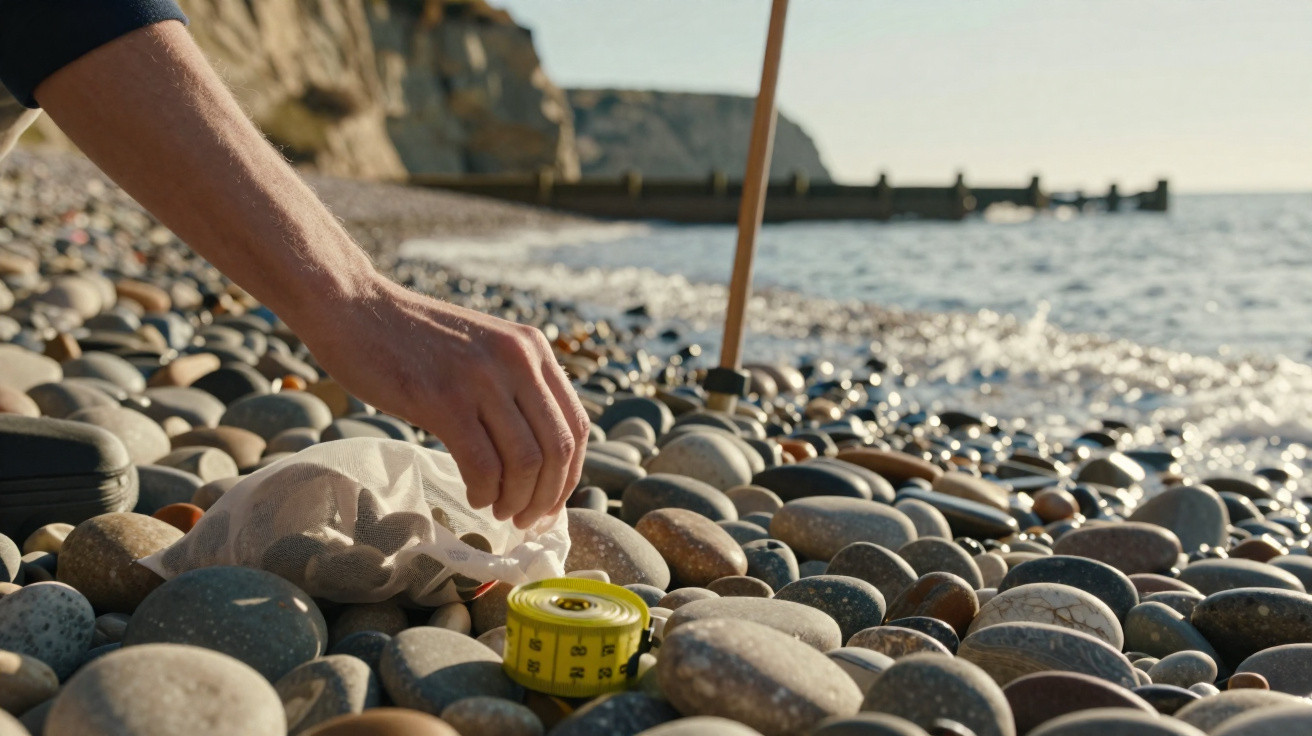
Cumberland Council in northern England has said that anyone removing pebbles from beaches could now be fined as much as £1,000. Although the announcement has frustrated many people, research underlines why limiting erosion is so important.
A trip to the seaside can evoke happy memories of childhood. However, it is easy to overlook the fact that sand and pebbles form a valuable habitat for numerous species. They also offer homes and infrastructure a natural buffer against the sea’s force.
Many visitors will have picked up an occasional stone as a keepsake, while others may have taken bags of pebbles for garden rockeries. Keen collectors are drawn to the range of pebble types, colours, forms and even fossils found along beaches, which may have been carried there by ancient glaciers or worn from nearby cliffs.
What is less widely known is that removing any material from a UK beach is illegal. The restriction is set out in the 1949 Coastal Protection Act, which was introduced to limit the historic removal of hundreds of thousands of tonnes of beach sediment for supposedly "free" building material.
Pebble beaches and coastal protection
Stretches of England’s pebble beaches are also legally safeguarded because of their environmental value. Natural England designates them for the habitats they support and the species dependent on them. For nearby communities, however, pebbles are particularly valuable because they help to reduce coastal erosion and flooding.
The amount of material on a beach determines how well it can lessen both threats. Put simply, a beach with more pebbles and sediment is better able to take in wave energy. When substantial quantities of pebbles, sand or other sediment are removed, the beach becomes less effective as a natural defence against erosion and flooding.
Beach volume shifts naturally throughout the year as shorelines respond to seasonal changes in wave conditions. Waves move pebbles on to and away from the beach, arranging sediments of different sizes in separate areas. During winter storms, more powerful waves can push larger material towards the upper beach, creating a steep pebble bank known as a berm.
Located at the top of the beach, the berm is often the first natural line of protection during storms. It absorbs and disperses wave energy, lowering the chance of waves travelling beyond the beach or eroding and undercutting the sea walls or cliffs behind it.
The cumulative effect of taking pebbles
One person removing a handful of pebbles is unlikely to make a noticeable difference to the berm or total beach volume. Yet the combined impact of many people taking large numbers of pebbles may be far greater. Their removal can disrupt the beach’s natural sorting mechanisms and interfere with its wider dynamic balance.
Because sediment must remain within the system to protect against flooding and erosion, researchers continue to investigate how pebble beaches react to waves and storms. This work is especially important when evaluating how effectively artificially created cobble beaches can protect coastlines from flooding and erosion risks.
Tracking sediment on beaches
Following sediment movement is central to progressing this research. New low-cost methods and citizen-science approaches are being used to trace sediment after waves have eroded it from the beach.
As the climate changes, these hazards are expected to become both more severe and more frequent. There is therefore an urgent need to keep sediment on beaches, allowing their natural coastal-defence and habitat benefits to flourish.
Requesting that people leave beach pebbles where they are may seem minor or inconsequential, but doing so can help beaches protect our coasts effectively.
Joseph Earl, PhD Candidate, Lancaster Environment Centre, Lancaster University and Suzana Ilic, Senior Lecturer, Lancaster Environment Centre, Lancaster University
This article is republished from The Conversation under a Creative Commons licence. Read the original article.






Comments
No comments yet. Be the first to comment!
Leave a Comment