
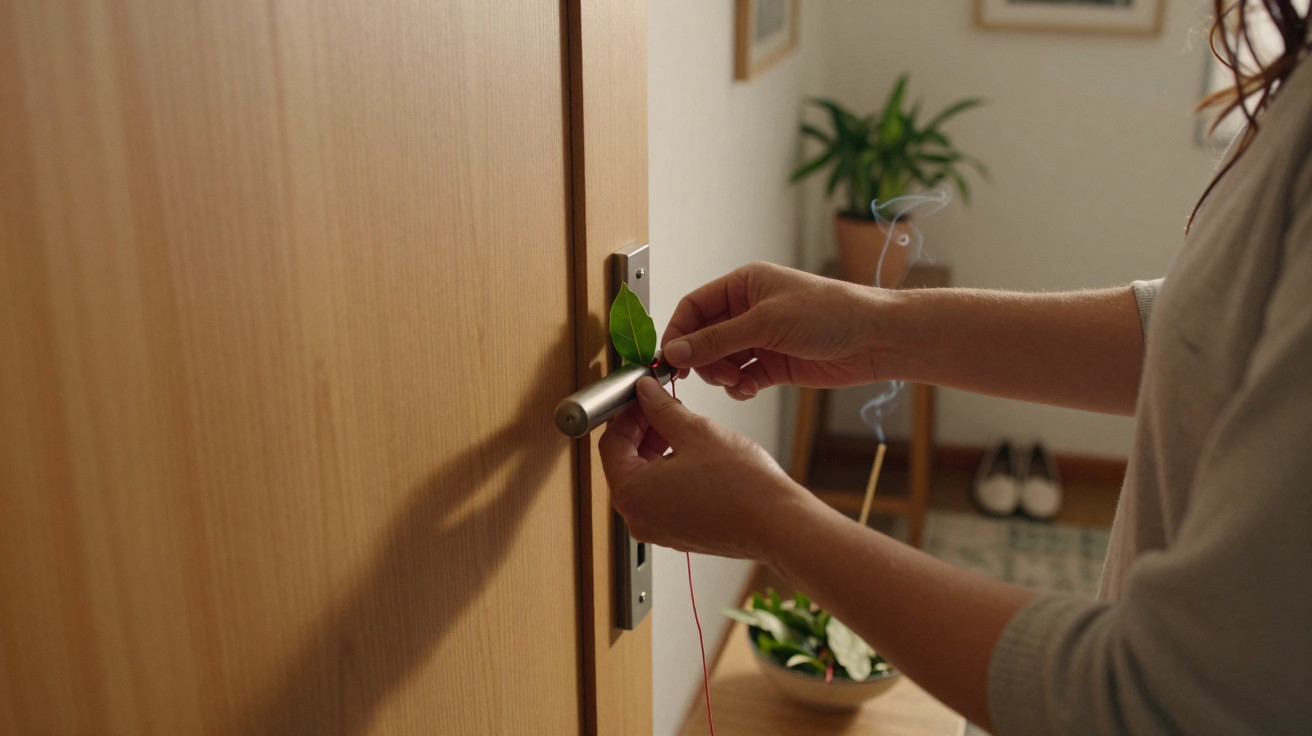
A small fabric pouch hanging from the front door may look innocent, even accidental, but it represents an emerging money ritual.
On social media and home décor feeds, a growing number of people are discreetly placing an unusual item by their entrance: a little bag containing dried lentils. Although it can look like a short-lived craze, the custom is rooted in long-standing ideas about abundance, safeguarding the home and how people “set the tone” when they enter it.
The origins of the lentil bag trend
For centuries, lentils have been associated with prosperity and growth in communities around the world. This is not an idea born on TikTok. It stems from the meanings attached to ordinary foods, particularly reliable staples that helped households through severe winters and uncertain harvests.
Across many European and Latin American customs, lentils form part of New Year meals to represent money and possibility. Their coin-like form, their expansion during cooking and their affordability all contributed to their connection with financial security.
Lentils symbolise coins, multiplication and the basic security of “never going hungry” – three core ideas behind prosperity rituals.
The symbolism has returned prominently over the past several years, with increasing living costs encouraging people to combine sensible money management with modest gestures of hope. A lentil bag on the door belongs in that overlap: partly superstition, partly intention-setting and partly decorative accent.
Why a bag of lentils is hung on the front door
Front doors have long held powerful symbolic importance. They are where visitors enter, parcels arrive and both welcome and unwelcome news can appear. In many cultures, the doorway is viewed as an energetic filter, deciding what comes in and what remains outside.
People who practise the custom say that a bag of lentils near the entrance can serve several purposes:
- Expressing a desire for financial security over the year
- Working as a charm intended to bring improved employment and business opportunities
- Signalling a new phase when circumstances in life change
- Forming a small protective boundary against “bad vibes” or tension
Usually, the pouch is hung inside the front door, commonly straight from its handle. Believers say the bag’s gentle movement whenever the door opens helps to “reactivate” the purpose placed into it.
Supporters describe it less as magic and more as a daily reminder to manage money wisely and welcome new chances without fear.
How to create a lentil door charm
The ritual is straightforward, which is one reason it has spread rapidly online. It requires household items that many people already own.
Step-by-step guide
- Put a small handful of dry lentils into a fabric, mesh or paper pouch.
- Secure it with thread or ribbon, often green or yellow to represent money and prosperity.
- Hang it inside the front door, preferably from the handle or a small hook.
Some people include a coin, bay leaf or brief handwritten note containing a personal wish. They use the bag as a small time capsule for goals they hope to pursue in the months ahead.
| Element | Common meaning |
|---|---|
| Dried lentils | Abundance, food security, steady income |
| Green ribbon | Growth, money, fresh starts |
| Yellow or gold ribbon | Success, confidence, visibility at work |
| Coin inside the bag | Cash flow, quick gains, small windfalls |
When people believe the ritual “works best”
The first day of the year is widely linked with the lentil bag, as part of New Year customs involving food, colour and symbolic gestures. However, followers increasingly use it at times that feel like a personal fresh start.
- Moving into a new flat or house
- Beginning a new job or freelance project
- Ending a challenging period and seeking a psychological reset
- Starting a new month, birthday year or financial plan
Some choose one annual “refresh day” to replace the lentils and ribbon. Others change the bag when they relocate or once the material begins to show signs of wear.
The act of renewing the bag often matters more than the object itself: it gives a clear moment to rethink habits, debts and goals.
Why rituals such as this are popular now
The lentil bag trend is part of a broader development rather than an isolated phenomenon. As conventional religious observance falls in some areas, people are creating smaller, more individual rituals around finances, good fortune and wellbeing.
Financial instability is helping to drive the trend. Young adults dealing with insecure employment and costly rents are drawn to practices that feel reassuring, while still recognising that a pouch of pulses cannot substitute for a pay rise or savings plan.
It also suits the growth of “quiet” décor. A small pouch in a neutral shade can hang on a door without disrupting an interior scheme, unlike conspicuous signs or louder amulets. It can function as a minimalist accessory while retaining private significance for those living there.
Practical advice for trying the lentil bag ritual
Anyone considering the custom can make a few adjustments to ensure it feels more purposeful than superstitious:
- Choose one specific financial aim as you tie the ribbon, such as paying down one debt or creating an emergency fund.
- Combine the ritual with a practical task on the same day, such as reviewing bank statements, ending an unused subscription or setting a budget.
- Do not hang the bag outside, where damp could make it wet or mouldy; keep it dry and unobtrusive.
- In rented accommodation, use a removable hook or simply place it on the door handle.
Homes with young children or pets should keep the pouch beyond their reach, as dried lentils may present a choking risk. Anyone with significant dust or fabric allergies may prefer a sealed container hidden behind a decorative item rather than a loose textile bag.
Beyond lentils: subtle rituals for the entrance
Renewed fascination with lentils is part of a larger group of “door habits” intended to influence the atmosphere of a home. Some people keep a small bowl of sea salt just inside the doorway, believing it absorbs tension. Others position a plant with rounded leaves near the entrance as a living representation of growth and continuity.
Interior designers also connect these rituals with useful everyday guidance: keeping entrances free of clutter, ensuring the door can open completely and allowing daylight into the hallway. While these measures do not guarantee good luck, they can often affect how people feel when they step inside after a long day.
For those interested in money symbolism, the lentil practice raises wider questions about what abundance means today beyond a bank balance. Many treat it as a cue to identify non-financial wealth – time, health, strong networks – and reshape their aims around it. In this way, the trend occupies an unusual meeting point between folklore, psychology and day-to-day financial behaviour.






Comments
No comments yet. Be the first to comment!
Leave a Comment