
Nearly two centuries after California’s gold rush, the United States appears poised for a lithium rush. With demand for the material climbing sharply, government geologists are working urgently to establish where this valuable element can be found.
In September 2023, scientists backed by a mining company reported what may be the biggest lithium deposit within an ancient US supervolcano. Public-sector researchers on the opposite side of the country have now identified another unexploited resource, one that could satisfy almost half of the nation’s lithium needs.
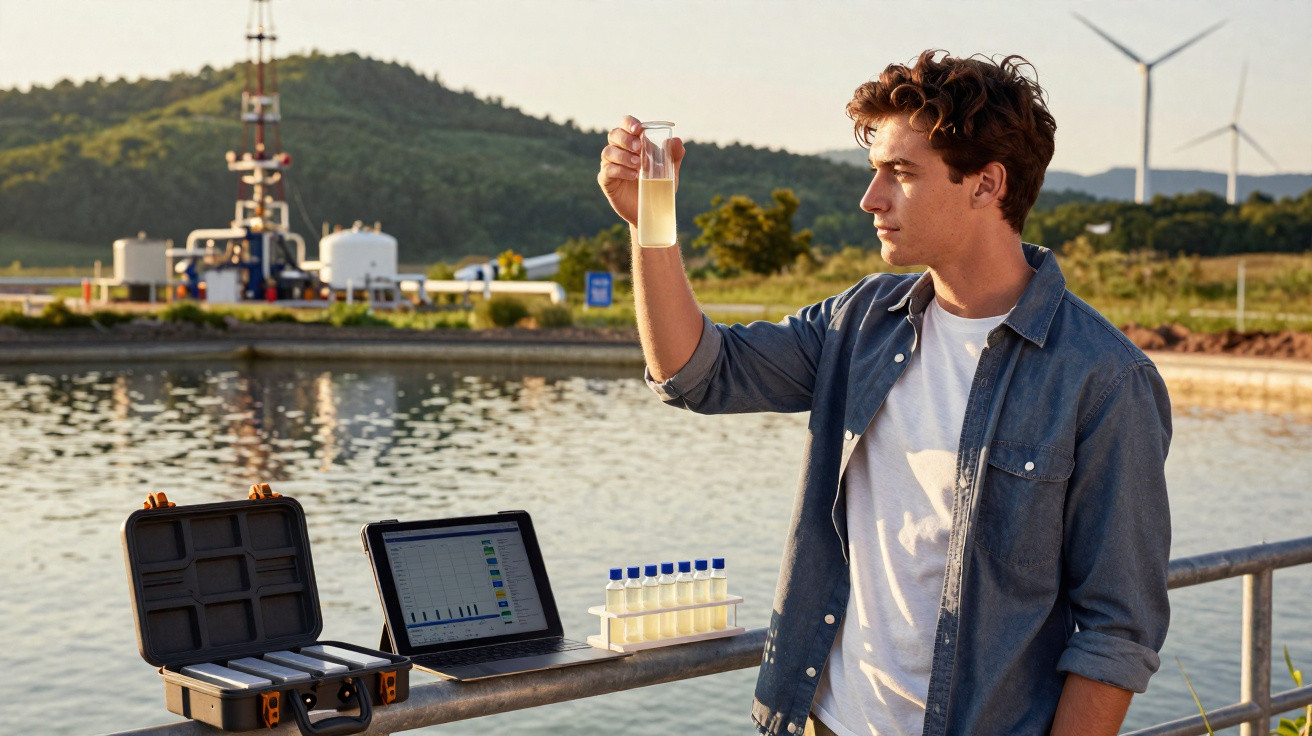
It is contained in wastewater produced by Pennsylvania’s gas fracking industry.
Lithium and the US renewable energy transition
Lithium is arguably the most significant element in the country’s shift to renewable energy, as it is the preferred material for electric-vehicle batteries. Yet the US has only one large-scale lithium mine, so it must currently import the supplies it requires.
US Department of Energy officials are keen to alter that situation. Their aim is for all lithium to be produced within the country by 2030.
Growing America’s lithium sector is nevertheless deeply contentious, because mining can damage ecosystems, release toxic chemicals and encroach on sacred Indigenous land.
Lithium-ion batteries are also regarded as essential to the global move towards renewable power, as they store electricity generated by wind and solar energy. Locating lithium supplies without causing unnecessary additional environmental harm is therefore vital, although finding a clean answer is far from straightforward.
Pennsylvania fracking wastewater and the Marcellus Shale
Pennsylvania lies above the Marcellus Shale, a sedimentary-rock formation rich in natural gas. Formed by volcanic activity nearly 400 million years ago, this geological layer includes lithium from volcanic ash.
Over immense periods, groundwater at depth has dissolved the lithium held in these rocks, effectively “mining the subsurface”, according to Justin Mackey, a researcher at Pennsylvania’s National Energy Technology Laboratory.
Mackey and his team have found that wastewater brought up from deep underground during fracking contains a remarkable quantity of lithium.
“We just didn't know how much was in there,” says Mackey.
Pennsylvania’s location has made it a leading state for the controversial practice of fracking, which has prompted numerous concerns over environmental and human health effects.
Fracking involves drilling an L-shaped well into the ground, allowing water to be pumped downwards. This drives materials from deeper below the surface, including gas, upwards.
“Wastewater from oil and gas is a burgeoning issue. Right now, it's just minimally treated and reinjected,” says Mackey.
These methods may waste a valuable supply of lithium. The new study indicates that, if lithium reserves in fracking wastewater are measured properly, the waste could potentially be put to productive use instead.
Potential lithium yields from fracking waste
The regional assessment used information supplied by oil and gas firms, which report the elements identified in their wastewater to government authorities. Mackey and his colleagues examined data gathered between 2012 and 2023 from wastewater at 515 Pennsylvania wells.
Their findings suggest the Marcellus Shale “has the capacity to provide significant lithium yields for the foreseeable future” – provided fracking continues.
The researchers calculate that recovering even a conservative quantity of lithium from the state’s fracking wastewater could meet more than 30 percent of current US demand.
Although this prospect appears highly encouraging, the environmental effects of extracting lithium from fracking wastewater have not yet been investigated. Moreover, that wastewater is available only while fracking operations continue.
To meet climate targets, worldwide lithium demand is projected to rise by 400 percent over the coming decades. How lithium needs will be supplied – and which new environmental crises those approaches could create – remains uncertain.
The study was published in Scientific Reports.





Comments
No comments yet. Be the first to comment!
Leave a Comment