
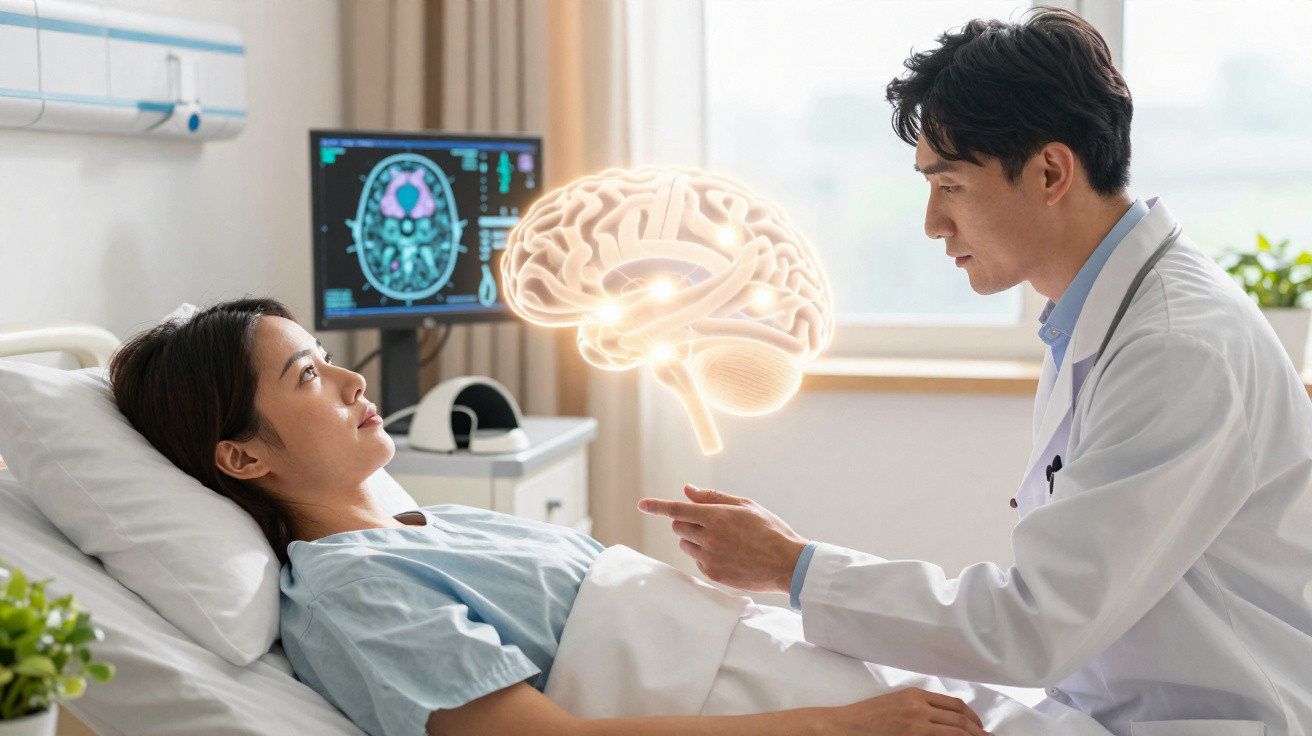
For millennia, scientists have tried to explain human consciousness: our awareness that we exist. Even with major progress in neuroscience, its origins and the way it emerges remain poorly understood.
Researchers may, however, have moved closer to locating its physical basis. A study identified a network involving three particular brain regions that seem essential to consciousness.
Published in November 2016, the work could significantly advance our understanding of what it means to be human. It may also help scientists develop treatments for patients in vegetative states.
"For the first time, we have found a connection between the brainstem region involved in arousal and regions involved in awareness, two prerequisites for consciousness," said lead researcher Michael Fox from the Beth Israel Deaconess Medical Centre at Harvard Medical School back in 2016.
"A lot of pieces of evidence all came together to point to this network playing a role in human consciousness."
Arousal and awareness in consciousness
Consciousness is usually understood to have two vital elements: arousal and awareness.
Previous research had indicated that arousal is probably controlled by the brainstem, the section of the brain connected to the spinal cord. This is because it governs sleep and wakefulness, as well as heart rate and breathing.
Awareness has proved harder to locate. Scientists have long suspected it lies somewhere in the cortex, the brain's outer layer, but have not been able to establish precisely where.
The Harvard researchers found a particular brainstem area associated with arousal, alongside two cortical regions. Together, these areas appear to form a consciousness network.
The three-region brain network
To reach that conclusion, the team examined 36 hospital patients with brainstem lesions. Of these, 12 were in a coma, meaning unconscious, while 24 were classified as conscious.
They then mapped the patients' brainstems to establish whether a single area could account for why some had remained conscious after their injuries whereas others had entered a coma.
They identified a small brainstem area called the rostral dorsolateral pontine tegmentum, which was strongly linked with coma. Damage to this area was present in 10 of the 12 unconscious patients, but in only one of the 24 conscious patients.
This finding implies that the tiny brainstem region matters for consciousness, although it does not provide the complete explanation.
To determine which other brain regions were connected to it, the researchers consulted a brain map, or connectome, from a healthy human brain. A connectome charts all of the brain connections identified so far; one appears in the image at the top of this story.
Two cortical areas were connected to the rostral dorsolateral pontine tegmentum and were considered most likely to help regulate consciousness. One was the left ventral anterior insula (AI), while the other was the pregenual anterior cingulate cortex (pACC).
Earlier studies had associated both regions with arousal and awareness, but this was the first research to link them with the brainstem.
Potential treatment for disorders of consciousness
The researchers checked their findings by examining fMRI scans from 45 patients in comas or vegetative states. In every case, the network connecting the three regions was disrupted.
Although this is an encouraging initial finding, the team recognised that it must be tested in a larger patient group.
Other research teams will also have to replicate the results before it can be stated with confidence that the three areas are the physical source of consciousness in the brain.
For now, the work may lead to treatment approaches for people in comas and vegetative states, whose brains could otherwise be healthy but who are unable to regain consciousness.
"This is most relevant if we can use these networks as a target for brain stimulation for people with disorders of consciousness," said Fox at the time.
"If we zero in on the regions and network involved, can we someday wake someone up who is in a persistent vegetative state? That's the ultimate question."
The research was published in Neurology.
A version of this article was first published in November 2016.





Comments
No comments yet. Be the first to comment!
Leave a Comment