
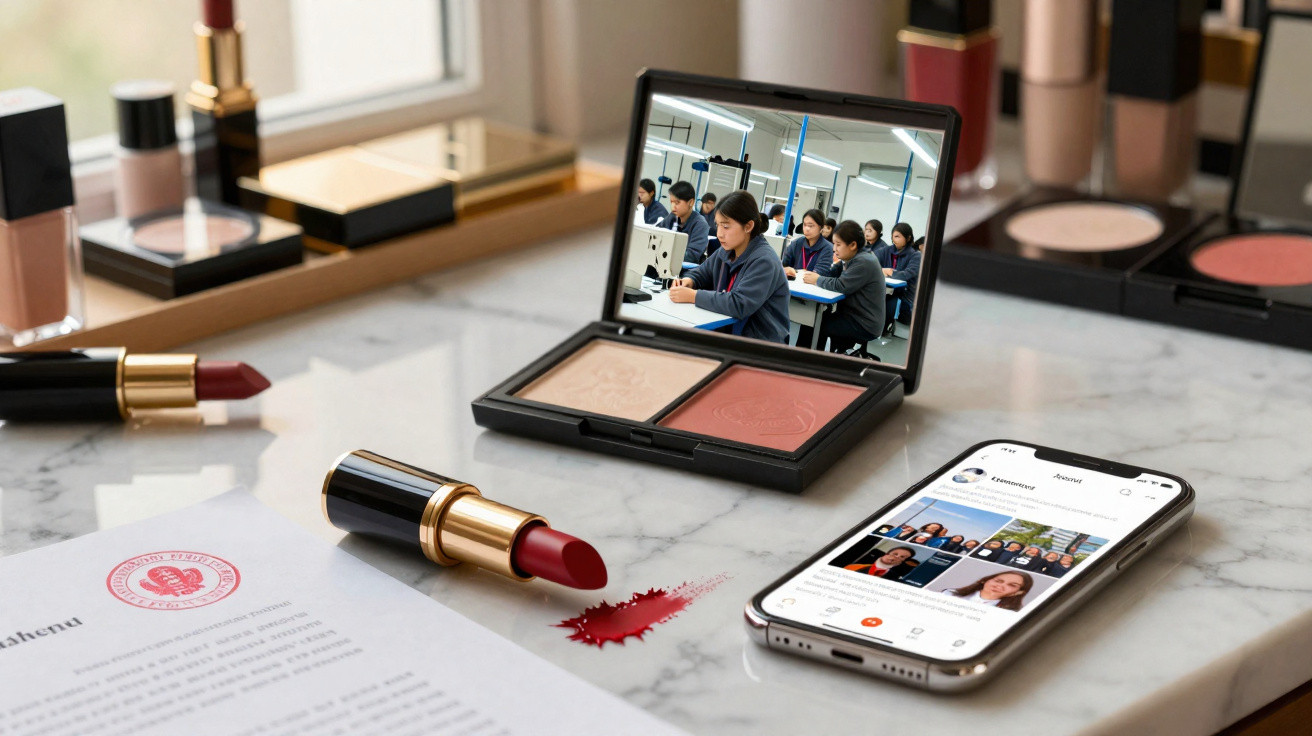
At 8:47 a.m., the shutters at the flagship boutique on a polished London street remained firmly down. A handwritten “closed for inventory” notice fluttered in the wind, stuck across a gold-embossed logo which, only the previous evening, had represented aspirational luxury and Instagram fantasies. Several puzzled regulars lingered on the pavement, phones in hand, reading the torrent of alerts that had transformed their favourite makeup brand into an apparent crime scene.
Then the push notifications arrived: employees accuse the brand’s founder of modern slavery. Influencers describe it as a witch hunt. Comment sections erupt.
No one knows where to focus.
At the heart of the chaos, one question thumps more insistently than any other.
Who is really telling the truth?
From viral lipsticks to legal letters overnight
Only a week earlier, the brand had been impossible to escape. There was the heavy glass foundation bottle, chrome bullet lipsticks and velvet-finish compacts styled on marble worktops. Beauty vloggers swatched them as though they were precious finds. Makeup artists quietly suggested this was the label worn by people who “knew”.
Now, those same posts are being overlaid with furious duets, witness accounts and tearful apology clips. The brand name is obscured in certain videos. In others, it is said unmistakably.
A glittering empire, unravelling within a 24-hour news cycle.
The initial trigger was an anonymous thread from a former factory employee. She alleged 16-hour shifts, passports being seized and dormitory-style accommodation locked overnight “for security”. Images of purported contracts began circulating, showing penalties for “disobedience”, deportation threats and pay deductions for toilet breaks.
Within hours, three additional workers at the brand’s overseas suppliers added their accounts, saying they packed those same gleaming highlighters beneath surveillance cameras and barbed wire. One spoke of bruised hands that never fully recovered.
The posts drew hundreds of thousands of likes, while snake emojis overwhelmed the founder’s latest lipstick-launch video.
Then came the reaction against the reaction. Influencers whose careers had flourished alongside the brand stepped forward to support the founder. They characterised the allegations as “exaggerated”, “taken out of context”, “a smear campaign”. One major creator went further, calling it a “witch hunt against a successful woman in beauty”.
Lawyers soon became involved. Statements referred to “third-party suppliers” and “isolated incidents”. PR teams attempted to distance the sleek black-and-gold logo from language as disturbing as modern slavery.
The divide was now absolute: victims against stans, justice against cancel culture, ethics against aesthetics.
The messy truth behind a “clean” luxury image
Every “luxury” label depends on a supply chain. It cannot be captured in a flatlay, which is why most people never encounter it. Behind it are raw-material farms, pigment laboratories, factories, subcontractors and labour brokers who are never featured in a campaign. This is where the allegations are directed.
Modern slavery does not necessarily resemble chains. It may mean a work visa that cannot be retained, wages that are never paid in full, or a dormitory a worker cannot leave without an escort.
You still clock in. You are still classified as “unskilled”.
The workers who came forward allege that recruitment charges left them in debt before they had worked a single shift. One woman said she paid the equivalent of six months’ wages merely to obtain a role at the plant filling the brand’s viral liquid blush. Another alleged she was threatened with “blacklisting” when she requested permission to return home.
Local NGOs, suddenly tagged in social-media threads, said they had received comparable reports from nearby factories, rather than this facility alone. They published anonymous accounts of passports being kept in a manager’s safe, supposedly “for convenience”. The identical wording appeared in old HR emails leaked overnight.
From the outside, this is often what an “isolated incident” looks like.
For influencers, the situation is less clear-cut. Some truly say they were unaware. Others concede they overlooked rumours because the PR packages were exceptional and affiliate codes brought in too much money. A subdued panic has set in: old posts are being removed, captions revised and “I didn’t know” videos recorded.
Let’s be honest: almost nobody reads every page of a brand’s ethical sourcing report before uploading a glamorous tutorial.
The founder, formerly celebrated as a “self-made visionary”, now faces the most difficult scrutiny imaginable. Was she uninformed, negligent or complicit? Or has she been caught in a system designed to reward those who ask the fewest questions?
How consumers, workers, and influencers are rewriting the rules
The first change is remarkably modest: people hesitate before pressing “add to cart”. For many beauty enthusiasts, a rapid search for “[brand name] + controversy” has become part of the purchasing process. Some are assembling public spreadsheets identifying brands with transparent supplier audits, those that avoid answering questions and those that say nothing at all.
Others are discreetly removing products from their routines, finishing what they already own while declining to buy again. There is now an uncomfortable feeling when looking in the bathroom mirror.
That lipstick still looks brilliant. Its backstory does not.
Consumers are also becoming better at recognising warning signs in corporate statements. Broad posts saying “we’re deeply concerned” ring empty when workers describe sleeping in overcrowded dormitories watched by security cameras. More people are asking: Who carried out your audit? Was it independent? What did you do once problems were identified?
We have all experienced it: the point at which a beloved product suddenly feels contaminated, leaving you unsure whether to bin it or retain it as a reminder.
Influencers are confronting their own reckoning. Some promise to reject partnerships unless suppliers are transparent. Others quietly erase old sponsorship disclosures, hoping the algorithm moves on.
Workers’ voices, once pushed to the margins, are now directing the story. NGO representatives describe a new level of co-operation between activists, whistleblowers and selected creators prepared to use their platforms. One medium-sized beauty YouTuber uploaded a 40-minute investigation into the allegations, giving the last 10 minutes to an anonymous factory worker’s recorded testimony.
“I spent years showing people how to blend eyeshadow,” she says in the video. “Nobody taught me how to read a labor contract. I’m learning now, out loud, because silence clearly helped build this mess.”
Some readers are now making their own checklists before purchasing from prestige brands:
- Find the brand’s latest sustainability or ethics report.
- Seek clearly identified factories and countries rather than vague “global partners”.
- Check whether independent watchdogs have raised concerns about the brand or its suppliers.
- Pay attention to how quickly, and how precisely, a brand responds when workers speak out.
- Follow creators who consistently address ethics, rather than launches alone.
This “due diligence” may seem tiring for a lipstick, but that is the reality now.
When beauty, power, and responsibility collide
The downfall of this luxury makeup brand is not merely a scandal within beauty. It is a test of how far people are prepared to go in matching their routines to their values. Some leave altogether, promising to “only buy ethical”. Others dismiss the issue, arguing that every major brand has a dirty secret if examined closely enough.
Between those positions is a quieter group attempting something more demanding: remaining part of the discussion, raising difficult questions and rejecting simplistic answers.
The founder’s supporters continue to call it a witch hunt. They cite online pile-ons, inaccurately reported details and the genuine human consequences of public shaming. They are not wholly wrong. Mob justice is no substitute for labour inspections or court proceedings. But without public anger, those inspections seldom happen in the first place.
This is the grey area that remains: a world in which call-outs can ruin someone’s livelihood overnight, while silence can slowly ruin lives away from the camera.
Beauty has always concerned appearances: perfect skin, immaculate packaging and a logo signalling that you belong. Now that polished exterior is breaking apart, revealing something chaotic, human and profoundly unsettling.
Some people will keep scrolling in search of the next launch. Others will remain with the discomfort. They will question how a “clean, cruelty-free, inclusive” brand could allegedly be involved in conduct resembling coercion and abuse. They will consider where responsibility falls: with a founder, factory manager, government, YouTuber or shopper.
The answers are not straightforward. They never were going to be.
| Key point | Detail | Value for the reader |
|---|---|---|
| Reading beyond the hype | Reviewing a brand’s ethics and worker reports, rather than campaign imagery alone | Supports purchases that reflect personal values without depending on PR spin |
| Understanding “modern slavery” | Coercive contracts, debt bondage and restricted movement within polished supply chains | Provides language for identifying abuse that does not match old textbook images |
| Using your influence, big or small | Sharing verified information, elevating workers’ voices and asking questions publicly | Makes passive consumption a source of pressure for improved practices |
FAQ:
- How can a luxury brand be linked to modern slavery? High prices do not ensure ethical production; many premium labels still depend on outsourced factories where labour is inexpensive, inadequately monitored and tightly controlled.
- What does “modern slavery” usually look like in beauty supply chains? It commonly involves debt bondage, confiscated passports, excessive working hours, deportation threats and housing linked to employment, making it difficult for workers to leave.
- Are influencers legally responsible when brands they promote are exposed? Usually not, unless they knowingly make false claims, although their standing and their audiences’ trust may be damaged over the long term.
- What can I do if I already own products from the accused brand? Some people give away unopened products, others use what they have while ceasing future purchases, and many direct later spending towards brands with clearer transparency.
- How do I find brands that treat workers better? Look for independent certifications, third-party audits, comprehensive supplier lists and brands that respond quickly and specifically when labour concerns arise.


Comments
No comments yet. Be the first to comment!
Leave a Comment