
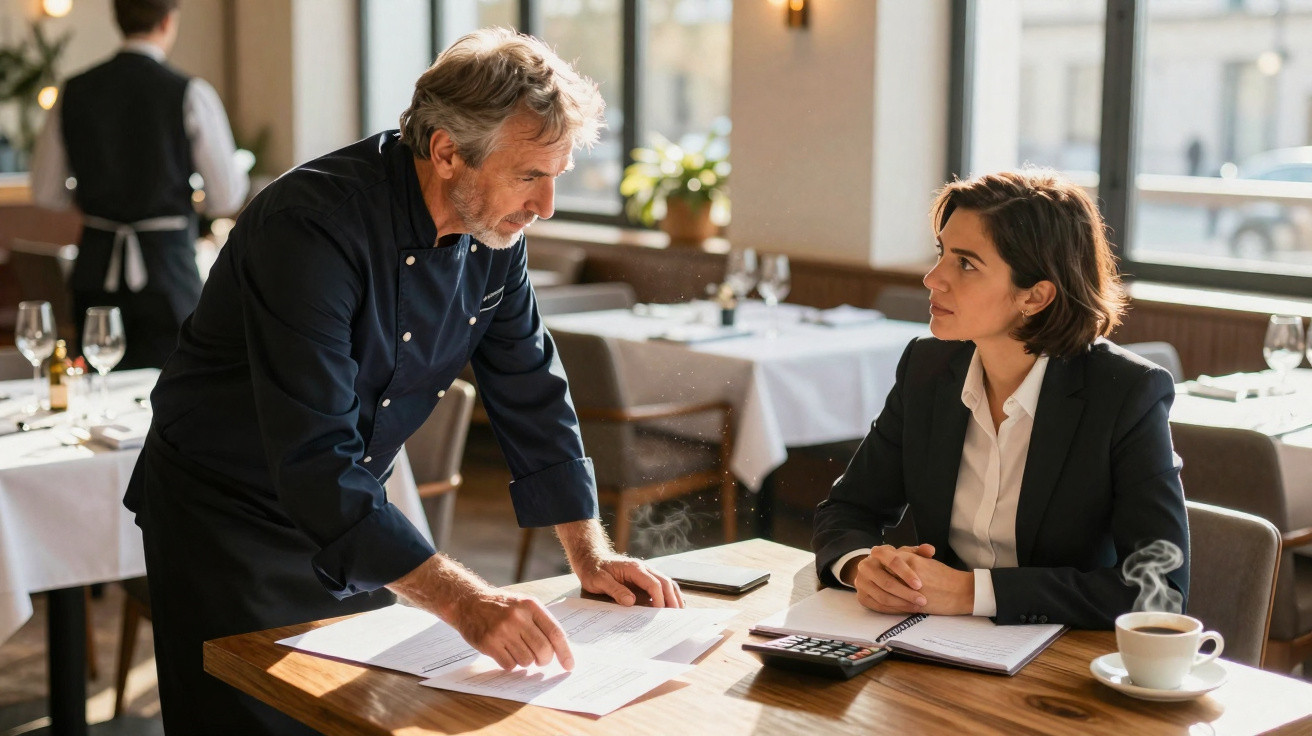
Fresh, hot plates are leaving the kitchen, customers are returning and service finally appears to have found its stride. Yet behind the counter, restaurateurs in Lot-et-Garonne face another reality: looming deadlines, bank applications and renovation bills that must be paid before they can enjoy the benefits of this revival. Philippe Etchebest visited their restaurant, bringing his forthright approach, angry outbursts and the energy that can sometimes get a team back on its feet. Customers responded positively. However, in hospitality, a busy dining room does not always reassure those controlling the purse strings. The hardest part was not visible on the plates. That is where the story takes a turn.
Philippe Etchebest restored momentum, not bank credit
When Philippe Etchebest walks into a struggling restaurant, the scene is often familiar: a weary team, entrenched routines and a kitchen that no longer has much of a story to tell. In Lot-et-Garonne, his visit helped bring order back, sharpen the offer and give fresh impetus to restaurateurs who had almost run out of it. Diners welcomed the changes, sometimes with the simple yet hugely meaningful words: “We’ll be back.” In a small town, this kind of word of mouth can make all the difference. It brings bookings, but also restores a degree of confidence.
Following the programme, the restaurant received renewed attention. Local residents came to see what had changed, curious viewers booked after recognising the venue on screen, and social media spread photographs of the new dishes. This kind of exposure can fill a reservations book for several weeks. Yet the restaurateurs also had to confront a far less photogenic issue: the funding needed to continue, pay operating costs and strengthen cash flow. A bank does not assess a television-induced emotional response. It considers security, figures and risk.
That is the harsh paradox of this experience: customers did not have the final say, even though they endorsed the work achieved. A restaurant can rediscover its identity, improve its welcome and appeal to diners again while remaining financially vulnerable. Suppliers, rent, wages, energy bills and repayments allow very little breathing space. A lively dining room does not always mean a business has been saved. We all know that moment when we think good news will solve everything; in real life, it may only solve part of the problem.
In a restaurant, the real risk often begins after service
For restaurateurs, the first practical step is to examine cash flow head-on, even when the figures make them want to close the ledger. They need to know what is coming in, what is going out and when, week by week. Support from an accountant, a chamber of commerce or a specialist adviser can help separate a temporary difficulty from a deeper imbalance. The aim is not to produce spreadsheets for their own sake. It is to be able to speak to the bank with precise information, a quantified requirement and a credible plan.
A common mistake is waiting until the restaurant is busy again before arranging a meeting with the bank. It is understandable: nobody wants to reveal their concerns while already trying to keep up appearances for customers. However, the earlier discussions begin, the more options are available. Rescheduling repayments, credit mediation, local support and negotiations with certain creditors: none of these routes is a miracle solution, but they can create some breathing room. Let us be honest: nobody truly does this every day. Running a kitchen and managing a financing plan are two different jobs.
The involvement of a well-known chef can provide a springboard, provided the media spotlight is converted into lasting habits. What works after filming must be retained, without trying to recreate a television programme every evening.
“The real restart begins when the cameras have gone and the accounts must stand up on their own.”
- Monitor actual bookings, rather than social media reactions alone;
- Work out the cost of every dish before revising the menu;
- Prepare a clear bank application setting out costs and forecasts;
- Maintain an easy-to-understand offer suited to the area and its local customers.
Customer support remains valuable, even when the bank decides
This Lot-et-Garonne story resonates because it goes far beyond the circumstances of one restaurant. Behind every independent venue, there is often a couple, a family, employees who know regulars by name, and local producers who rely on the orders. Seeing tables fill up after Philippe Etchebest’s visit must have brought immense relief. Then the bank’s response delivered a brutal reminder: hospitality operates on tight margins and cash flow. Visible success does not always reveal the full economic picture.
Customers are not powerless, however. Returning out of season, booking rather than simply saying they will call in, and choosing a meal rather than grabbing a quick coffee: these actions matter in a restaurant’s day-to-day life. Loyalty is also measured on a rainy Tuesday, not just on the evening when everyone wants to try the place they saw on television. That relationship cannot replace a bank decision, but it adds value to a business and can sometimes support a recovery when one becomes possible.
This restaurant’s experience also highlights the limits of rapid transformation narratives. A programme shows a crisis, a reorganisation and a revival in a matter of days; reality unfolds over months, and sometimes years. In this episode, the bank had the final say, not the customers won over by the new cooking. That does not erase the work completed or the affection built around the restaurant. Above all, it raises a question that many small establishments know only too well: how can a good idea be given the time to become a genuinely robust business?
| Key point | Detail | Added value for the reader |
|---|---|---|
| Philippe Etchebest effect | A television appearance can attract new customers and revive a restaurant’s image. | Understand that visibility is a lever, not a financial guarantee. |
| Bank decision | Banks primarily assess cash flow, security and repayment capacity. | Better understand why a loyal customer base is not always enough. |
| Useful response | Anticipate difficulties with a quantified application and regular spending monitoring. | Identify practical actions before the situation becomes irreversible. |





Comments
No comments yet. Be the first to comment!
Leave a Comment