
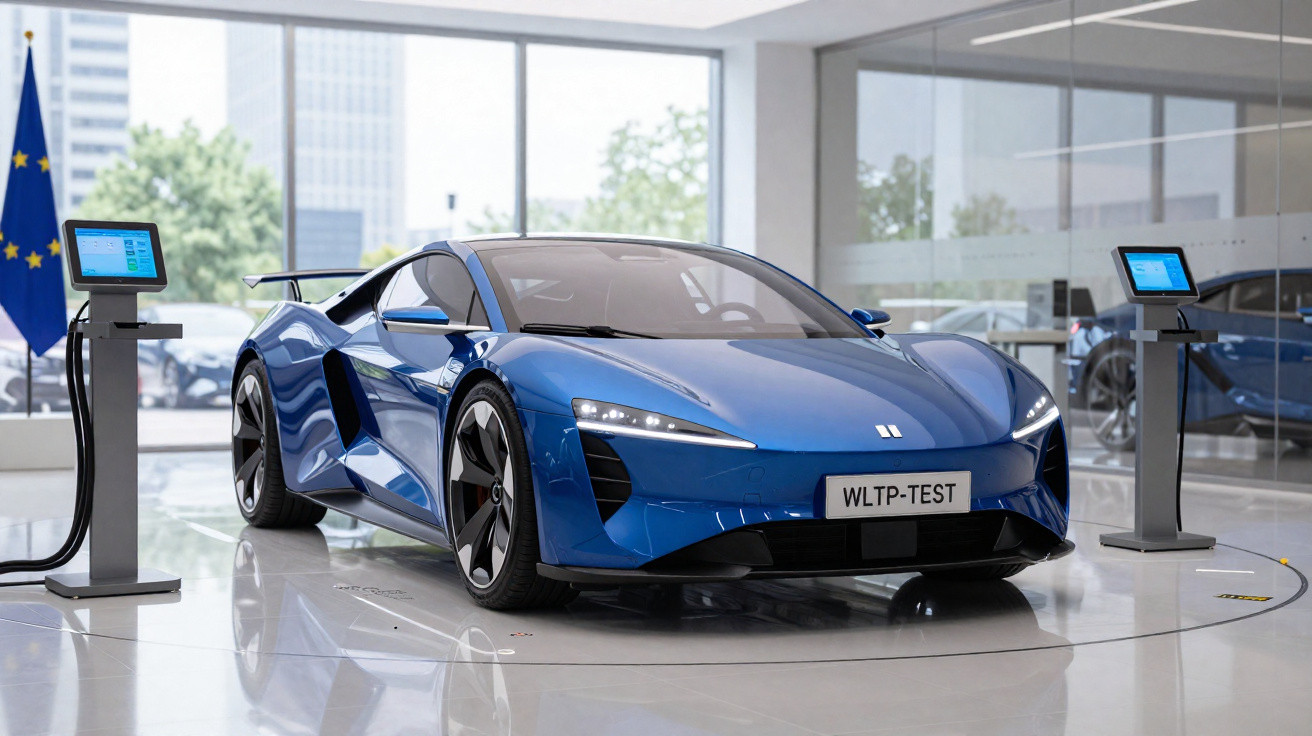
The European Commission has reportedly found evidence that CO2 emissions test results may have been manipulated. In a five-page briefing note that was not made public but was seen by the Financial Times, the Commission alleges that car makers have artificially increased CO2 figures.
The industry is undergoing a critical shift from the NEDC cycle to WLTP. It was under the stricter WLTP procedure that the European Commission identified irregularities after examining 114 data sets from type-approval files submitted by manufacturers.
The apparent manipulation involved changing the operation of certain systems. Examples include disabling the start-stop system and applying different, less efficient gear-change strategies, both of which increase emissions.
According to the EU, the test data from two particular cases provide even clearer evidence. The tests were begun with the vehicle battery almost flat, making it virtually impossible not to infer deliberate distortion. This forced the engine to use more fuel to recharge the battery during testing, naturally producing higher CO2 emissions.
The briefing states that manufacturers' declared emissions were, on average, 4.5% higher than those recorded in independent WLTP tests, while in some instances they were as much as 13% higher.
Why are CO2 emissions higher?
At first sight, deliberately increasing CO2 emissions seems illogical. This is especially so because, in 2021, manufacturers will have to achieve average CO2 emissions of 95 g/km (see box). Reaching that limit has become more difficult, both because of Dieselgate and because sales of SUV and crossover models have risen rapidly.
In the wake of Dieselgate, the scandal substantially reduced diesel sales. Manufacturers had relied heavily on diesel powertrains to meet the mandated reduction targets, so the shift towards petrol engines - which consume more fuel and generate more emissions - followed.
SUVs also do nothing to help reduce emissions, as their aerodynamic and rolling resistance figures are higher than those of conventional cars.
Why increase CO2 emissions?
The explanation is set out in the Financial Times investigation and in the official briefing seen by the newspaper.
The WLTP testing protocol must be viewed as the basis used to calculate the European car industry's future emissions-reduction targets for 2025 and 2030.
For 2025, the target is a 15% reduction relative to CO2 emissions in 2020. By reporting allegedly manipulated and artificially inflated values in 2021, the targets for 2025 would become easier to meet, even though regulators and manufacturers had not yet agreed those targets.
Secondly, this could demonstrate to the European Commission that the required targets cannot be met, giving manufacturers greater negotiating leverage when setting the new emissions limits, which would be less ambitious and easier to achieve.
For now, the European Commission has not identified the manufacturers alleged to have manipulated emissions type-approval test results.
Source: Financial Times
Image: MPD01605 Visualhunt / CC BY-SA






Comments
No comments yet. Be the first to comment!
Leave a Comment