
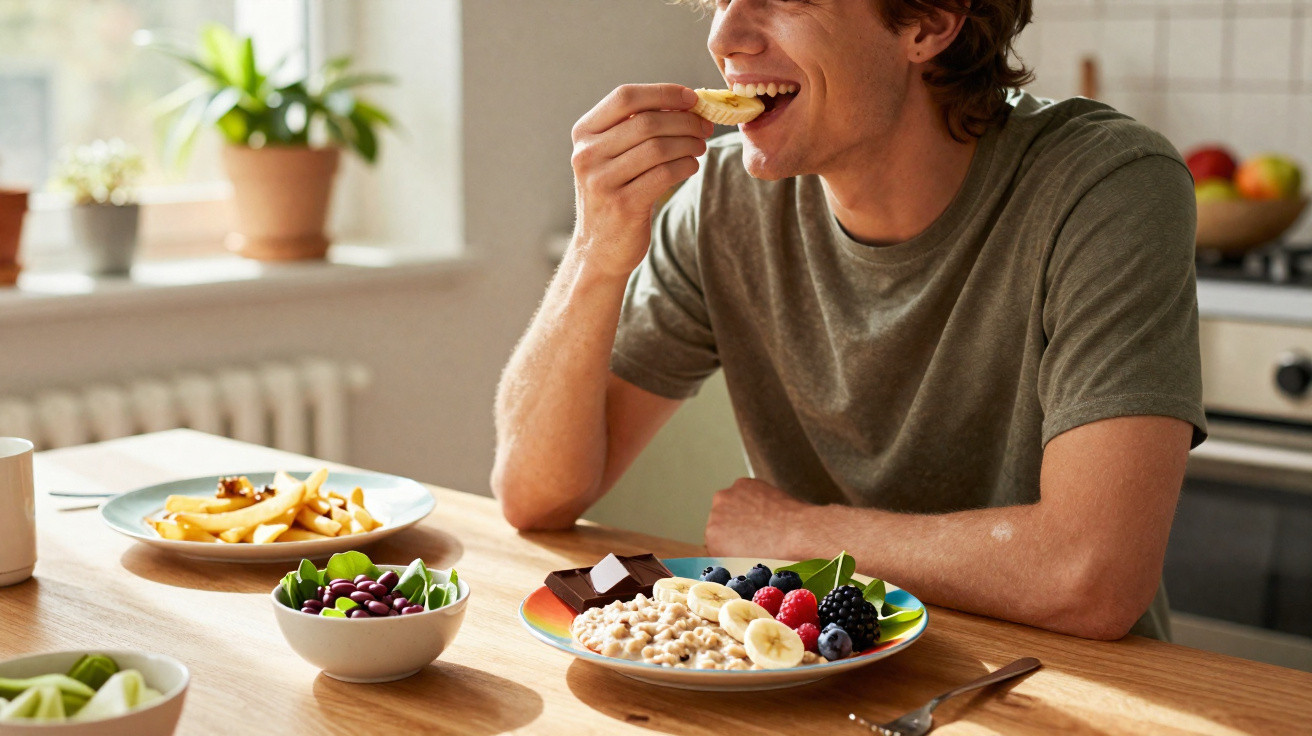
There is a moment most of us know: you arrive home in the evening completely drained, with the odd feeling that the fridge is judging you.
You have no energy to cook, no desire to go out, only that dull tiredness settling behind your eyes. An open packet of biscuits sits on the coffee table while your phone scrolls almost by itself. Somewhere in the middle of it all, an uncomfortable question nags away: is what I eat helping me, or is it making me feel even worse?
A woman I met in London once told me: “I used to think food was just calories. Actually, it’s a kind of emotional chemistry.” She was right. For several years now, neuroscience and nutrition have been telling us much the same thing: what we put on our plates communicates directly with our brains. Sometimes it whispers. At other times, it shouts.
What if some familiar everyday foods could act as a gentle reset for our mood?
How everyday foods quietly shape your mood
Step into any supermarket and the choice seems limitless. There is colourful packaging, “superfood” claims, low-fat promises, and protein labels on everything from yoghurt to cereal bars. Yet beneath that clamour is something far simpler: every mouthful sends a chemical signal to your brain. A handful of nuts, a banana or an overly sweet coffee are not having the same conversation with it.
Your brain has particular requirements. Although it uses glucose for fuel, it also relies on amino acids, healthy fats, vitamins, minerals, fibre and water. Give it straightforward, consistent nourishment and it is more likely to remain settled. Give it nothing but instant hits and sharp peaks, and the emotional result can resemble a rollercoaster. That is why certain breakfasts can leave you unexpectedly on edge by 11 am, whereas others soothe rather than stimulate.
In 2022, a large UK survey examined people’s diets alongside their self-reported mood during a typical working week. The trend was stark. People who missed breakfast or ate only something ultra-processed reported greater anxiety, more irritability and afternoon slumps described as “hitting a wall”. Those who began the day with whole grains, fruit and a protein source said they felt “more patient” and “less reactive”, even when work was stressful.
This was not about immaculate diets or green smoothies. It concerned ordinary foods eaten in ordinary lives: a bowl of porridge with berries instead of two slices of white toast with jam; plain yoghurt and nuts rather than a pastry eaten on the move. Minor adjustments, noticeable effects. The shift was not limited to energy levels, but extended to the emotional feel of the whole day.
There is a sound reason for this. Eating highly refined, sugary foods causes blood sugar to rise rapidly before falling away. As it drops, the body releases stress hormones including adrenaline and cortisol. That may register as sudden low mood, impatience, or the peculiar frazzled sensation that everything and everyone is “too much”.
Foods high in fibre, protein and healthy fats, on the other hand, slow down digestion. They provide the brain with a gradual stream of fuel rather than a rush. Consider oats, lentils, chickpeas, nuts, seeds, eggs, plain Greek yoghurt and brown rice. Include brightly coloured vegetables and fruit for antioxidants and B vitamins, and you are directly nourishing the chemical messengers involved in stabilising mood. In scientific terms, these are serotonin, dopamine and GABA. In human terms, they can mark the difference between “I’m coping” and “I’m about to explode”.
Proven everyday foods that lift your mood naturally
One of the most straightforward mood supports, with substantial research behind it, is fermented food alongside fibre that feeds the gut. A healthy gut microbiome creates substances that communicate directly with the brain through what neuroscientists call the gut–brain axis. In practical terms, your lunch can quietly turn your stress response up or down in the background.
Add a spoonful of sauerkraut to a sandwich. Have a small pot of live yoghurt and a banana for an afternoon snack. Stir a little kimchi into leftover fried rice. They may not be glamorous or Instagram-worthy every day, but they can be highly effective. Combine them with fibre-rich foods such as oats, beans, lentils, apples or carrots, and you give microbes that reduce inflammation a supportive environment. Lower inflammation can mean less brain fog and fewer emotional fluctuations.
Let’s be honest: hardly anyone manages this every single day. People miss meals, eat at their desks, and grab whatever is nearest when a meeting overruns or a baby will not sleep. That is real life. The aim is not to become someone who prepares quinoa salads in glass jars every Sunday for ever. It is to establish a few default choices that gently steer your mood in a better direction on most days.
Think about substitutions rather than dramatic overhauls. Twice this week, replace your usual mid-morning biscuit with a handful of mixed nuts and a piece of fruit. On three mornings out of seven, swap sugary breakfast cereal for porridge. Turn one takeaway pizza night into a quick omelette with cheese, tomatoes and spinach. These are modest, almost unremarkable choices, but together they alter the emotional texture of your week.
As one psychiatrist told me over coffee in Bristol:
“We still underestimate how much the small, daily foods affect the background noise of our minds. We’re busy searching for big solutions and ignoring the three chances a day we already have on our plate.”
Here are several mood-friendly everyday choices that repeatedly appear both in research and in real kitchens:
- Breakfasts combining fibre and protein: oats with nuts, eggs on wholegrain toast, or yoghurt with seeds.
- Sources of omega-3 fats: oily fish such as salmon or sardines twice weekly, or ground linseed and walnuts for people eating plant-based diets.
- Fermented foods: live yoghurt, kefir, kimchi, miso and unpasteurised sauerkraut in small daily portions.
- Colourful foods on your plate: berries, leafy greens, peppers, carrots, or frozen vegetables if fresh produce feels like too much effort.
- Consistent caffeine: have coffee after food rather than on an empty stomach, and set an afternoon cut-off time.
None of this has to be perfect before it starts helping.
Rethinking comfort food without losing the comfort
Comfort food has a dreadful reputation among nutrition experts and a brilliant one with almost everyone else. There is a reason you reach for mashed potatoes, cheesy pasta, buttered toast or a large bowl of ramen when the day falls apart. Warm, soft, carbohydrate-rich foods temporarily raise serotonin levels. They genuinely comfort us. The answer is not to resist that urge, but to build it into meals that support your mood for longer than 20 minutes.
Take the classic exhausted-evening dinner: an enormous plate of white pasta with sauce from a jar. It is quick, easy and numbing. Now make a small adjustment. Choose wholewheat pasta, or use half lentil pasta. Stir a handful of frozen spinach and some tinned sardines or chickpeas into the sauce. Grate cheese over it, because joy matters. You have turned a blood-sugar spike into a more stable comfort bowl with protein and omega-3 fats, without changing the ritual of eating something warm while watching a silly series.
A frequent trap is treating sugar as emotional first aid throughout the day: a biscuit with mid-morning coffee, a chocolate bar at 4 pm, ice cream eaten from the tub at 10 pm. There is no moral failing in this, only a pattern that gradually teaches your brain to translate “I feel off” as “I need sugar now”. If it becomes your primary coping method, the crashes start contributing to the problem.
Rather than prohibit anything, retain the comfort while changing the pattern. Eat something sweet alongside a food that slows digestion: dark chocolate with a small handful of almonds, or ice cream after a proper meal rather than in place of dinner. If you know the 4 pm slump is punishing, plan a snack you genuinely enjoy for 3.30 pm: Greek yoghurt with honey, peanut butter on sliced apple, or hummus with crackers. You are not “being good”; you are heading off the meltdown before it arrives.
A nutritionist I spoke with in Manchester was direct about it:
“If your entire emotional toolkit is caffeine, sugar and scrolling, of course your mood feels fragile. Food isn’t therapy, but it can make therapy’s job a lot easier.”
A few quick comfort-food changes can preserve the emotional hug while reducing the crash:
- Craving crisps? Have a small bowl alongside a sandwich containing protein and salad, rather than making them your only “meal”.
- Love toast? Choose seeded wholegrain bread and add nut butter or cheese to make it more sustaining.
- Ordering pizza? Serve it with a side salad dressed with olive oil and nuts, or add extra vegetables and tinned tuna before baking.
- Fancy something sweet at night? Heat frozen berries with a spoonful of yoghurt and a crushed biscuit, instead of eating half a packet.
- Having a large weekend brunch? Pair pancakes with eggs and fruit to avoid the afternoon mood hangover.
These are small gestures of care rather than punishments. They build up quietly, especially on the days when your mental weather is at its most delicate.
Food will not fix everything. There are days, weeks and entire seasons when grief, burnout, hormones, financial pressure or the news pull your mood down. A bowl of porridge cannot compete with those forces on its own. Even so, research continues to show that people who eat more whole, varied and colourful foods tend to have fewer severe lows and a greater ability to recover when life becomes difficult.
What stands out is just how ordinary the useful foods are: eggs, beans on toast made with proper wholegrain bread, frozen mixed vegetables thrown into a pan with olive oil, tinned fish, bananas, apples, walnuts, natural yoghurt and dark chocolate. Miracle products are not required. If there is a miracle, it lies in repetition: quietly choosing the option that supports tomorrow’s mood, not only tonight’s craving.
| Key point | Detail | Benefit for the reader |
|---|---|---|
| Stabilise blood sugar | Choose fibre, protein and healthy fats over rapidly absorbed sugars | Fewer energy slumps and less sudden irritability |
| Feed the microbiome | Include fermented, fibre-rich foods in your everyday diet | Reduced inflammation and a steadier mood during the week |
| Reinvent comfort food | Keep comforting meals while adding more nutrients | Retain the pleasure while limiting emotional crashes |
FAQ
- Can food really change my mood, or is that just a trend? Food will not replace therapy or medication, but many studies show that dietary patterns affect inflammation, neurotransmitters and energy levels, all of which influence how you feel from day to day.
- How quickly might I notice a difference after changing what I eat? Some people find their energy becomes more stable and mood crashes lessen within a few days; deeper improvements in overall mood generally emerge after several weeks of more regular eating.
- Do I need costly “superfoods” to boost my mood? No. Oats, beans, frozen vegetables, eggs, tinned fish, fruit and nuts provide most of what your brain needs, without the expense or marketing hype.
- What if I have a history of emotional eating? A gentle framework can help: regular meals containing protein and fibre, snacks you enjoy planned in advance, and no strict food bans, which often backfire emotionally.
- Is coffee bad for my mental health? Moderate coffee can be perfectly fine for many people, but it is best consumed after food and not too late in the day; if you feel anxious or sleep poorly, cutting down caffeine may noticeably calm your system.






Comments
No comments yet. Be the first to comment!
Leave a Comment