
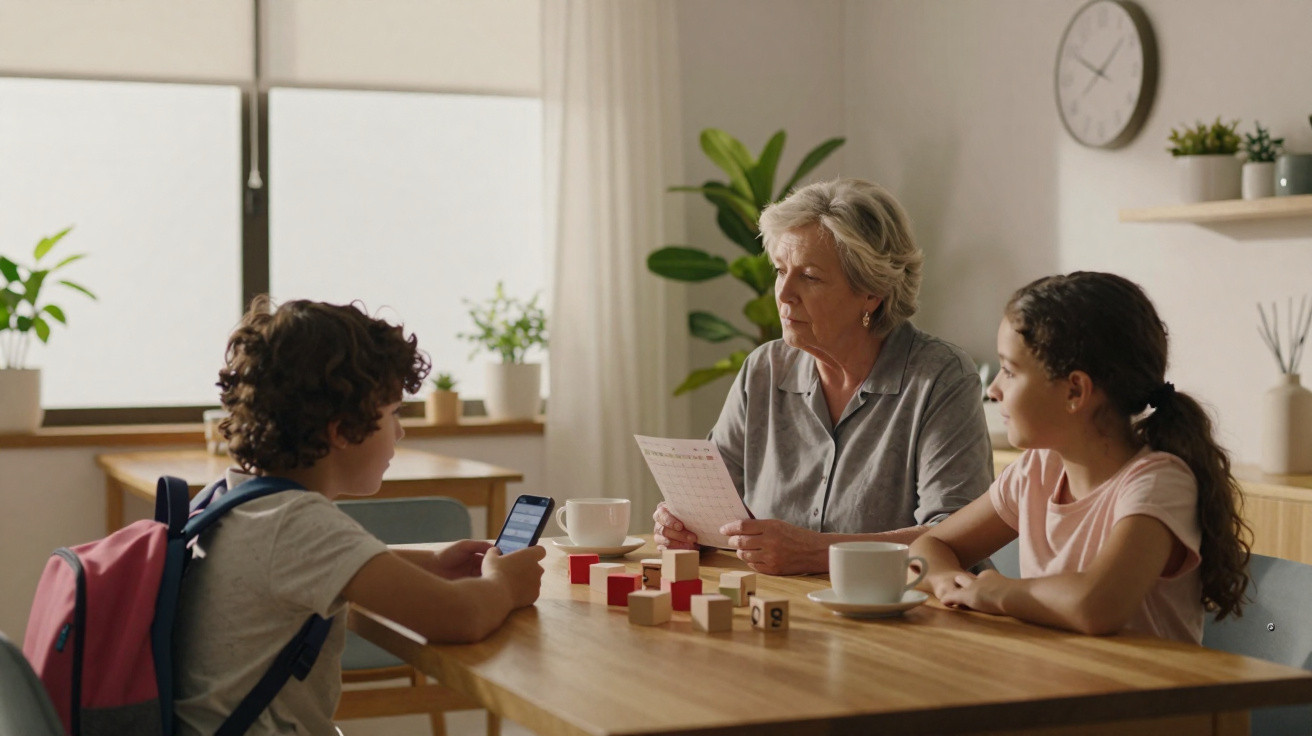
The argument began over roast potatoes.
Emma asked her mum whether she could look after the baby “just one afternoon a week”. Her 64-year-old mother set down her fork, met her gaze across the table and replied, quietly but firmly: “No. We raised our kids. We did our time.”
The entire room went still. Emma’s brother rolled his eyes, while her dad became suddenly absorbed in the gravy. What Emma had considered a modest request exposed a simmering conflict that had been growing for years.
Across the world, an increasing number of grandparents are drawing a similar boundary. They adore their grandchildren, happily buy presents, attend birthdays and send money at Christmas. Yet nappies, school runs and days off for sick children? Those are another matter.
More importantly, they are no longer unwilling to say so openly.
“We did our time”: the quiet revolt of grandparents in their sixties
From living rooms in London to those in Los Angeles, one phrase is surfacing in family disputes: “We did our time.”
It is rarely yelled. More often, it is delivered wearily after the third appeal to “help just a bit more” with the grandchildren.
These are people who spent their thirties balancing two jobs, difficult managers and toddlers with chickenpox. Now, at 60 or 65, they are at last beginning to breathe again. There are holidays they delayed, hobbies they abandoned and bodies that hurt more than they care to acknowledge.
They do not want to embark on another twenty years of unpaid childcare. And their refusal is beginning to divide family dinner tables.
Consider Janet and Paul, both 62 and living in Manchester. Their daughter works long hours in tech, earns a good salary and faces extremely high nursery costs. She asked her parents to cover three days each week to “save money and keep it in the family”.
Janet still has a part-time job, and Paul has a dodgy knee. They already provide one afternoon of care, do pick-ups, go to the playground and handle bath time. By the end of it, they are exhausted and collapse on the sofa. When their daughter pressed for additional help, they refused. She did not speak to them for three weeks.
Surveys lend quiet support to these battles around the kitchen table. In the UK, roughly half of grandparents provide some form of childcare. In the US, one in four grandparents looks after a grandchild regularly. Yet a growing proportion are imposing firm limits - at times offering zero hours - even when their adult children are struggling.
Their reasoning is generally straightforward and uncomfortably candid. Today’s people in their sixties are not like the cardigan-wearing grandparents of their childhoods. They have had careers, divorces and second chances. Many are still repaying mortgages or caring for their own elderly parents.
They also grew up in an era that told them to “sacrifice everything” for their children. Now they watch those children travel, attend therapy and speak about boundaries and work-life balance. Part of them is proud. Another part quietly asks: “So when do I get that?”
For some, declining full-time grandparent duties is not about loving their family any less. It is an act of self-respect later in life. They are choosing Pilates over pick-up time and language lessons over Lego, and they are weary of being made to feel guilty for it.
How families can set boundaries without ruining Christmas
One practical change can transform the situation: replace vague expectations with clear agreements. Rather than an emotional ambush over Sunday lunch, have a calm, almost deliberately dull discussion.
Talk in specific numbers: “We can help on Tuesdays from 3–6pm, plus one Saturday evening a month.” Put it in writing. Approach it as a small family timetable, rather than a favour that can be extended whenever someone asks.
Set out the non-negotiables as well: no last-minute calls at 6am on workdays, no presumed cover for sick days and no guilt when a holiday has been booked. Initially, it may feel impersonal. Soon, it can feel unexpectedly liberating.
When everyone understands the boundaries, there is less conflict about the emotions behind them.
Adult children often make the same error: they request help as though grandparents are a free service with unlimited flexibility. Then they become angry when that “service” refuses.
A small adjustment in language can prevent matters escalating. Rather than saying, “Can you take the baby again? Nursery is so expensive”, try: “Would you be open to helping one afternoon? If not, we’ll find another solution.” It makes space for an honest response instead of emotional pressure.
Grandparents make familiar mistakes too. They agree when they really mean perhaps. They accept an arrangement “just for a few months”, only to discover it has become the permanent expectation. Speak plainly: state the limit clearly and early. It is less painful than an explosive row two years later.
When families eventually speak truthfully, something gentler often sits beneath the anger: both sides are hurt. Grandparents feel taken for granted, while adult children feel deserted. Neither says it plainly, so it emerges as sarcasm over pudding.
“I want to be the fun grandma,” one 63-year-old told me. “Not the exhausted one who secretly resents her own daughter.”
A straightforward mental checklist can keep the conversation humane when feelings run high:
- Ask yourself: “Am I asking, or am I expecting?”
- Explain what you are able to offer, not simply what you cannot.
- Identify your fear: money, burnout, health or loneliness.
- Arrange backup childcare that does not rely on family.
- Agree that ‘no’ can be said without punishment.
Most of us have experienced the moment when someone slams a door after an apparently “small” remark about who provides more help. Sometimes the bravest person at the table is the one who quietly says, “This is too much for me,” and remains there nevertheless.
What this generational clash reveals about modern family life
Behind each grandparent who declines extra hours lies a larger, uncomfortable question: why does modern parenting require so much unpaid support simply to work at all? Pay has not kept pace with rent, childcare or food costs. In many cities, a full-time nursery place for one child costs more than a mortgage.
Families therefore stretch the only resource that seems stretchable: grandparents’ time. It was once called “help”. Now it quietly underpins entire economies.
When a 64-year-old says “No, I won’t do five days a week”, they are not merely replying to their adult child. They are also rejecting a system that assumes older women, especially, will catch everything that slips through the gaps.
There is another dimension as well: the way every generation pictures old age. People now in their thirties and forties often had grandparents who lived nearby, seldom travelled and were available at short notice. That recollection becomes the benchmark.
Their own parents, however, grew up with different expectations. Retirement brochures promised cruises, yoga and long lunches in the sunshine. They did not imagine exchanging school runs for nursery runs.
So when they say “we did our time”, they are defending that vision too. To them, being a grandparent is a role, not a full-time job description. Love, certainly. Complete availability, no.
There is a hidden price when this disagreement becomes a cold war. Parents of young children can feel abandoned, and that is an isolating, heavy emotion. Grandparents can feel criticised for wanting a life beyond family, as though enjoying themselves at 65 is selfish.
Yet when families accept that nobody is arriving to rescue them, a more practical response can take shape. Parents begin properly considering childminder shares, flexible working, career changes or moving closer to support that genuinely exists rather than support they wish existed.
Grandparents who no longer have to defend every boundary often become more giving within limits they have selected themselves. They can attend the school play because they are not the default babysitter.
And somewhere between those two “no’s”, a different form of family loyalty can emerge - one in which love is measured less by hours worked and more by presence that is freely and genuinely wanted.
| Key point | Detail | Benefit for the reader |
|---|---|---|
| Clear boundaries | Turn vague “help” into specific days, times and conditions | Reduces arguments, guilt and last-minute pressure |
| Two-way honesty | Both generations share their limits, finances, health and needs | Helps each side feel heard rather than used or abandoned |
| Plan B childcare | Look beyond grandparents: nurseries, babysitters and swaps | Prevents complete reliance on one fragile source of support |
FAQ:
- Are grandparents obligated to provide childcare? Legally, no. Morally, views vary, but childcare is a choice rather than a contractual duty.
- How can I ask my parents for help without guilt-tripping them? Present it as an invitation with a clear way out: “Would you like to do X? If not, I understand and will sort something else.”
- What if my parents live nearby but never offer any help? Explain what you feel and what you need, clearly and once. Then organise your life around their actual response, not the answer you hoped for.
- Can saying no damage the bond with grandkids? It can if ‘no’ means complete distance. With considered boundaries, many grandparents discover they have more energy to be present and enjoyable when they are with them.
- How do we heal after a big fight about this? Let tempers settle, then discuss the feelings beneath the practical arrangements: fear, exhaustion and regret. Small apologies from both sides often achieve more than grand speeches.






Comments
No comments yet. Be the first to comment!
Leave a Comment