
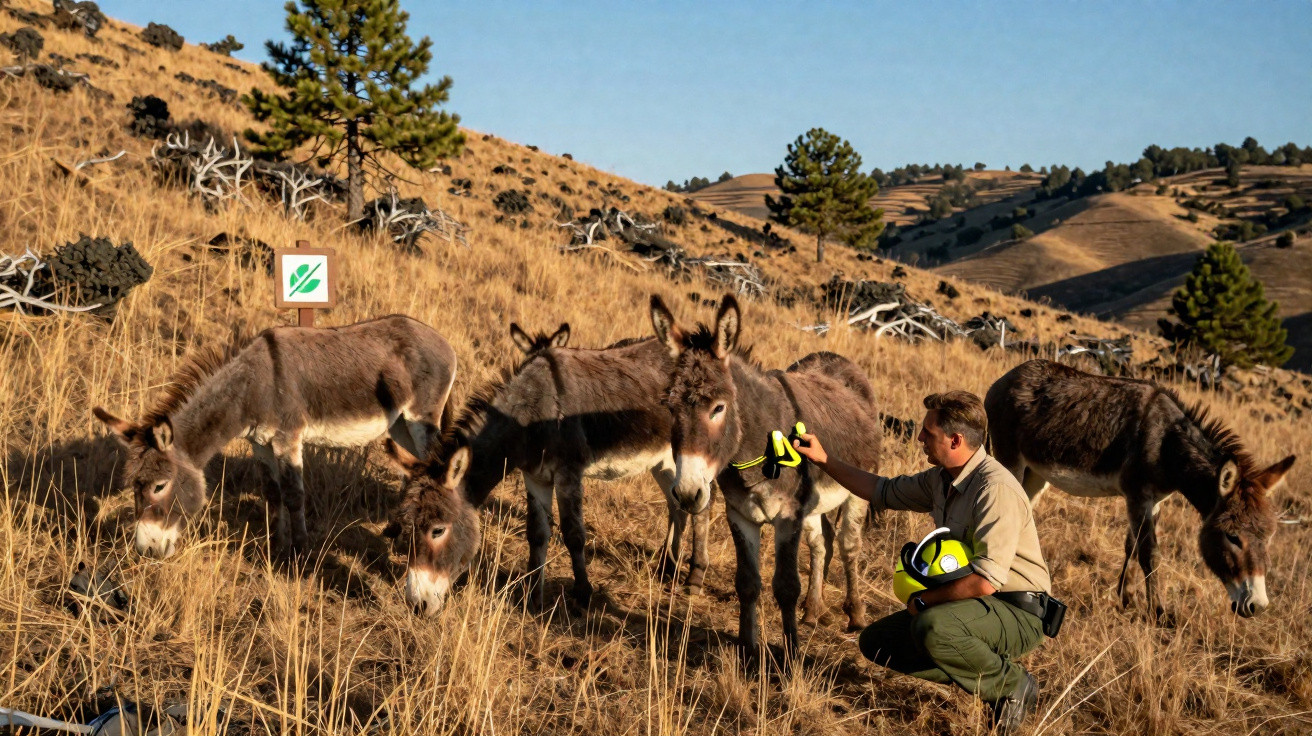
Preventing wildfires in Spain has received unexpected support from rescued animals. Rather than relying on noisy machinery, eighteen animals remove flammable vegetation, forming a natural, effective barrier against forest fires in environmentally protected areas.
How does the donkey wildfire-fighting brigade work?
The scheme operates near Doñana National Park in southern Spain. Every day, the animals roam the area eating dense scrub and dry grass, leaving strips of cleared ground that stop the spread of fire during prolonged dry spells.
This organised routine takes place chiefly from spring through to autumn, when high temperatures dry out wild vegetation. The four-legged workers spend up to seven hours a day grazing intensively, turning grass into organic fertiliser for the native forest soil.
How do large bison help tackle wildfires?
Introducing large animals into rural areas can create barriers against flames, but the presence of these giants has raised… Read more
Why does grazing reduce the risk of wildfires?
The ongoing removal of dry biomass substantially cuts the amount of fuel available in the forest. As animals continually clear low-growing vegetation, flames lose their ability to spread quickly, making immediate control by ground firefighting crews easier.
These grazed strips also act as strategically planned biological firebreaks. The animals can reach uneven ground and slopes where heavy machinery cannot operate, carrying out detailed work that safeguards local biodiversity with extremely low ecological impact.
Below is a video from the Historias de Luz YouTube channel showing these animals grazing:
Who is responsible for organising the initiative?
El Burrito Feliz association oversees the preventive work. Founded to protect abandoned mules, the organisation found that providing environmental services was a way to offer decent shelter and purpose to dozens of rescued animals.
The project also receives ongoing field support from the Mujeres por Doñana collective. These volunteers accompany the animals through their days in the sun, provide veterinary care and ensure fresh water is available so the herd remains healthy while clearing woodland.
Sustainable land-management measures
Elements of ecological grazing
The method used in the region includes several important operational elements:
- Mobile fencing in strategic areas to concentrate grazing;
- A constant water supply provided by community support groups;
- Daily monitoring of plant biomass to ensure containment.
What are the main benefits of this sustainable model?
Using herbivores for forest clearance delivers substantial financial savings for public authorities. While tractors require fossil fuels and costly maintenance, the animals work at minimal cost, supporting ecological conservation and having a direct positive impact on the surrounding environment.
Another important benefit is the rescue and welfare provided to the participating animals. Once disregarded or subjected to mistreatment, the mules now receive community respect, proper nutrition and an active routine, showing that wildlife preservation can go hand in hand with preventive forest safety.
Among the most significant benefits identified in this sustainable forestry practice are:
- Continuous reduction of fuel loads without noise pollution;
- Physical recovery and improved welfare for animals rescued from abandonment;
- Stronger community involvement in forest protection.
How could this solution inspire other forest regions?
The success achieved in Spain offers a practical example for countries vulnerable to severe wildfires. Combining local communities with animal management demonstrates that traditional solutions can be adapted effectively, delivering lasting results without requiring major investment in heavy industrial machinery.
By bringing together compassion and sustainability, initiatives of this kind point to promising ways of achieving environmental balance. Recognising rescued animals as ecological allies strengthens forest protection and encourages new approaches to preventive defence against the effects of global warming in rural areas.






Comments
No comments yet. Be the first to comment!
Leave a Comment