
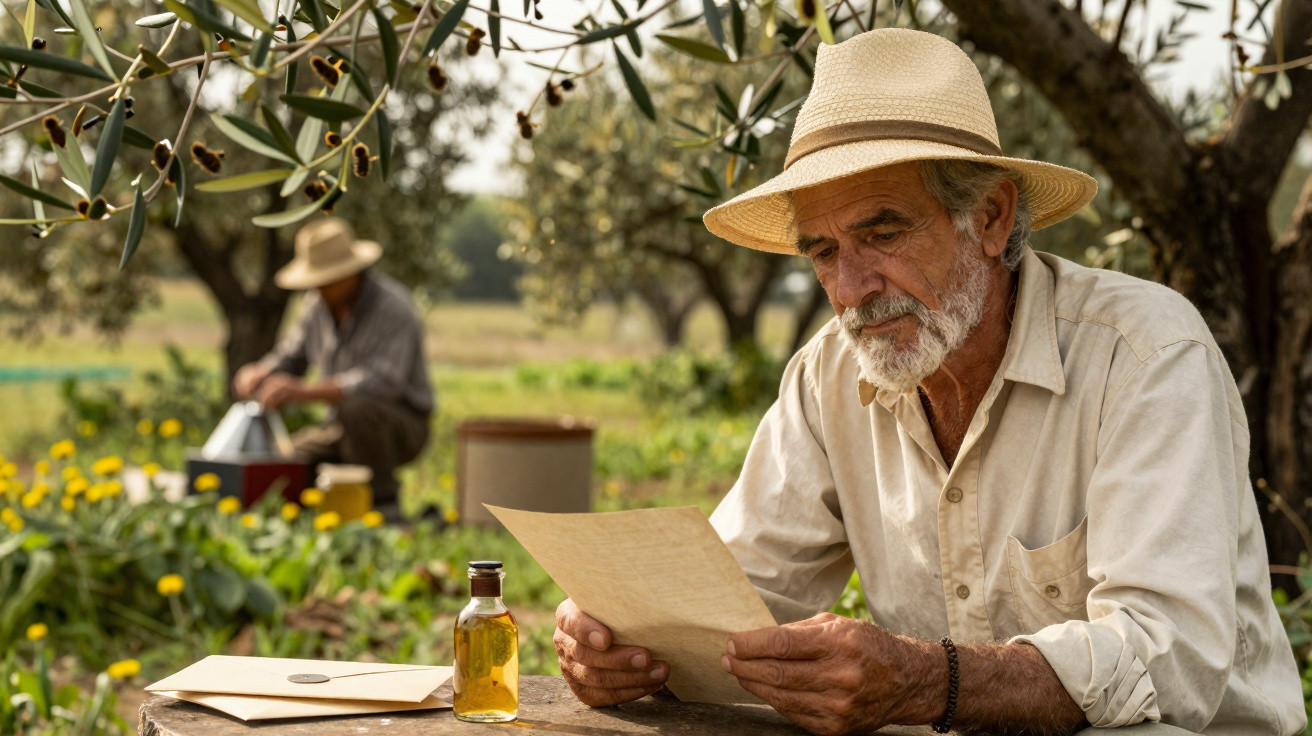
An elderly man moves slowly along the boundary of his field, his hands tucked into his pockets as he watches the beehives catch the final light of the day.
The air carries a steady, subdued buzz, rather like an unseen electricity cable. The hives are not his, he does not trade in honey, and he has never worn a beekeeper’s white protective suit and veil. He simply offered a small corner of his land to a young beekeeper who could not afford a site of his own.
Then a letter arrives from the tax office declaring that he is a farmer. It describes this as a “professional activity”. He gives a short, bitter laugh. “I earn nothing from this.”
The open letter sits on his kitchen table beside an unpaid electricity bill and a jar of honey left as a token of thanks.
The bees can work without pay. He may not be able to.
A quiet favour that turned into a national dispute
It began discreetly, as the sort of neighbourly kindness that usually disappears into the everyday rhythm of rural life. A retired man had a neglected piece of land, while a beekeeper in difficulty needed a secure location for the hives. There was no tenancy agreement and no payment: only a handshake over a wire fence, with the dusty bonnet of an old car between them.
Such arrangements helped sustain countryside communities long before digital forms and tax classifications existed.
Several months later, an administrative comparison of land records and agricultural databases gave the arrangement an unexpected description: agricultural use.
That description brought a more serious consequence - a demand for agricultural taxes and contributions.
In official records, it amounted to a simple reclassification. In his modest home, it felt like a punishment.
At national level, the case could easily have passed unnoticed: one retiree, one field and several dozen hives.
But after local radio covered the story and it then reached social media, it travelled rapidly. Many people recognised themselves in his words: “I just wanted to help.”
Tax specialists, environmental campaigners and farmers’ unions debated on television and radio over what should truly count as “exploiting land”. Politicians were suddenly being challenged to explain why a man who had never sold a drop of honey could be charged as though he operated a business.
Some observers blamed a web of rules intended for large agricultural businesses but applied awkwardly to minor, informal gestures of support.
Was the land in use? Yes. Did the retiree receive anything through a commercial arrangement? No.
This grey area - in which the law identifies an activity while ordinary life sees a favour - became the focus of an angry debate reaching far beyond a single village or field.
When a favour is classified as an “economic activity”
From the perspective of an official behind a desk, the facts may appear straightforward. A parcel registered as agricultural land is placed at a beekeeper’s disposal. Hives are set up, production starts and a resource is used.
Under many tax systems, that alone can be enough to place the landowner within an agricultural value chain, even where no money changes hands.
The real situation, however, was much more personal and precarious. Living on a limited pension, the retiree saw an overgrown section of his property become a thriving, humming ecosystem.
The beekeeper offered no guarantee beyond keeping the area neat and perhaps bringing him an occasional jar of honey.
There were no invoices, contracts or commercial plans. There was only trust, together with the sense of doing something modest for nature at a time when insect populations are declining.
Once the tax office assigns a formal category, though, intention can matter less than that classification.
Officials rely on definitions: where land supports production, it is considered “used”, and that “use” may create obligations.
That is how a gesture intended to support biodiversity can be handled almost as if the owner had let a field to a dairy farmer. The retiree repeats, “I earn nothing from this,” but the system does not operate in those terms. It deals in categories rather than personal accounts.
How people can avoid paperwork arising from a good deed
The episode offers a quiet warning to anyone who has spare land and an instinct to help. Before accommodating beehives, allotment gardens or a friend’s sheep “just for the summer”, it is wise to set out the arrangement clearly.
A short written document confirming that no rent is paid, no profits are shared and that the land user alone is responsible for the activity can make a major difference.
It does not need to be written in complicated legal language. Names, dates and a clear statement are enough: the land is being lent rather than leased, and its owner receives no income.
Where local rules permit it, identifying the beekeeper or other user as the sole operator in agricultural or environmental registrations can ensure that tax scrutiny is directed at the appropriate person.
This may seem overly formal for a friendly favour, but it could be the only protection against a misunderstanding years later.
Many people will know the pattern: you agree to help, and then a brown envelope unexpectedly appears through the letterbox.
On a personal level, that is when embarrassment and anger emerge - the feeling that generosity is being penalised.
Let us be honest: nobody reads the small print of tax rules before lending a piece of land to a neighbour.
The most frequent error is to believe that “no money = no problem”.
Another is to disregard minor notices from the tax office or land registry in the hope that they will disappear. They seldom do.
Speaking promptly with a local farmer, solicitor or tax adviser - even for only half an hour - may prevent years of worry for retirees whose room for error is very limited.
“I didn’t think I was doing anything official,” the retiree told a local journalist. “I thought I was just being kind.”
His words remain both a plea and a warning.
Cases of this kind point to several straightforward, practical habits that may reduce the consequences for anyone considering making land available for bees, gardens or animals:
- Put a brief agreement in plain language in writing - even a handwritten note is preferable to nothing.
- Make explicit that you receive no payment, no proportion of the products and no undisclosed benefit.
- Require the person using the land to manage every registration, permit and declaration in their own name.
- Retain copies of messages, emails and texts that demonstrate the nature of the arrangement.
- When authorities send the first unusual letter, contact someone who understands the system.
A small field and a major question about the society we want
The matter concerns one retired man and a few hives, but it raises unsettlingly broad questions.
Should private individuals who offer space for environmental projects be regarded as contributors to the public good, or as small business operators to be taxed and inspected?
It also reveals a quiet divide between legal terminology and the language of everyday life.
Administrations refer to “effective use”, “fiscal triggers” and “economic value”. People speak about neighbours, favours and avoiding waste of unused land.
On a good day, these two perspectives can align. On a bad one, they clash, leaving a person on a fixed income to carry the consequences.
It is possible to argue that the system is merely performing its role: applying consistent treatment to all land use, closing loopholes and preventing misuse.
But when that approach deters the gestures so badly needed - land for pollinators, space for local food production and opportunities for new farmers - something appears wrong.
On a quiet lane, a man looks at the bees he welcomed in good faith and wonders whether the safest response next time would simply be to refuse.
| Key point | Detail | Why it matters to the reader |
|---|---|---|
| Reclassification of the land | Lending a parcel to a beekeeper may be viewed as a taxable agricultural activity | Understand why a simple gesture can result in unexpected taxes |
| No income does not always mean an exemption | The tax office considers how the land is used, rather than only declared earnings | Avoid assuming you are protected because you earn “nothing” |
| A written record can change the position | A clear, even simple, agreement can direct tax responsibility towards the person actually using the land | Learn how to protect your retirement income while remaining supportive |
FAQ:
- Can lending land for beehives really trigger farm taxes? Yes, in some jurisdictions, any agricultural use of land - even without direct income for the owner - can lead authorities to classify it as a taxable farming activity.
- Does it matter that the retiree never sold honey or took money? It matters morally, but on paper many tax systems focus on how the land is used, not on who pockets the profit, which creates these unfair grey areas.
- How can landowners reduce the risk of being treated as farmers? They can draft a simple agreement making the user solely responsible for production, declarations and income, and clearly stating that no rent or profit is shared.
- Is hosting beehives always a bad idea financially? No. With clear paperwork and advice, it can remain a low-risk act of solidarity and environmental support, instead of becoming a fiscal trap.
- Could cases like this push lawmakers to change the rules? Many observers hope so: high-profile stories tend to force conversations about exemptions and protections for small, non-commercial ecological initiatives.



Comments
No comments yet. Be the first to comment!
Leave a Comment