
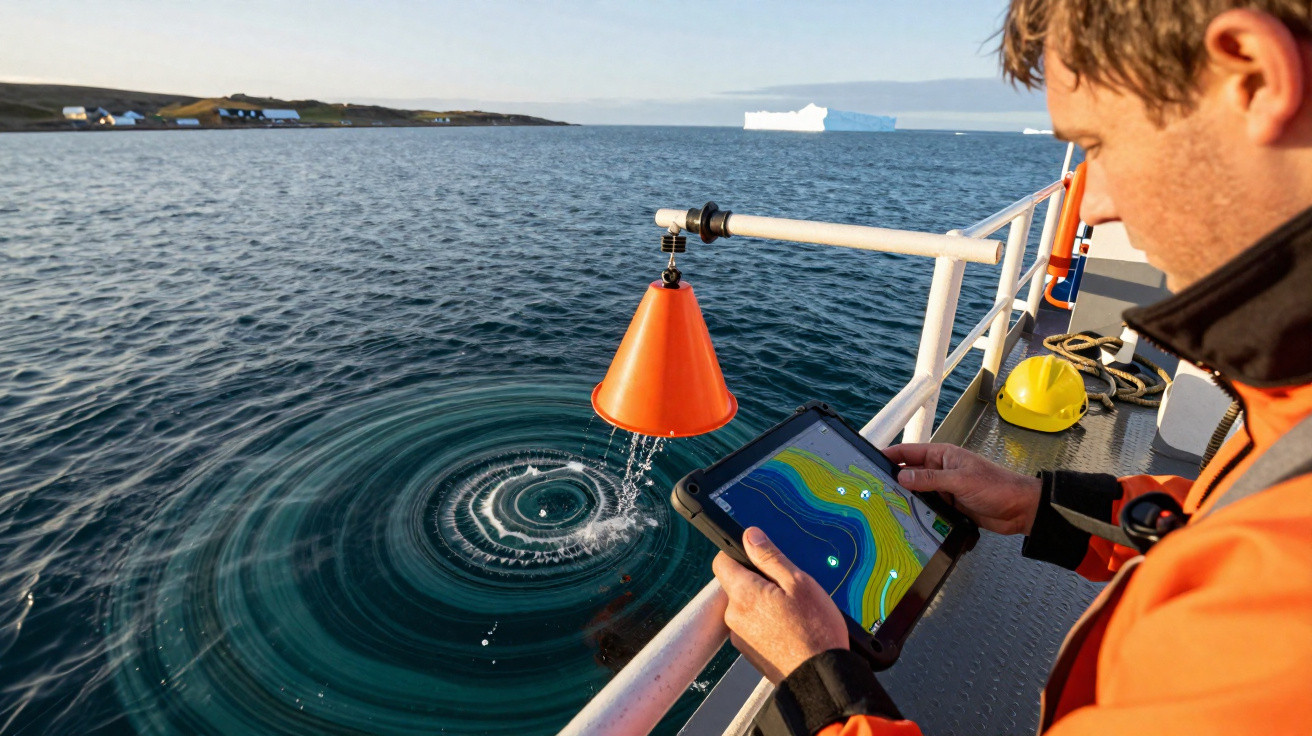
It was one of those British afternoons when the sky could not make up its mind between steel and silver. I stood on a wet Cornish quay, watching a gull harass a packet of chips while the sea gave a soft thud against the harbour wall. Beside me, a fisherman with cold-reddened hands said the mackerel had been “odd” this year-late, then suddenly everywhere, then absent once more. He is no climate scientist, merely a man with a boat, but the water is his calendar, and lately it has been out of time. As I drank coffee carrying a faint salty taste from the wind, one uneasy thought settled in: something immense is changing beneath this grey water. We look across the Atlantic and see waves; below them, a hidden engine is losing pace.
What happens when the engine that helps warm our weather begins to falter?
The invisible engine beneath our weather
Atlantic Meridional Overturning Circulation is not a phrase that rolls easily off the tongue, which is why it is often described as a conveyor belt. Warm, salty surface water flows north, gives its heat to the atmosphere-quietly helping to deliver our mild winters-then cools, sinks and travels south through the deep ocean. This is not one river-like current, but an intricate arrangement of layers and loops, influenced by winds and directed by density. Tug at one strand, and the entire pattern can change.
Scientists have been tracking indications that the system is weakening. The causes appear almost too neatly connected: oceans are heating, ice is melting, freshwater is diluting the salty North Atlantic, and the descending part of the circulation slows. Picture a kettle that never fully reaches the boil-the steam is less forceful, the room receives less warmth and a slight coldness remains. Some research suggests this huge circulation could already be at its weakest for centuries. The precise timetable remains disputed, but the direction of travel is clear.
A belt that buckles
This is not science fiction. In Earth’s distant past, the AMOC has jolted and faltered, at times bringing severe cold periods to Europe. We are not about to see ice sheets along the Thames, but the consequences still matter. Reduce the Atlantic’s heat pump and weather patterns shift across multiple continents. We are not travelling through a neat simulation; we are afloat within a system that breathes, sloshes and retains a memory.
When the ocean’s memory changes, our seasons learn a new script.
Britain, placed differently on the map
Britain has always enjoyed something of a climatic advantage. We sit at a similar latitude to Canada, yet wear jumpers rather than parkas because warm tropical water drifts northwards. Should the AMOC weaken, some of that borrowed comfort disappears. Winters may become more biting, with sharp bursts of easterly cold more likely, while storm patterns could change their rhythm. Greenhouse warming would not cease; it would be more like one person adjusting the thermostat as another opens a window.
The models do not offer one identical tune. Some point to wetter UK winters as storm tracks move, while others indicate summer dry spells as the jet stream meanders and stalls. Those periods when rain blows sideways, followed abruptly by a fortnight without it, could feel less like an oddity and more like ordinary background conditions. Farmers already coping with mud and drought within the same year would face more difficult decisions: sow earlier, sow later, diversify, insure, hope.
The little things that won’t feel little
There is also a human-sized version of this story. Gardeners complain that daffodils appeared too soon, only to be struck by frost. Railway lines buckle in summer heat that feels alien here. Insurers revise maps in spreadsheets and, with a quiet ping, raise premiums. Along the coast, higher seas intensified by shifting currents may turn a lively storm into a minor disaster. Sandbags begin to look like part of the street furniture.
Most of us have experienced forecasts being wrong repeatedly in the same direction, and sensed a pattern without having a name for it. The ocean does not speak, but it gives us a push. The AMOC is a deep push, one that may only become noticeable over several seasons, but impossible to ignore once seen. It is the difference between a nation that shrugs off drizzle and one that keeps a torch beside the stairs.
When one ocean stirs the whole table
Slow the Atlantic’s moving belt and its effects spread far beyond these islands. Tropical rain bands that nourish the Amazon and support West Africa may move southwards, leaving northern areas drier. Monsoons shift. Crops bear the consequences, and harvests become strained. Altering where the ocean releases heat also changes where clouds are inclined to gather.
On the other side of the Atlantic, the east coast of the United States may see sea levels rise when the Gulf Stream weakens. It would not happen everywhere or permanently, but could be enough for storm water to reach further towards doorsteps. North Atlantic fisheries follow temperature boundaries as travellers follow the sun: mackerel, cod and plankton all move northwards and into deeper water. The sea is not a pantry that can simply be replenished; it shifts, carrying its wealth with it.
A slower AMOC doesn’t mean a calmer world-it means a differently arranged one.
Signals in the water
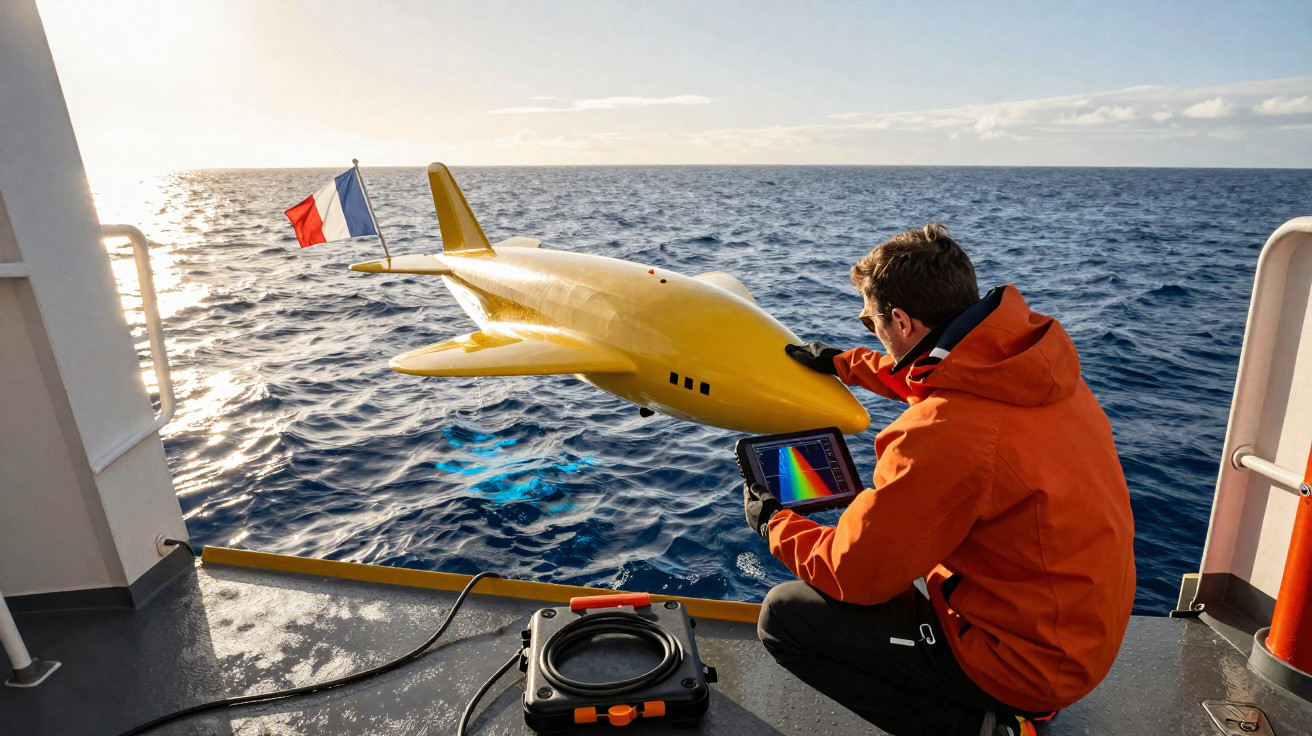
This is not speculation dreamed up from the coast. Since 2004, a line of instruments positioned across the Atlantic at approximately Florida’s latitude has recorded the AMOC’s strength in near real time. Anchored to the seabed, they detect the movement of currents day after day and return data that become graphs, discussions and disagreements. Their records reveal substantial year-to-year swings, like the ocean drawing breath, alongside signs of a gradual dip in the longer trend. Scientists debate how long observations must continue before a true slowdown can be declared: ten years, 30 years, a lifetime?
What scientists watch
Palaeoclimate researchers bring further evidence. Seabed mud preserves a diary made of tiny shells, isotopes and earlier salinity levels. Greenland ice cores contribute records of temperatures and dust. Together, they outline periods when the AMOC weakened and Europe became colder. Today differs because we are warming the entire planet while adding freshwater to the equation, yet the past need only rhyme to provide a warning. The danger is not unknown; it is a matter of probability.
The uncomfortable reality is that complex systems seldom provide straightforward alerts. They wobble. A symptom can resemble a cause. Then they leap. Researchers discuss tipping points: thresholds beyond which a system does not simply recover after pressure is removed. Imagine tipping backwards on a chair, relying on its balance, only to find one day that the floor is not where you expected it. That is the kind of threat cautious voices continue to raise at conferences and in quietly troubling reports.
From London kitchens to Labrador seas
There is an unusual intimacy to this. The Gulf Stream may sound remote, but it reaches into the morning routine. It is there when herbs on a windowsill bolt in May because sunlight arrived too eagerly; when an evening run feels autumnal in July; when a toddler’s nursery shuts for a “once-in-50-years” storm for the second time in a decade. You begin to understand that the Atlantic’s slow beat sets the tempo for your plans.
I keep returning to a harbour in west Wales, smelling of diesel and kelp. A skipper once showed me ropes hardened with salt and said they are hauling differently as patterns change-more work for the same catch, more uncertainty about the days in between. That is the economy in miniature: not apocalypse, but friction. Greater friction brings greater costs, and costs usually roll downhill until they appear on a supermarket receipt.
Let us be honest: nobody truly thinks about this every day. Nobody gets up and checks the AMOC index before making toast. We live through habits, through the familiar temperament of our climate, and through wardrobes assembled in good faith. Only when a system changes gradually and then abruptly do those habits begin to seem fragile.
Timing, fear and the honest unknown
It is reasonable to ask whether this will occur within our lifetimes. The careful response is that further weakening is likely this century if we continue heating the planet, while a dramatic shift-an abrupt collapse-remains unlikely but possible. That is not evasive language; it is the language of risk. When the potential cost is a rewritten climate for hundreds of millions of people, even a small probability deserves attention.
Scientists differ over both likelihood and timing. Some papers have raised alarms about risks around mid-century under high-emissions scenarios. Others examine the variation and conclude that the system may wobble yet remain upright for longer. Uncertainty is not reassurance. It is where prudence belongs. The ocean will not submit an itinerary two weeks in advance, complete with courteous times and locations. It will simply follow the physics governing it.
You don’t need false certainty to make a wise choice; you need a clear sense of what you can’t afford to gamble.
What we can do while the tide still listens
There are two forms of action: reduce the force driving the problem, and cushion ourselves against impacts we cannot prevent. The first is direct. Cutting the heat added to the planet reduces stress on the AMOC. Every tonne of carbon not emitted means less warmth stored in the sea, less freshwater melt running from ice and less weakening of the ocean’s salty backbone. This concerns policy, electricity grids, boilers, cars and ships-the stories of infrastructure.
The second approach is less grand, but equally tangible. Coastlines can be planned with a slower Gulf Stream in mind. Flood defences can anticipate heavier bursts of rain. Farmers can receive support to trial crops capable of handling less stable seasons. Urban planners can watch for the jet stream’s tricks, providing shade, water and backup power like umbrellas one hopes never to need. Resilience is not a slogan; it means drainpipes, hinges and training days.
At a personal level, habits matter too, though not in the scolding way people fear. Choosing an electric car because it costs less to run, making a home warmer by replacing a wheezing boiler with a heat pump, or reducing food waste to save money all help turn the ship while improving daily life. The size of the problem can feel paralysing. Yet the scale of the answer-woven through a million decisions supported by sound policy-is how major change happens in democracies.
How to pay attention without burning out
Following the AMOC does not require becoming a climate hawk who speaks entirely in acronyms. It means noticing when local weather moves from strange to familiar, and asking what that may reveal about the water that warms us. It means remaining curious about signals: more extreme rainfall, unexpected cold snaps in a warming world, and saltier or fresher patches measured by ships. That curiosity can then support the unglamorous, effective measures: energy improvements, coastal planning and international agreements that limit warming.
I sometimes think the greatest difficulty is the story we tell. We prefer narratives with villains and triumphs. The ocean does not offer that. It gives us feedback loops and probabilities, along with a real chance to get ahead of a blow if we take the warning seriously enough. There is no prize at the finish, only a world that feels more like the one in which we learned to live as ourselves.
The long memory of the sea
Stand once more on a harbour wall and feel water strike stone. It is the sound of distance becoming close. A current that begins near the equator, exchanges heat with our sky and returns to the deep cannot be pointed at, yet it is as real as wind pulling at a collar. The AMOC is slowing. It is not tumbling over a cliff this afternoon, nor is it a bedtime story meant to frighten children, but it is a measured weakening that could alter lives in subtle, decisive ways.
The future remains open. That is both its best and worst quality. We can prevent the Atlantic’s engine from stopping completely, or at minimum gain time for our systems to adapt. If we manage it, the Cornish fisherman may still complain about the mackerel, but he will be complaining in a world we recognise. If we fail, we will teach our children a different sort of British weather and act as though it had always been that way.
Some changes come with a crash. Others go tap, tap, tap at the window until at last you rise to find what is demanding your notice. This is one of those. The ocean is knocking.



Comments
No comments yet. Be the first to comment!
Leave a Comment