
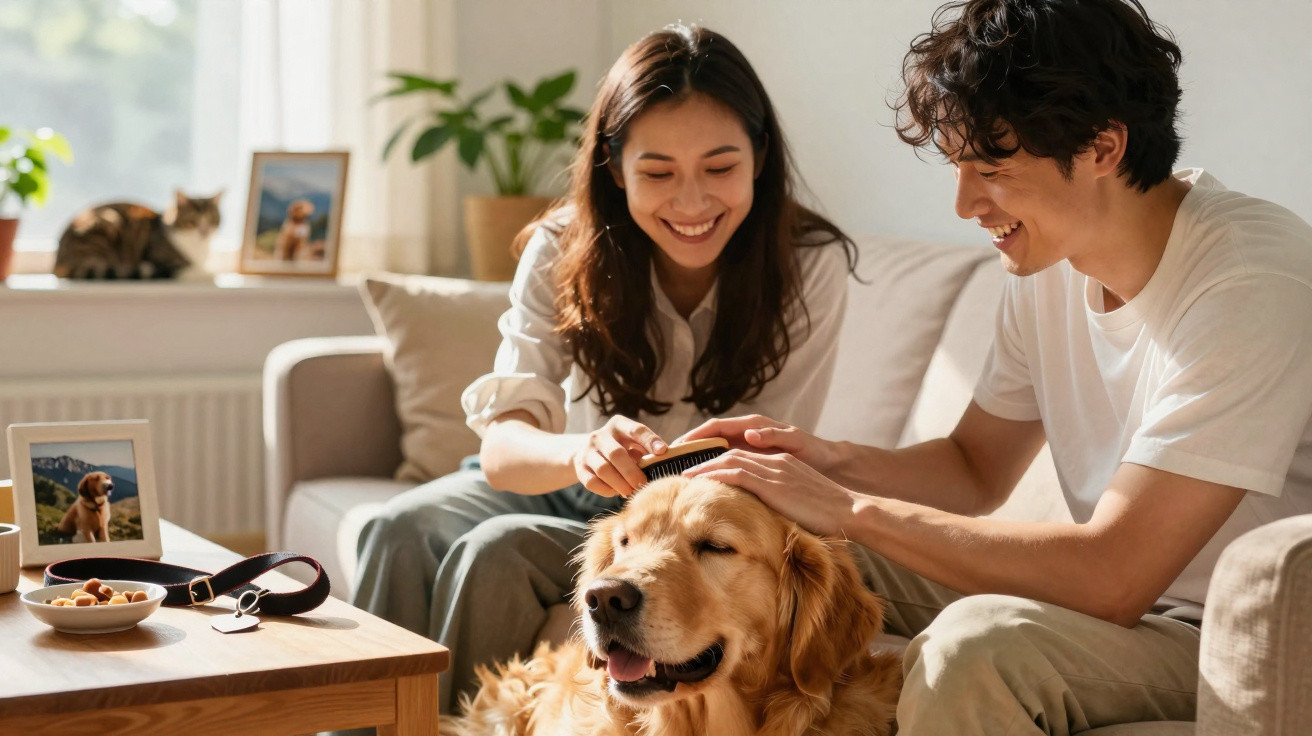
The café carried the oddly appealing scent of burnt toast and damp dog. On a grey February afternoon, a lead was looped around the leg of almost every other chair. Beneath one laptop, a golden retriever snored; a skittish rescue crossbreed watched from a tote bag; and a couple in their thirties alternated between wiping drool from their jeans and laughing like teenagers.
Beyond the windows, Valentine’s Day adverts shouted about roses and diamonds. Indoors, treat packets rustling and the soft, daft voices people save for animals made the most noise.
When their dogs touched noses, the two strangers shared the quiet, bashful glance of people who have just discovered they understand one another.
At times, love begins with “Can I pet your dog?”
Why shared love for animals brings people closer
Take a walk through any park in mid-February and the pattern is clear: couples match their pace to a dog weaving along on its lead, or bend over a pushchair where a cat - yes, a cat - peers from a bubble backpack. These moments have a softer feel: less showmanship and more everyday reality.
A recent survey found that 49% of people feel a shared love for animals strengthens emotional attachment. This is not merely something felt by a small group of pet owners; it is almost half of all respondents.
It is almost as though enjoying the same animals quietly communicates, “You’ll be safe with me.”
Last winter, Emma and Lucas were both idly swiping through dating apps, distracted and bored. Her profile said “must love dogs” and included a photograph of her scruffy terrier. He nearly passed her by, but the dog made him smile because it looked exactly like the dog he had owned towards the end of his childhood.
They arranged to meet for a single drink. Instead, they spent three hours walking, had two coffees, and shared half a bag of treats between their dogs. Their first handhold happened not in a candlelit restaurant, but as they tried to settle their pets after a siren went past.
Several months later, each of them said the same thing: they had felt at ease more quickly because their dogs “approved” of one another.
There is a straightforward explanation for that 49%. Watching someone crouch down to gently reassure a frightened dog, or carefully remove a spider from the bath, registers somewhere in your mind. Looking after a creature more vulnerable than yourself demonstrates empathy without needing any grand speech.
A shared love for animals also gives people an instant common language. Suddenly there are pet names, routines and tales about the cat that wrecked the curtains or the dog that ate the anniversary cake. Those small, ridiculous anecdotes become part of a couple’s private mythology.
Honestly, hardly anyone can recall the precise message inside an elaborate Valentine’s Day card. They do remember racing together to the emergency vet at 2 a.m.
Turning pet love into genuine emotional connection
If you are spending Valentine’s Day with someone who shares your love of animals, make it a practical, modest way to connect rather than simply a charming detail in the background. Choose an activity involving actual care: walk a dog at sunset with your phones left in your pockets, or visit a shelter and ask about the animals’ histories.
There is no need for an extravagant gesture. A calm, regular habit can often achieve more.
One couple began taking “gratitude walks” with their dog every Sunday. One holds the lead while the other says aloud one small thing they valued about their partner that week. It may seem cheesy on paper, yet on the pavement, while a dog zigzags ahead, it feels less staged and more like something shared privately.
If you are single, avoid turning your love for animals into an impossible test. Wanting a partner who treats living creatures with respect is perfectly healthy. Expecting a first date to form an immediate bond with your anxious rescue, as you have had years to do, is a trap.
Most of us know that moment: your pet growls at a guest and suddenly you read too much into it. Rather than deciding, “My cat hates you, so we’re done,” allow time and context. Unfamiliar smells, unfamiliar energy and small flats can be overwhelming.
A caring partner does not have to be a flawless “animal whisperer” from the first day; they only need to be prepared to learn and pay attention. That is what lasts.
On this, one therapist who works with couples and animal-assisted therapy told me: “When two people care for an animal together, they rehearse caring for each other. Feeding, vet visits, walks - it all becomes proof that they can show up on the boring days too, not just the fun ones.”
That shared care can be remarkably easy, if a little untidy.
- Start small
Take on one everyday task together: an evening walk, a weekly grooming session or cleaning the litter tray on Sundays. Small, dependable actions matter more than large but infrequent gestures. - Choose a “together rule”
Perhaps keep phones away on walks, or always say goodbye to the pet before leaving home. These rituals become glue as life gets noisier. - Let the animal prompt a gentle check-in
Once a week, ask one another: “How do you think our dog/cat is feeling?” It may sound silly, but the replies often reveal how each person is truly feeling. - Do not pretend
If animals do not come naturally to you, say so with kindness and demonstrate care differently - by washing pet bowls, covering a vet bill or arranging a pet-friendly break.
Beyond Valentine’s Day: what shared animal love reveals about us
That 49% figure points to more than a passing trend; it suggests a subtle cultural change. Loving animals together says, “We choose softness in a world that often rewards hardness.”
Pets grow old, fall ill, misbehave and sometimes destroy carpets. Remaining present through all of it develops a form of loyalty that plastic hearts and heart-shaped pizzas cannot really match. When someone sees you clean up vomit at 3 a.m. and still thinks you’re beautiful in the morning, that’s a different league of intimacy.
For certain couples, sharing a dog or cat creates the first “we” in a life story previously made up entirely of “I”. For others, it eases the pressure to have children by offering a gentler but still deeply real family project. For many single people, a furry or feathered companion keeps their heart open long enough to notice love when it eventually arrives - sometimes at the dog park, sometimes in a vet’s waiting room, and sometimes on a dating profile where a pair of paws steals the spotlight.
| Key point | Detail | Value for the reader |
|---|---|---|
| Shared animal love creates trust | Almost half of people feel a stronger emotional attachment when their partner loves animals as well | Helps explain why pet compatibility can be as significant as shared hobbies or tastes |
| Everyday care matters more than grand gestures | Small routines, including walks, feeding and vet visits, build dependable emotional bonds | Offers realistic, low-pressure ways to strengthen connection around Valentine’s Day |
| Pets show real character | The way somebody treats a vulnerable animal often reflects how they may treat you during difficult times | Provides a practical way to assess compatibility without playing mind games |
FAQ:
- Does not liking animals mean a relationship is doomed?
No. It means honest discussions are needed about boundaries, allergies, fears and lifestyle. Mutual respect matters more than identical enthusiasm.- When is the right time to introduce a new partner to my pet?
Wait until you have established a basic sense of emotional safety with that person. Then begin with brief, relaxed visits instead of sleepovers or lengthy stays.- What if my partner’s pet and mine don’t get along?
Take things slowly. Use neutral locations, short introductions and professional trainers where necessary. Some animals can live alongside one another without becoming “friends”, and that is fine.- Is getting a pet together too big a step early on?
Yes, for most couples. View adopting together as you would signing a tenancy agreement: it is a serious commitment that can be difficult to undo if the relationship ends badly.- Can pets really help heal after a breakup?
For many people, yes. The regular responsibility of caring for an animal can ground you, encourage you to go outside and ease loneliness during the months following a separation.






Comments
No comments yet. Be the first to comment!
Leave a Comment