
In the US state of Minnesota, an elderly man has to leave his home and move into a nursing home. His cat cannot go with him. With a heavy heart, he takes the animal to a shelter - leaving behind a handwritten note that suddenly brings the staff’s daily routine to a halt.
A farewell that leaves no one unmoved
The four-year-old ginger tabby is called Zoey and had spent years living closely alongside his owner. They were a typical elderly-owner-and-pet pairing: familiar routines, quiet days and small rituals. Those routines disappear overnight when the man’s move into a nursing home is confirmed.
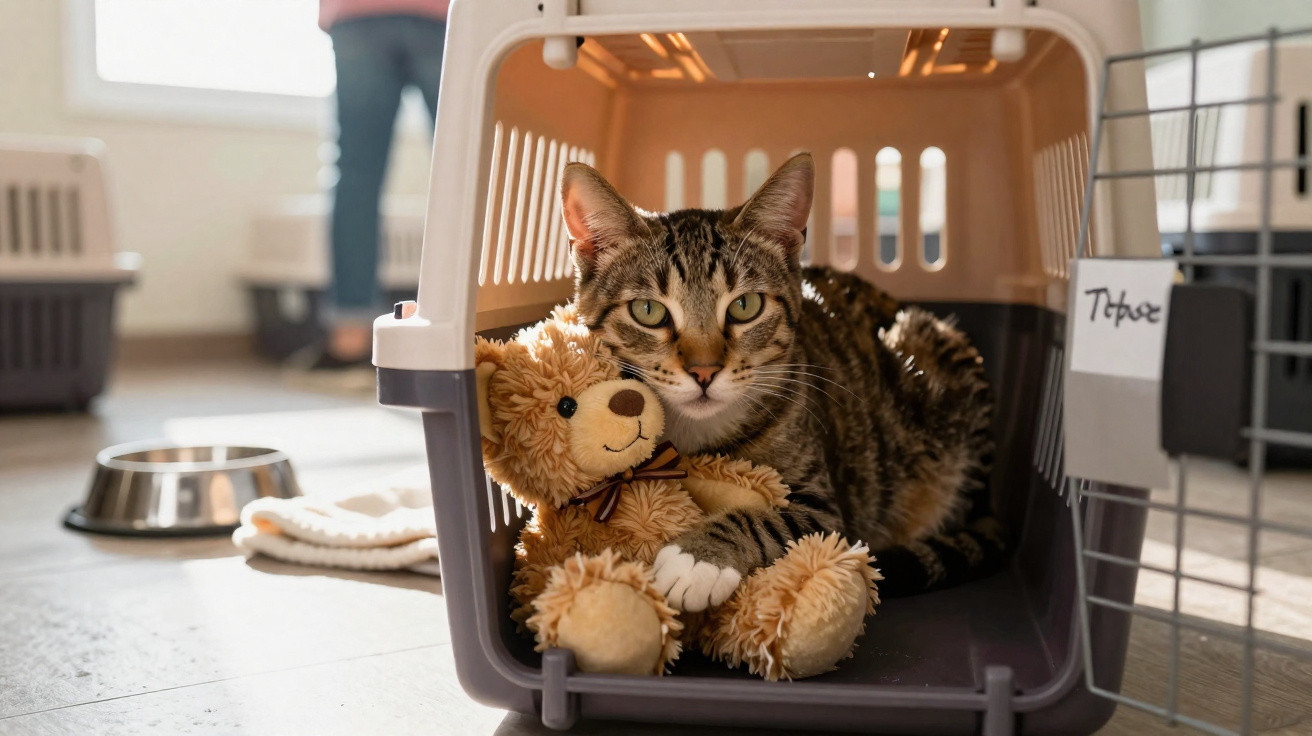
Many care facilities have strict rules and either do not allow pets at all or permit them only in very limited circumstances. The senior therefore turns to a friendly animal shelter that works with the Carver Scott Humane Society in Minnesota. Zoey arrives there on 22 February in a simple carrier - but he is not alone.
Staff immediately notice that there is something unusual about the carrier. A folded note has been carefully attached to its side with tape. There is no lengthy explanation and no apology - just a few brief sentences and one very firm request.
The staff read the message, look inside the carrier and understand within seconds how much love this decision involved.
The elderly owner’s moving request
In his short note, the man makes one clear demand: no one must take the cat’s teddy bear away. There is no mention of food, no preferred cat litter and no special medical requests - only this one item.
The small bear is lying in the carrier right beside Zoey. The soft toy is slightly worn and clearly well used. It had evidently remained within the cat’s reach for a long time. To outsiders, it may initially look like nothing more than a toy, but for Zoey it is something else: a familiar anchor from his former life.
The animal carers test just how strong that attachment is. They briefly remove the bear in order to clean it. Zoey’s response surprises even experienced members of staff: the cat becomes tense, paces restlessly around the carrier, meows and is plainly searching for something.
When the teddy bear is returned a few minutes later, the opposite happens. Zoey presses himself against the toy, wraps his paws around it and curls up. His body visibly relaxes. For the shelter, it is clear that the bear belongs with Zoey like a second shadow.
An unusual pair touches thousands
Word of the story quickly spreads around the shelter. A cat clinging to a soft toy, along with an elderly owner whose only request concerns that one object, is hard to forget. The Carver Scott Humane Society decides to share the story publicly in order to find Zoey a new home.
The shelter posts photographs and short updates on its social-media channels. Staff ask the community one question: what should the bear be called? The cat already has a name, but the toy has so far remained nameless.
Numerous suggestions appear in the comments. In the end, the team chooses “Joey” - a name that echoes Zoey’s and reflects how closely the pair are now seen. Suddenly, this is no longer about a single cat, but a small “team of two”.
- Zoey: four years old, ginger tabby, with a generally quiet nature
- Joey: a brown teddy bear, constantly by his side
- Elderly owner: has to move into a nursing home and cannot take the cat along
- Animal shelter: is specifically seeking a new family willing to take both of them
Zoey at the animal shelter - always with his bear
Since arriving, Zoey has lived in the shelter’s cat section. He has even been given a room of his own. This helps him establish a new rhythm after such an abrupt break with his old life. In this small, protected space, he can retreat without being constantly bothered by other animals.
According to the staff’s first observations, Zoey is initially reserved. Strangers make him uneasy, and he dislikes sudden movements. However, anyone who approaches him calmly is soon rewarded with a soft purr. He enjoys being stroked and brushed too.
The bear is almost always within reach. Sometimes Zoey presses his forehead against it; at other times, he simply rests one paw on it. To staff, the cat appears noticeably more settled when Joey is nearby. They therefore take great care never to separate them for long.
From the shelter’s perspective, the bear is now far more than a toy - it is a kind of emotional bridge between Zoey’s old and new lives.
Why animals become attached to certain objects
What looks touching in the photographs has a serious background. For pets, losing their person, home and daily routine causes considerable stress. Many withdraw, some eat less, while others become overactive or meow and bark more than usual.
Familiar possessions can act like small islands of safety in these moments. It may be a cushion, blanket, old T-shirt that still smells of their main carer - or a soft toy that always sat beside the food bowl.
Experts refer to these as “comfort objects”. They can help animals cope better with unfamiliar surroundings and offer reassurance when everything else feels different.
Typical comfort objects for cats
- A worn blanket or small cushion from their former sleeping spot
- A toy the animal regularly plays with alone
- A carrier that was left open and accessible at home
- Fabrics carrying the scent of the animal’s main carer
In Zoey’s case, Joey fulfils precisely this function. The bear smells of his former home, the sofa, the carpet and perhaps even his previous owner. In this way, the cat connects his new life at the shelter with memories of the familiar flat.
What potential adopters need to consider
Zoey is now ready for a new home. However, the shelter will not compromise on one point: anyone adopting the cat must adopt Joey too - without debate. Everyone on the team sees the elderly owner’s request as a clear responsibility.
For potential adopters, that means the teddy bear is a permanent part of Zoey’s essentials. Anyone who wants to throw it away because of its appearance or concerns about dirt is simply not the right person for this cat.
At the same time, staff say that such situations are not especially rare. Many older people surrender their pets only when there is genuinely no other option. They often send blankets, baskets or favourite toys with them, and sometimes small notes listing habits and quirks.
Helping shelter animals settle into a new home
Anyone considering adopting a shelter cat can learn a great deal from cases such as Zoey’s. A few straightforward steps can make the move much easier for the animal:
- Create a retreat: provide a quiet room where the animal can stay during its first few days.
- Keep familiar items: anything sent home from the shelter should definitely remain accessible at the beginning.
- Build routines: set regular feeding times, keep the bowl in the same place and schedule recurring play sessions.
- Be patient: some cats settle after hours, while others need several weeks.
- Arrange a veterinary check: after stressful periods, a thorough health examination is never a bad idea.
When people have to give up pets because of age
The elderly man’s situation raises a question that many families will face at some point: what happens to pets when an older owner suddenly has to move into hospital or a care home? Planning ahead protects both the person and the animal.
It is sensible to discuss openly within the family or friendship group who could step in in an emergency. Sometimes neighbours offer to take in a pet. In other cases, an animal welfare organisation can help find suitable new carers.
It is also useful to put together a kind of “pet file”: favourite food, veterinary information, behavioural traits, medication and routines. Details like these make a huge difference to shelters and new owners trying to keep the animal’s everyday life as stable as possible.
Why this small note moves people so deeply
The brief message attached to the carrier quietly tells a bigger story. It reveals how strong the bond between this elderly man and his pet must have been. He did not ask about himself, visiting rights or photographs from Zoey’s new home.
His sole concern was for the cat - and the thing that comforts him. That is exactly what strikes so many readers in the heart. In this case, the teddy bear symbolises something many people understand: the desire to know that a loved one is in safe hands, even when you can no longer accompany them on their journey.
For Zoey and Joey, that wish represents a real opportunity. The shelter hopes to find people who do not merely find their story touching, but are ready to welcome them as an inseparable team - complete with a teddy bear on the sofa and a cat slowly leaving old wounds behind.





Comments
No comments yet. Be the first to comment!
Leave a Comment