
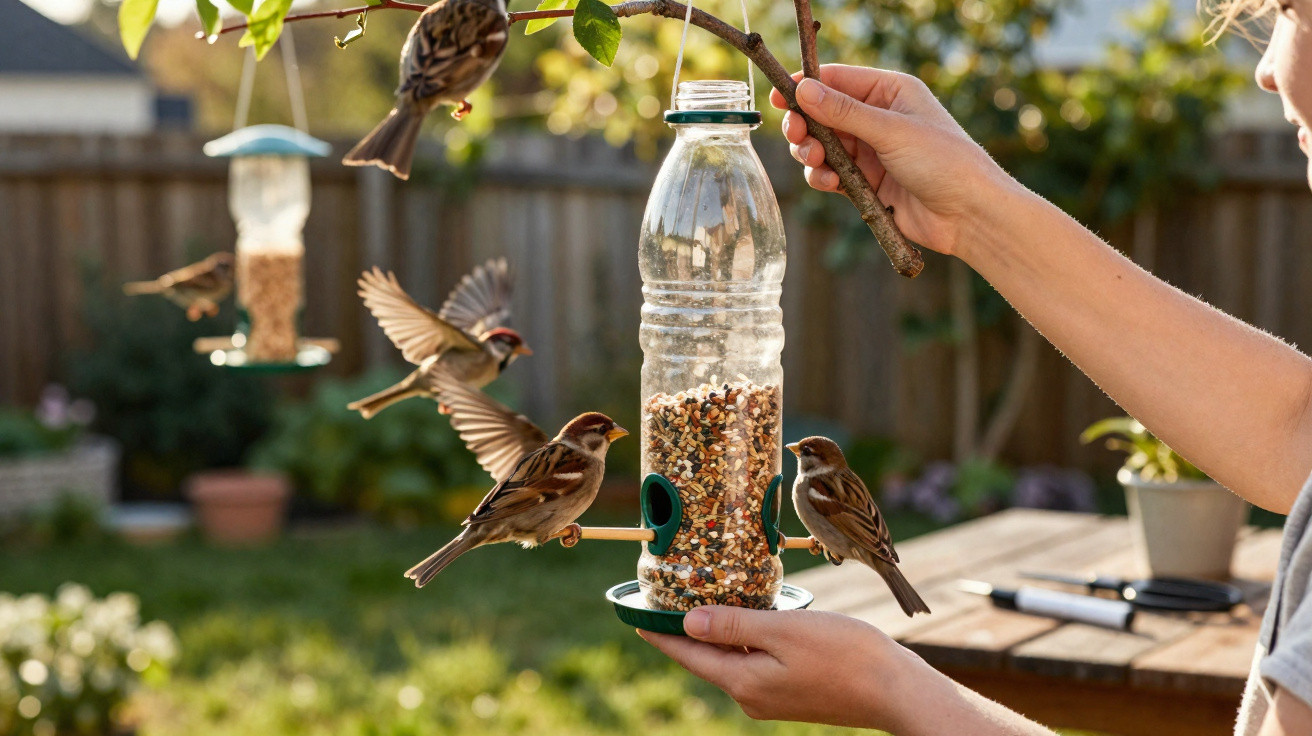
A clear, lightweight plastic bottle sits beside a bin, seemingly destined to vanish into a lorry, a sorting centre or, worse still, a ditch. Then, one day, you pick it up by the neck, properly look at it, and a thought appears: what if it could become something other than rubbish?
On a city balcony or at the bottom of a garden, a few minutes, a slightly blunt craft knife and a handful of seeds can turn that piece of plastic into a small stage for nature. A sparrow pauses, lands and pecks. A robin waits its turn.
The bottle no longer looks like packaging. It has become a meeting point, and what happens around it can have a greater effect than you might expect.
From rubbish to perch: seeing a bottle take on a new purpose
The first time you hang up a bottle bird feeder, it can look rather makeshift. The bottle sways in the breeze, seeds shift about inside, and you wonder whether birds will dare to come near. There is nothing Instagram-ready about it: an old piece of wire, a scuffed cap and a label that is only half removed.
Then a small bird lands, if only for a moment. It tilts its head, assesses the arrangement, then pushes its beak through the small opening cut with a knife. It is a tiny moment, yet before long you are no longer watching the bottle but the life gathering around it. That is the quiet turning point.
In an English residential neighbourhood, a local study found that residents who put up homemade feeders spotted up to twice as many species in less than a month. This is not about having a perfectly shaped feeder or buying a particular brand of seed. It comes down to providing a reliable, visible feeding point where birds already travel.
Most of us know the feeling when one simple action makes us feel as though we are “part of the setting”, rather than merely watching it from behind a window. A hanging bottle creates that understated connection. A neighbour asks where you got it, while a local child is amazed to see a blue tit so close. Suddenly, you find yourselves discussing species and seasons instead of the weather and traffic.
In practical terms, the conversion works because the bottle already has almost everything required: a seed container, the potential for openings and a built-in hanging system through its neck. By adding perches and carefully positioned holes, you turn an object made for constant circulation into a fixed spot. A disposable container becomes a micro-ecosystem.
This repurposing is also a quiet challenge to the logic of single-use everything. Let us be realistic: three pierced bottles will not save the planet. However, they can change how we view waste and, above all, how we relate to the living world around us. Often, those small shifts are what set bigger changes in motion.
Step by step: making a working plastic bottle bird feeder
The basic method takes only a few straightforward steps. Pick a 1.5 L bottle with reasonably firm sides, rinse it out and allow it to dry. Using a felt-tip pen, mark two opposite points around one third of the way up from the base. These will hold the perches, such as two wooden spoons or two sticks.
Carefully pierce the bottle with the tip of a knife or a bradawl, widening each hole only enough for the spoon handles to pass right through. Beneath each perch, cut a small semi-circular opening a few centimetres wide, allowing seeds to sit within reach without pouring out in a rush. Keep a plastic lip in place to reduce spillages.
Next, fill the bottle with seeds - use a garden bird seed mix, not bread or table scraps - screw the cap back on, then make two small holes in the plastic near the neck. Thread through strong string or plastic-coated wire, tie it securely and hang the feeder from a branch or hook. Ideally, position it 1.5–2 metres above the ground, away from cats and from window-strike hazards.
To be honest, hardly anyone does this every day. You cut, fill and hang it, then almost forget that it needs maintenance. This is where many people go wrong. A bottle feeder left outside in the rain for weeks can quickly become a breeding ground for mould and bacteria. Birds deserve better than that.
The answer is to create a “realistic routine”. A quick clean every two weeks will often do the job: empty out damp seed, rinse the bottle with hot water and leave it to air-dry. Avoid harsh detergents; use a little white vinegar only if grime is really stuck on. A simple feeder that is kept clean is better than an elaborate homemade design that is never maintained.
Another common mistake is trying too hard by adding too many openings. The more holes there are, the more exposed the seed becomes to rain, meaning it spoils sooner. Two to four feeding ports are more than enough to create a regular flutter of activity without turning the area into a field of crumbs. Your aim is not to feed every bird in the neighbourhood, but to provide a healthy feeding station.
“The first time I made a feeder from a bottle, I thought it was just a fun hack. Then I realised it was the only way my city-born kids would ever see a goldfinch this close,” says a father from Bristol. His words neatly capture what this small project can change in everyday life.
To help your bird feeder last, keep these points in mind:
- Choose a sturdy bottle that will not lose its shape under the weight of the seeds.
- Use broad perches so birds can feel secure and balanced.
- Keep it out of direct full sun, which warms and damages the seed.
- Leave open space around it so birds can spot approaching predators.
- Adapt the seed mix to the season, while avoiding salted or sweetened peanuts.
These modest refinements are what separate a decorative gimmick from a feeder that local wildlife genuinely uses. Ultimately, you are creating not so much an object as a regular stopping place.
What this small bird feeder truly changes
A repurposed bottle will not remove the tonnes of plastic produced every day, nor will it replace the hedgerows, meadows and rough ground that birds need. It is not a heroic act. It is a local one, prompting you to look up regularly and notice who arrives, who leaves and who disappears for a few weeks.
What happens here goes beyond a simple “recycling tip”. You begin to recognise the seasons through plumage, birdsong and the frequency of visits. You discover that great tits do not behave like blue tits, and that some sparrows always fight over the very same place on the perch. The feeder becomes a small window onto a world you may have assumed belonged only in wildlife documentaries.
Without any moralising, the bottle hanging outside broadens the conversation. You can talk about waste while showing a practical answer. You can discuss biodiversity while pointing at a very real robin. You can move on to cities, countryside and climate, starting with an unremarkable object once lying on the pavement. It is often through these tiny projects that major realisations find their way into our homes.
Some people will share photos of their feeder; others will simply show a child how to pierce the bottle without getting cut. Others still will just check each morning whether the seed level has gone down. The form it takes does not matter. The idea spreads.
The next time you hold an empty bottle, you may pause before dropping it into the recycling bag. You may see it as “a possible resource” rather than obvious waste. From that point onwards, something has already shifted.
| Key point | Detail | Benefit for the reader |
|---|---|---|
| Simple transformation | A few holes, two perches and a piece of string are enough to make a functional bird feeder. | Encourages action without requiring complicated equipment. |
| Everyday impact | The bottle bird feeder attracts a range of species and creates an observation routine. | Provides regular contact with nature, even in a city. |
| Rethinking waste | A single-use object gains a visible and useful second life. | Changes the way plastic and consumption are viewed. |
FAQ
- What type of bottle is best for a DIY bird feeder? Select a clear plastic bottle of 1–2 litres with reasonably rigid sides, so that it holds its shape once filled with seed.
- What seeds should go in a plastic bottle feeder? A mixed seed blend for garden birds is a good choice; black sunflower seeds and millet are generally popular, while salty or sweet human snacks should be avoided.
- How often should a plastic bottle bird feeder be cleaned? Cleaning every one to two weeks is a sensible routine, as is cleaning after heavy rain or whenever seeds appear mouldy or clumped together.
- Where should a bottle feeder be hung safely? Place it 1.5–2 metres above ground level, beyond easy access for cats and not too near large windows, helping to reduce the risk of collisions.
- Is a plastic bottle feeder safe for birds over the long term? Yes, provided that the edges around feeding holes are smoothed, the feeder is cleaned regularly and cracked or brittle plastic is replaced as it ages.




Comments
No comments yet. Be the first to comment!
Leave a Comment