
[Add Zona Militar to Google]
Why add us? Get the latest updates from Zona Militar in your Google feed.
[Join the WhatsApp channel]
Join our official WhatsApp channel and receive the news as it happens.
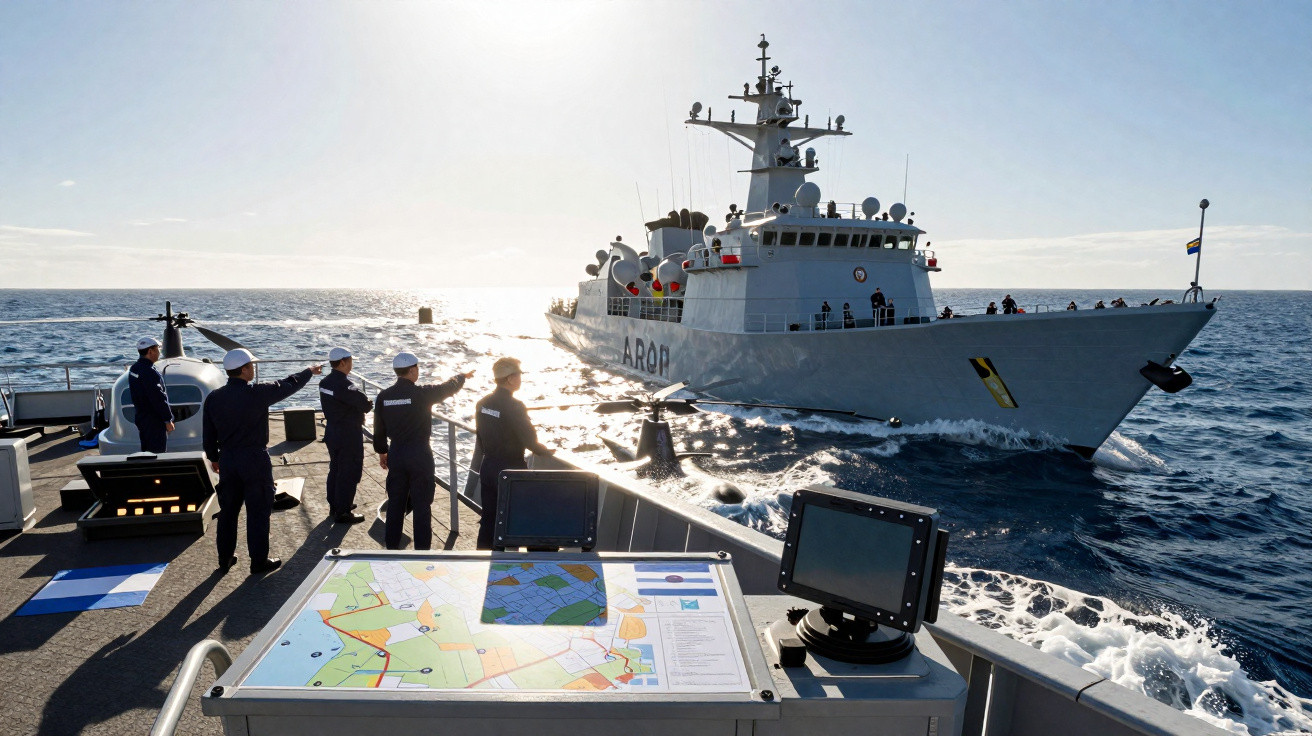
Days before the binational deployment was due to conclude, the destroyer ARA La Argentina (D-11) berthed at Puerto Belgrano Naval Base in Punta Alta after completing the demanding maritime phase of the combined Fraterno XXXIX exercise. Commanded by Commander Patricio Adrián Alisi, the ship formed part of the Argentine Navy’s Sea Fleet deployment in one of the most complex bilateral exercises of recent years, owing to the sophistication of its multi-domain operations and live anti-submarine warfare against the Brazilian Navy’s latest-generation S-41 Humaitá submarine.
👉 Read also: Navantia UK lays the keel of the first of the Royal Fleet Auxiliary’s new logistics vessels
In an exclusive interview with Zona Militar, Commander Patricio Adrián Alisi and his Executive Officer, Commander Sergio Daniel Baiocco, offered a detailed assessment of the tactical manoeuvres, the crew’s operational progress, and the strategic value of this uninterrupted bilateral training programme, which has been held since 1978.
Zona Militar: Commander Alisi, after two demanding weeks at sea, what is your overall assessment of this binational deployment, and which milestones from ARA La Argentina’s voyage would you highlight?
📌 You may be interested in:
- The Brazilian Navy deploys South America’s largest warship for the first time in the Rio Grande Upwelling
- British aircraft carrier HMS Queen Elizabeth returns to service to lead a three-month deployment in Northern Europe
“We carried out highly realistic exercises. I am convinced that this Fraterno exercise produced a more than positive outcome. From the instant we cast off at Puerto Belgrano, our crew faced an unrelenting pace of events in the South Atlantic. We began conducting a range of manoeuvres, including anti-aircraft drills, tactical evolutions, ship-handling manoeuvres between vessels, firing against a surface target and firing at a flare. The entire deployment required the utmost effort and concentration from the teams aboard, proving that the ship is fully ready to undertake the broad range of modern combat operations.”
ARA La Argentina and anti-submarine warfare training
ZM: Anti-submarine warfare (ASW) training was the central pillar of this operation. What specific role did the destroyer play, and how was the three-dimensional effort coordinated with the force’s aircraft?
“It was particularly rigorous and distinctive training. I would stress that, although every ship participated actively, the frigate *Tamandaré and the Argentine destroyer had an additional leading role, as we were the only two surface ships assigned to detect, locate and simulate an attack on the submarine. This task directly demonstrated that modern naval warfare is inherently multi-domain. In essence, anti-submarine actions require precisely that kind of aircraft: fixed-wing aircraft such as the P-3 Orion, normally undertaking long-range reconnaissance and search operations, and the Sea King helicopter operating much closer to the units. The ships serve as floating platforms from which they can detect, locate and even simulate attacks on the Brazilian submarine Humaitá through simulated torpedo launches.”*
ZM: The term “interoperability” appears frequently in reports on combined operations. How would you define it, and what practical effect does it have on crew preparedness?
“For us, interoperability is not merely a term from a manual; it is the tangible ability to integrate systems, doctrines and, above all, people. These activities enabled us to consolidate the exchange of procedures, equipment and communications that is encapsulated by that broad term. It is the capacity to interact with another navy in order to conduct combined actions with far greater strength, because two navies working together are much stronger. Yet it extends beyond tactical interoperability, towards comradeship and mutual understanding. That allows reciprocal professional confidence to grow until a point is reached at which you operate alongside another navy on equal operational terms and can achieve a shared objective without any difficulty.”
ZM: Brazil’s decision to deploy state-of-the-art assets to the South Atlantic, including the first international voyage of the frigate Tamandaré and the presence of a Riachuelo-class submarine, clearly has geopolitical implications. How do you assess this strategic environment?
“The South Atlantic is a strategically vital theatre for the Argentine Republic. For us, the arrival of that number of assets is extremely important. Today, the South Atlantic is a global setting that is as complex as it is dynamic, with many actors regularly transiting these waters, a permanent presence of extra-regional actors, and our natural projection towards the white continent of Antarctica. Within this geopolitical context, I consider it immensely valuable that the Federative Republic of Brazil has sent this volume of modern assets to operate in coordination with the Argentine Navy. It represents direct added value which, ultimately, helps us train to the most demanding standards and better prepare to defend Argentina’s sovereign interests at sea. This daily training strengthened our ties to such an extent that dealings with Brazilian officers and crews were so seamless that we went from being mere exercise partners to feeling like true brothers of the sea, because the combined mission was completed with absolute success.”
ZM: To conclude, Commander, how do you assess the performance of ARA La Argentina’s crew under your direct command?
“It is a great responsibility for me to command this destroyer and sustain the high training standards the ship genuinely possesses. At the same time, it is a profound honour to lead this group of people. Throughout every day at sea, they displayed exemplary commitment, professionalism and energy in fulfilling each of their posts and roles aboard. That shared synergy makes my task far easier and directly results in the successful completion of our ship’s mission, thereby contributing to the Argentine Navy’s overall mission.”
Fraterno XXXIX: crew readiness and combined operations
ZM: Commander Baiocco, given your responsibility for the ship’s internal management and crew training, what do you consider Fraterno XXXIX’s principal achievement for the crew?
“I believe the main value of this bilateral exercise lies in strengthening cooperation ties with a neighbouring navy and practically consolidating operational coordination at sea. We achieved all of that through the interoperability maintained between both forces. Specifically, the destroyer ARA *La Argentina took on a highly important role in this Task Group, combining gunnery events, helicopter manoeuvres and anti-submarine hunting operations, which were particularly complex. The mission’s complete success gives us enormous satisfaction in confirming that our people’s training has delivered excellent results.”*
ZM: Turning theoretical procedures and land-based simulator training into the physical reality of an actual voyage in the South Atlantic is challenging. How did the crew perform during the seamanship and tactical events?
“The crew’s response greatly exceeded our expectations. The comprehensive training we have conducted throughout the year ashore, carrying out different interactive exercises in our naval base simulators, has now delivered direct results at sea. We successfully completed every tactical and gunnery manoeuvre on the schedule, carrying out all prescribed procedures without any equipment or human failures during the various events. This is the direct result of viewing the ship as a single working team, in which individual training and collective effort converge towards the same goal.”
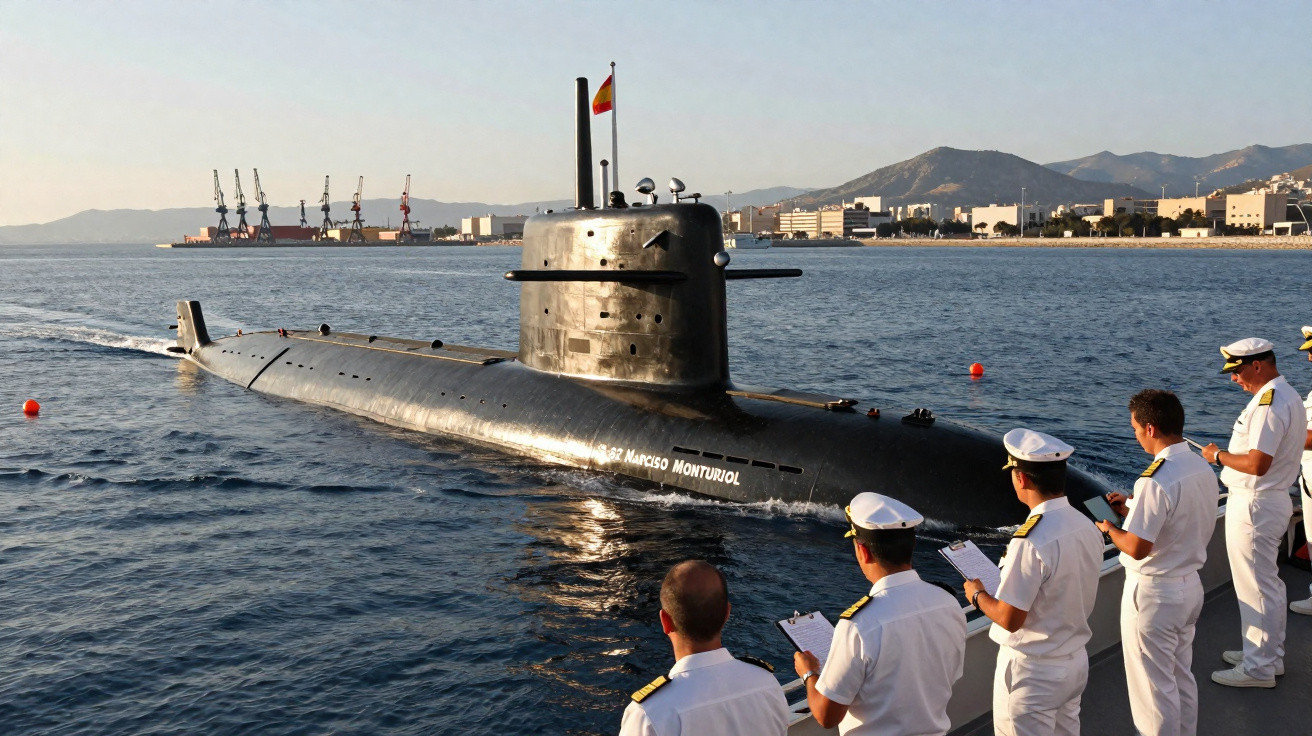
ZM: Anti-submarine training with Humaitá was an invaluable opportunity. What did it mean to operate against a real submarine in Argentine waters, given the temporary absence of this capability from the active submarine force?
“Having a submarine operating in our waters and alongside our navy, at a time when we have no submarines of our own in service, represents a fundamental historic milestone. It had been a long time since this kind of exercise had been conducted with a real submerged submarine, and it allowed us to train our personnel in a practical dimension that no shore-based simulator can fully reproduce. We made the most of this unique opportunity by embarking on the destroyer a group of officers who had recently completed the Anti-Submarine Control Officer course. They joined the voyage to undertake their practical requalification in a real-world scenario and obtain their final certification to operate directly in the Combat Information Centre (CIC). Our Anti-Submarine Control Officers took full charge of the tactical operations room and successfully directed the combined fleet’s searches and detections.”
Personnel exchanges and preparations for UNITAS 2027
ZM: You took part in your first Fraterno exercise in 2011 aboard the corvette ARA Spiro. From the valuable perspective gained over years at sea, how do you assess the personnel exchange, or Ship-Riders, aboard your vessel?
“Indeed, my first Fraterno was in 2011 aboard the corvette ARA *Spiro, which gives me a very interesting perspective on how this bilateral partnership has evolved. In this edition, the personnel exchange programme was tremendously enriching: we hosted Brazilian Navy officers and ratings aboard the Argentine destroyer, while sending officers from our force to operate aboard the submarine Humaitá. This close coexistence not only strengthens communications and harmonises doctrinal procedures, but also creates extraordinary synergy and comradeship.”*
ZM: During the manoeuvres, you also shared tactical exercises with the Brazilian frigate Tamandaré. What professional impressions did operating alongside this modern multi-purpose vessel leave on you?
“The frigate *Tamandaré is a technologically advanced, new vessel with a latest-generation design. For us, as members of a navy currently focused on seeking and incorporating new surface vessels and modern naval technologies, operating alongside Tamandaré was an excellent opportunity to assess its operational and sensor capabilities closely in open waters. It is undoubtedly an excellent option to consider in the future.”*
ZM: Finally, after completing this rigorous binational phase, how do you see the crew’s readiness ahead of next year’s major challenge, the multinational combined exercise UNITAS 2027?
“This Fraterno exercise provided the ideal platform for synchronisation and training ahead of the complex multinational operations approaching. Next year, the Argentine Republic will proudly take on the role of host nation for the UNITAS exercise. Our people are accumulating valuable practical experience at sea, learning to work in a combined manner and to harmonise tactical language and procedures so that we can operate using the same language at sea. The crew of the destroyer ARA *La Argentina takes away the valuable certainty that it fulfilled its mission to the highest possible standard, and we are ready to meet the demanding naval commitments the country may require of us internationally.”*
Special acknowledgement from the correspondent: It would not be possible to close this exclusive coverage aboard the destroyer ARA *La Argentina (D-11) without expressing my most sincere and heartfelt gratitude to her Commanding Officer, Commander Patricio Adrián Alisi; her Executive Officer, Commander Sergio Daniel Baiocco; and every man and woman in her outstanding crew. Being allowed to live alongside them in the waters of the South Atlantic, being welcomed into their “home”, and being made to feel part of the crew from the first day are gestures of generosity and comradeship that I will always treasure. Their unfailing kindness, infinite patience in explaining every detail of each tactical exercise, and exceptional professionalism not only enabled me to do my work in the best possible way, but also showed me the calibre of the remarkable people who safeguard our sea. To the entire crew of La Argentina: you have my deepest respect, admiration and gratitude. Fair winds and following seas!*
Photographs: Zona Militar.
Comments
No comments yet. Be the first to comment!
Leave a Comment