
The 2010 defence review and the Harrier retirement
In October 2010, the recently established Conservative–Liberal Democrat coalition released its Strategic Defence and Security Review (SDSR). The document was designed to address a £38 billion shortfall in the defence budget inherited by the government. Its reductions included the immediate withdrawal of the Harrier force and the premature retirement of HMS Ark Royal, the Royal Navy’s flagship aircraft carrier.
👉 Read more: U.S. Air Force announces initial operational capability for the new MH-139A Grey Wolf helicopter to reinforce the nuclear arsenal
This decision opened what would prove to be a ten-year break in Britain’s carrier strike capability. As the Harrier was due to leave service in 2011 and the Queen Elizabeth-class carriers were not expected to resume fixed-wing carrier operations until about 2020, the United Kingdom accepted the temporary disappearance of a capability central to British naval power for decades.
The Ministry of Defence determined at the time that it lacked the funds to keep both the Harrier and Tornado fleets, leaving ministers to choose which aircraft would remain after the cuts. As British forces continued to be heavily committed in Afghanistan, they opted to retain Tornado, maintaining that its larger fleet and wider range of capabilities made it better suited to ongoing operations. Harrier was consequently cut, prompting an “understandable emotional response within the services”, in the words of General Sir David Richards, then Chief of the Defence Staff. That reaction has repeatedly re-emerged as later reviews reconsidered the UK’s carrier ambitions.
📌 You may also like:
- The U.S. Air Force deploys B-52H bombers to Australia to strengthen the Indo-Pacific
- Following 34 years in service, the USAF’s final EC-130H Compass Call electronic warfare aircraft completed its last flight
The end of a British naval aviation era
For the Royal Navy, the move created an extraordinary interruption in capability. Harrier and its predecessor, Sea Harrier, had become synonymous with British expeditionary warfare, particularly during the 1982 Falklands War.
However, only weeks after publication of the SDSR, Harrier GR9s flew from HMS Ark Royal for the last time in November 2010. While both the aircraft and carrier were nearing the end of their operational lives, the SDSR brought forward the conclusion of Britain’s existing carrier aviation force, making it a deeply symbolic point in British naval aviation history.
Queen Elizabeth-class carriers and the return of carrier strike
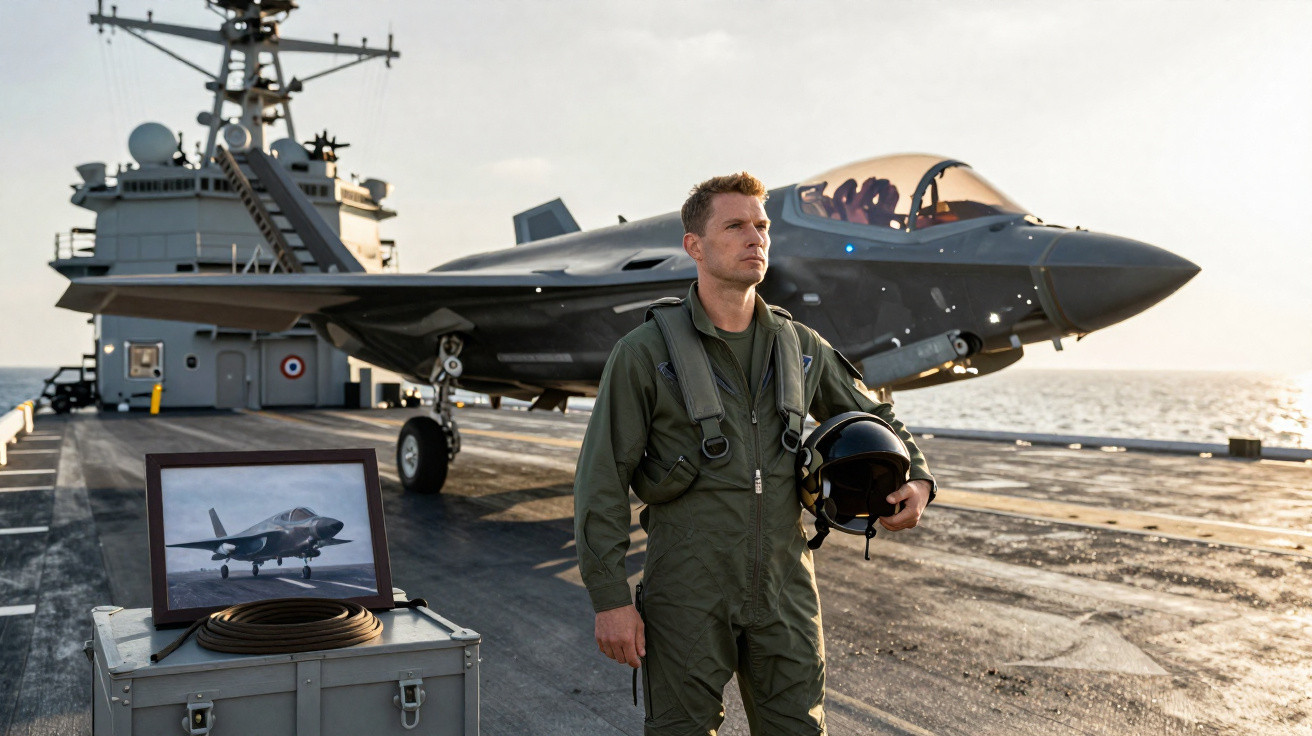
While the Harrier fleet and HMS Ark Royal were being removed from service, the Royal Navy’s future carrier force was already under construction. The two Queen Elizabeth-class aircraft carriers would ultimately become the largest warships ever operated by the Royal Navy, and the F-35B Lightning II was chosen to return fixed-wing carrier aviation to Britain. Ten years after the SDSR began the process leading to their retirement, HMS Queen Elizabeth completed its first operational deployment with F-35Bs embarked, returning Britain to carrier strike operations and restoring the lost capability.
Nevertheless, for roughly a decade, one of the world’s leading naval powers had no independently operational fixed-wing carrier strike capability. The episode demonstrated how rapidly a military capability can be lost, and how much more time is needed to rebuild it.
Comments
No comments yet. Be the first to comment!
Leave a Comment