
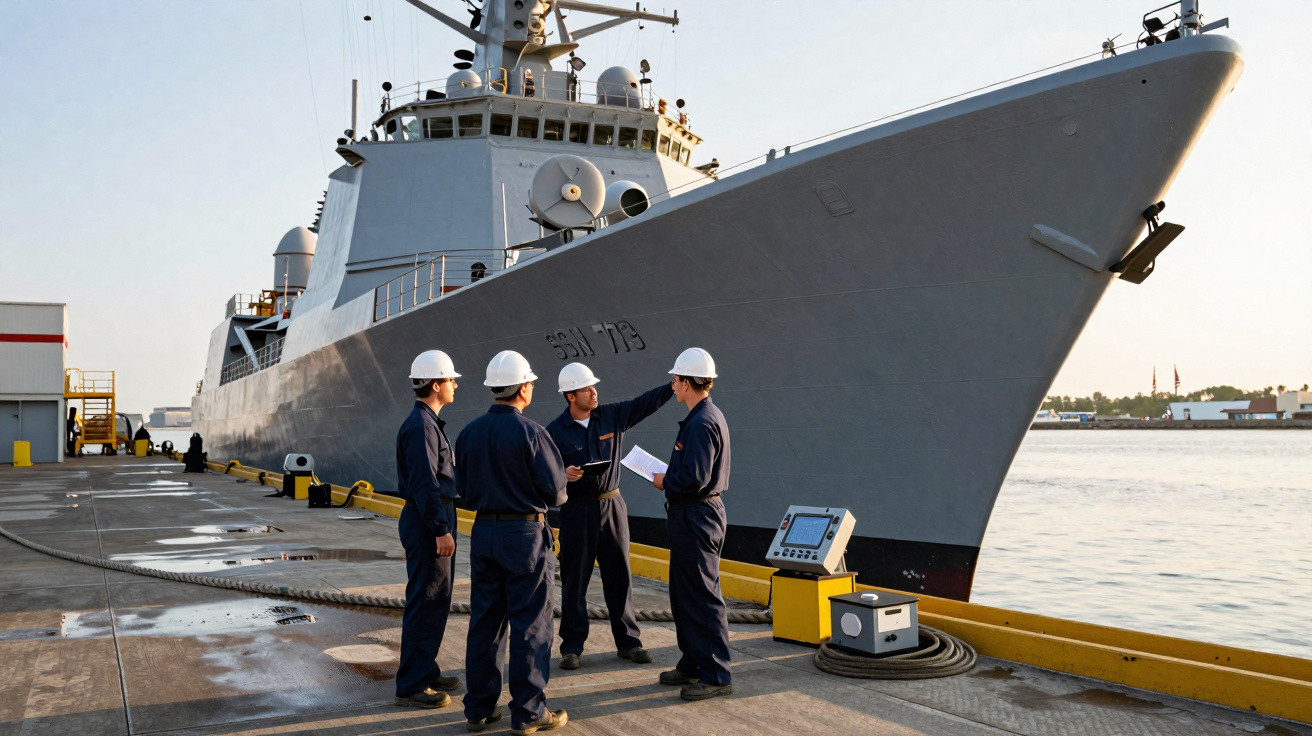
While the US naval industry is focused on building the next generation of nuclear submarines - represented by the Virginia and Columbia classes - the United States Navy (US Navy) has continuing plans to manage that transition without sacrificing response and deterrence capabilities or creating gaps between boats leaving service and new vessels entering the fleet. This is evident in several initiatives designed to keep earlier generations of nuclear-powered submarines operational. A significant milestone was recently reached with the completion of service-life extension work on USS Cheyenne (SSN 773), the final Los Angeles-class boat to be built and commissioned.
USS Cheyenne and the Los Angeles-class Service Life Extension Program
Built in a total of 62 units between 1972 and 1996, the Los Angeles class became the backbone of the US Navy's fast attack submarine fleet during the closing years of the Cold War. Although replacement of the class began with the introduction of the more modern and capable Seawolf class, the end of the confrontation with the Soviet Union brought budget reductions and changes in strategic priorities. The Virginia class, through its successive variants, ultimately became its successor.
Of the 62 submarines constructed, 23 remain in service today. USS Cheyenne (SSN 773), commissioned in 1996, was both the last boat built and the last to enter service. To support the transition to the Virginia class - which is approaching completion of Block IV and construction of Block V, while Block VI boats are already being planned - the US Navy launched the Service Life Extension Program (SLEP) for Los Angeles-class submarines with the greatest remaining potential.
Within that framework, USS Cheyenne was selected for the service-life extension works. The project was carried out at Portsmouth Naval Shipyard by its workforce and concluded when the submarine was handed back to the US Navy on 23 December.
Portsmouth Naval Shipyard returns USS Cheyenne to the fleet
The service stated that shipyard personnel “worked alongside the submarine's crew to return Cheyenne to the fleet as a combat-ready Navy asset, an achievement that advances the effort to close the operational attack submarine gap. This milestone ensures the U.S. Submarine Force remains the world's most lethal, capable and feared fighting force”.
Captain Jesse Nice, the shipyard's commanding officer, said: “The Service Life Extension Program, starting with Cheyenne, is critically important to the overall health of the attack submarine community and the strength of our Navy in any future conflict.” He added: “The Cheyenne project team has paved the way for us as a shipyard, establishing successful execution of refuelling a Los Angeles-class submarine, as well as overhauling and modernising a submarine that is at an advanced stage of its service life.”
The naval leadership's remarks are significant, as completion of the SLEP ensures that USS Cheyenne will have its service life extended to 44 years. It also confirms the programme's feasibility for application to other Los Angeles-class boats with sufficient remaining potential.
Los Angeles-class upgrades under the SLEP
Although no further details were provided or mentioned, the US Navy is understood to have selected a total of six submarines as potential candidates for the SLEP. The programme encompasses not only structural work on the submarine hull and refuelling of its nuclear reactor, but also new upgrades to combat, sonar and communications systems, as well as crew accommodation. Key improvements include the new AN/BQQ-10 sonar processing system and the AN/BYG-1 combat suite.


Comments
No comments yet. Be the first to comment!
Leave a Comment