
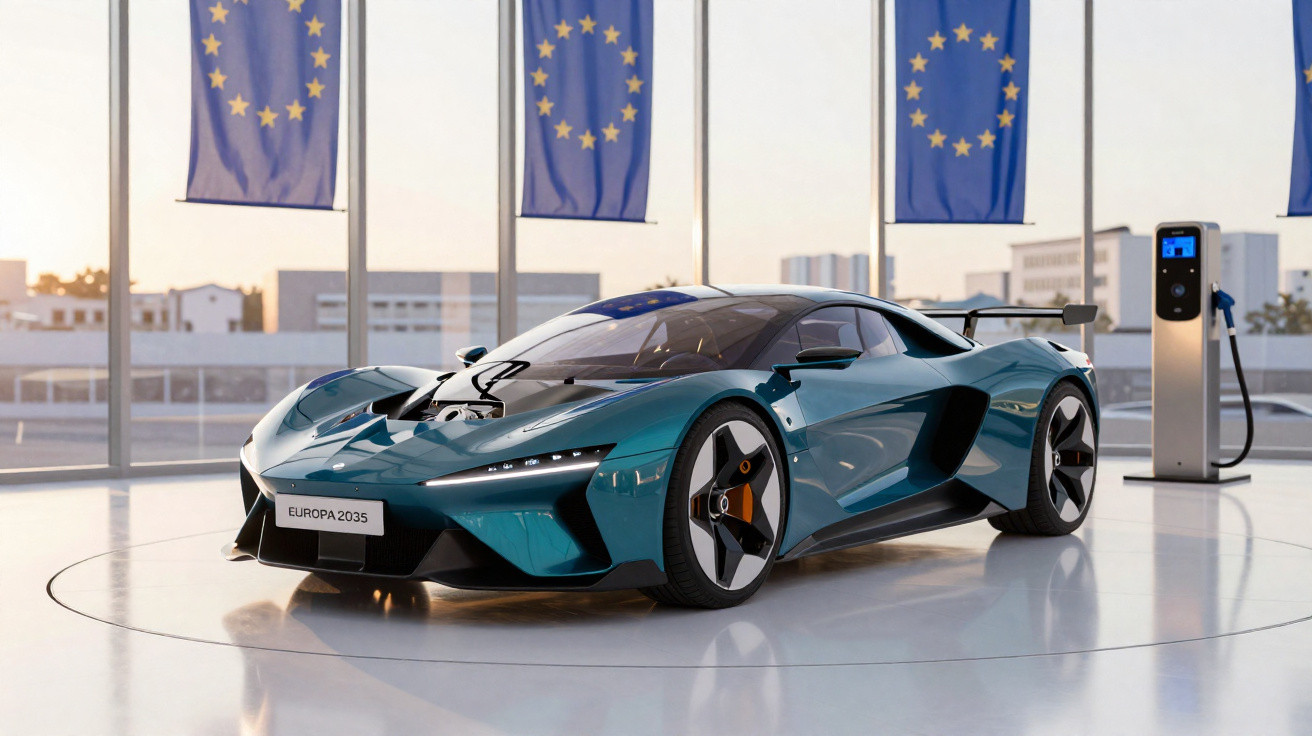
The planned 2035 ban on combustion engines has returned to the headlines after Apostolos Tzitzikostas, the European Commissioner for Transport, said that Brussels is examining measures that could extend the lifespan of these engines.
The debate has rarely been as heated as it is today. Just a few years ago, the objective of cutting CO₂ emissions from new cars by 100% in 2035 appeared set in stone - effectively a death sentence for combustion engines. Now, however, discussions seem to focus on either postponing that target or easing it by introducing a range of exemptions, including plug-in hybrids, EREVs, biofuels and synthetic fuels. The influence of external policies, such as decisions made by the US and China, is adding even more… fuel to the debate.
So, what is at stake that has prompted the established targets to be questioned? That was the focus of this edition of Auto Rádio, a Razão Automóvel podcast supported by PiscaPisca.pt.
Has the end of combustion engines been postponed?
The target to reduce CO₂ emissions from new cars by 100% by 2035 was approved by the European Commission (EC) in 2022. At first, it included no exemptions, and the expectation was that cars with combustion engines would no longer be sold from 2035 onwards.
Since then, several changes and delays have emerged, partly because electric vehicle market share is well below expectations. By October 2025, electric cars accounted for just 16.4% of EU sales, despite being expected to represent 30% by that point (source: ACEA).
At the time, Thierry Breton, France’s former Economy Minister and European Commissioner for the Internal Market, warned of the potential consequences of the ban: a possible fall in exports, the loss of 600,000 jobs, and higher car prices for European consumers.
Only three years of electric car sales falling far short of forecasts were enough to trigger alarm bells. Europe’s automotive industry has invested hundreds of billions of euros in developing and producing electric models that are not delivering the expected returns, leaving factories and jobs at risk.
Most manufacturers and suppliers, along with several EU countries, have therefore pressed for the targets to be reviewed. This episode of Auto Rádio explains everything that is at stake.
What happens next?
The European Commission is now preparing to reassess the agreement reached in 2022, while recent comments from Apostolos Tzitzikostas, the European Commissioner responsible for Transport, have fuelled speculation that the EU could indeed delay the 2035 target.
For now, however, the Commission has not provided definitive answers - although they could arrive as early as next week - leaving manufacturers and consumers without clarity about the future.
Join Auto Rádio again next week
There is therefore no shortage of reasons to watch or listen to the latest episode of Auto Rádio, which returns next week on its usual platforms: YouTube, Apple Podcasts and Spotify.






Comments
No comments yet. Be the first to comment!
Leave a Comment