
The washing machine droned in the background like a light aircraft as Emma flicked through her phone. There was another article about how to save energy at home, filled with gadgets she would never purchase and settings she would never remember. Nearby, towels sat in dense, damp bundles on the drying rack, stubbornly refusing to dry. The heating clicked on. Again.
She exhaled, looked at the digital meter on the wall and saw the figures rise a little faster. It was both abstract and irritatingly tangible. The bill arriving at the end of the month certainly was not abstract.
Then a friend said something she could not forget: “You know you’re probably wasting energy just by the way you do laundry, right?”
The habit she discovered afterwards seemed very small.
On paper.
The quietly effective laundry habit in your washing basket
For most people, saving energy brings to mind major changes: better insulation, solar panels or smart thermostats. But, each week, an everyday cleaning routine in one ordinary part of the home uses more energy than we tend to notice. It is in the laundry room.
The crucial factor is not the detergent you choose or the eco label printed on the bottle. It is whether clothes and towels have room to breathe before they are washed and dried. That is where the real difference is made, without much fuss.
The habit is this: shake, space and sort textiles so they wash and dry more quickly. It may sound almost ridiculously simple. It is not.
Imagine a Sunday evening. A week of clothing is swept up from the floor and washing basket in one hurried armful. Socks are caught in sleeves, jeans are twisted around themselves and sheets are rolled into a weighty ball. The lot is tipped into the drum, the door is shut and the start button is pressed.
At the other end, those same bundles are placed in the tumble dryer or onto the rack. They remain stuck together, thick as a sponge. The appliance runs for longer, while the heating comes on more frequently to deal with fabric that is slow to dry. The bill creeps upwards.
You cannot see it, but every twist and knot in that laundry pile means extra minutes of electricity use.
When material is tightly bunched, it holds onto water for longer. The washing machine must spin harder, while the tumble dryer or heating has to remove more moisture at a slower pace. Air cannot circulate, heat cannot travel freely and a supposedly quick cycle is no longer quick.
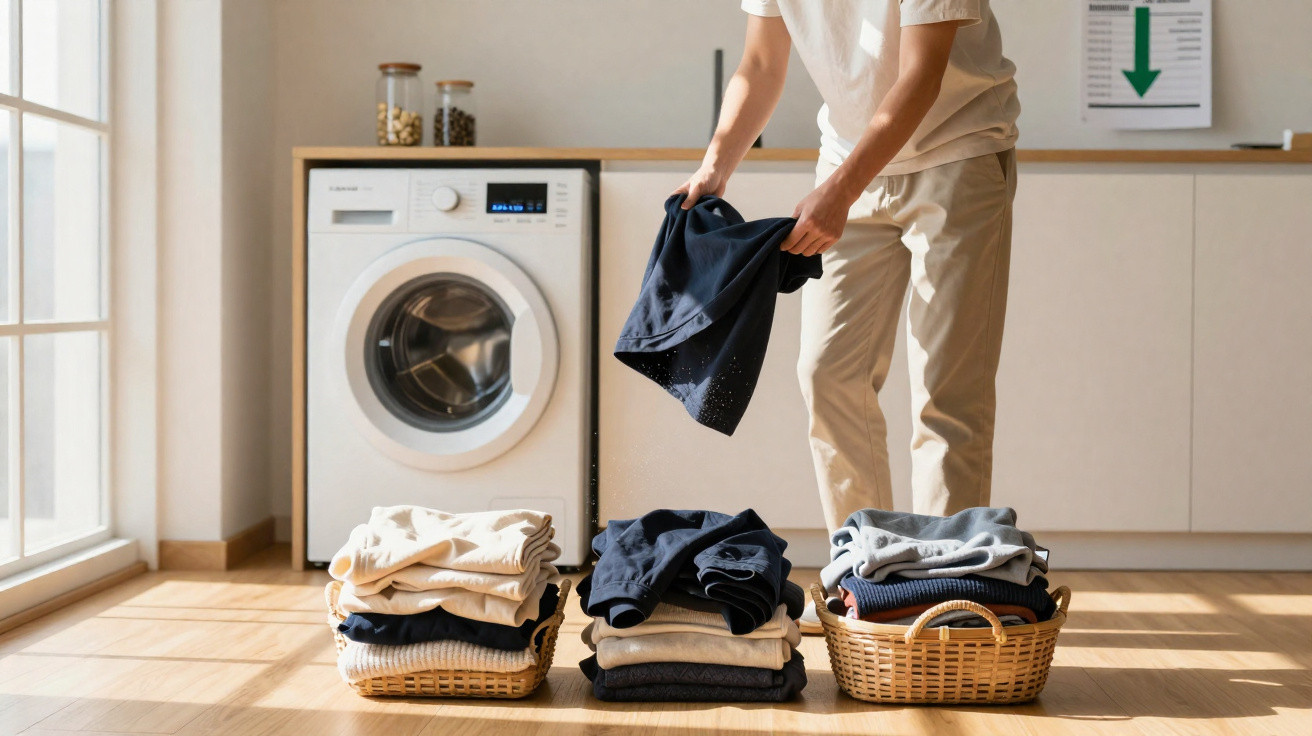
So the routine is almost embarrassingly straightforward: untangle items before washing and again before drying. Shake them out. Keep heavier pieces separate from lighter ones. Arrange them across the rack or washing line rather than leaving them in thick overlapping layers.
This modest ritual reduces the time the machine operates, the time radiators spend battling damp laundry and the time you spend waiting. It means less spinning, fewer drying cycles and fewer turns of the dial for “just ten more minutes”. This is where energy is quietly lost - or quietly saved.
How to make laundry a weekly energy-saving routine
Begin before you press a single button. Take the washing basket to the machine and allow an extra sixty seconds. Pull balled-up socks from trouser legs. Straighten T-shirts that have been removed inside out and become twisted. Give every towel one or two shakes so it is not glued to another towel.
Next, sort items loosely by thickness. Wash jeans and hoodies together in one load. Put lighter shirts, underwear and T-shirts in another. Keep sheets and duvet covers in a separate batch so they do not swallow everything else into a soggy fabric meteor.
Initially, it can feel like needless fuss. After a few loads, though, it becomes strangely satisfying, rather like arranging dominoes before knocking them down.
The second stage begins once the wash has finished. Rather than lifting out one wet mound of laundry and dropping it onto the rack, pause for a moment. Take each item, give it a firm snap through the air, then lay or hang it with a little space around it.
Towels? Do not fold them over three radiator bars. Keep them in one layer, as flat as possible. T-shirts? Do not double them over the line so they drip onto themselves. Jeans? Peg them by the waistband, allowing the legs to hang free so air can move through them.
Of course, nobody manages this perfectly every day. When you are exhausted, it is tempting to hang things “well enough” and leave. That is precisely when the habit makes the biggest difference.
There is physics behind this mildly fussy action. The greater the surface area exposed to air, the faster moisture can escape. Every overlap and heavy fold becomes a tiny moisture trap. That trapped water is what makes a tumble dryer run longer or forces a radiator to work harder against a barrier of damp cotton.
One energy specialist I spoke to described it almost as a confession.
“If people just shook and spaced their laundry and cleaned the lint filter, we’d see a real dent in household energy use, without anyone feeling deprived,” he said.
To make the routine easy, keep this short checklist in mind on each laundry day:
- Shake every item once before drying
- Hang items in a single layer whenever possible
- Keep heavy fabrics together and light fabrics together
- Leave spaces between items on the rack or line
- Clean the tumble dryer filter after each use to improve airflow
Why this “boring” laundry habit affects more than your bill
Once you notice how damp, heavy material slows everything down, you begin to look at your home in a different way. You see how long the bathroom remains steamy when towels are bunched onto one hook. You notice the bedroom feeling damp on sheet-washing day when everything is drying in one overcrowded corner.
You may also start to view your energy bill as the result of small actions rather than only major upgrades. It is a subtle but meaningful change. Instead of waiting for a far-off renovation to make a difference, you adjust what your hands already do each week.
This understated cleaning routine does not shout “eco warrior”. It does not require new products or sophisticated settings. It works because it fits directly into real life, including days when you are managing work, children or sheer exhaustion.
You still use the same washing machine button. You still dry clothes on the same rack. The difference is that those actions now have a quiet purpose: use less, waste less and spend less time fighting stubborn dampness. Across a year, those saved minutes of spin time and tumble-dryer cycles accumulate in a way you can feel when the bill arrives.
One straightforward truth is this: most households lose energy not through major disasters, but through tiny repeated habits that barely register.
| Key point | Detail | Value for the reader |
|---|---|---|
| Untangle and shake laundry | Release trapped moisture and improve spin efficiency | Shorter washing and drying times, lower electricity use |
| Space items while drying | Single layers and gaps allow air and heat to circulate | Clothes dry more quickly, reducing the need for heating or extra cycles |
| Sort by fabric thickness | Wash and dry heavier and lighter items separately | Better results from every cycle and fewer re-washes |
FAQ:
Question 1 Does this really save noticeable energy, or is it just symbolic?
- Answer 1 By itself, one load will not transform your bill. Over dozens of loads each year, however, shorter spin and drying times can cut several kilowatt-hours per month, particularly if you use an electric tumble dryer or depend on heating to finish drying.
Question 2 How much spacing do clothes actually need on a drying rack?
- Answer 2 Ideally, no item should sit directly on another. In a normal room, a two-finger gap between garments on a line or drying rack is generally enough to allow good airflow.
Question 3 Is it still helpful if I don’t own a dryer?
- Answer 3 Yes. Quicker air-drying means your home stays humid for less time, so the heating does not need to battle damp air and you are less likely to turn up radiators to “help” the washing dry.
Question 4 Do quick-wash programmes cancel out the benefit of this habit?
- Answer 4 Not at all. Quick cycles often spin less thoroughly. If laundry is already untangled and more evenly distributed, that limited spin works better, meaning clothes still come out less wet.
Question 5 What if my life is too hectic to fuss with every item?
- Answer 5 Focus on one or two “high impact” items: towels, jeans and bed linen. Simply shaking and spacing these can already reduce a substantial amount of drying time, without making laundry day a precision sport.






Comments
No comments yet. Be the first to comment!
Leave a Comment