
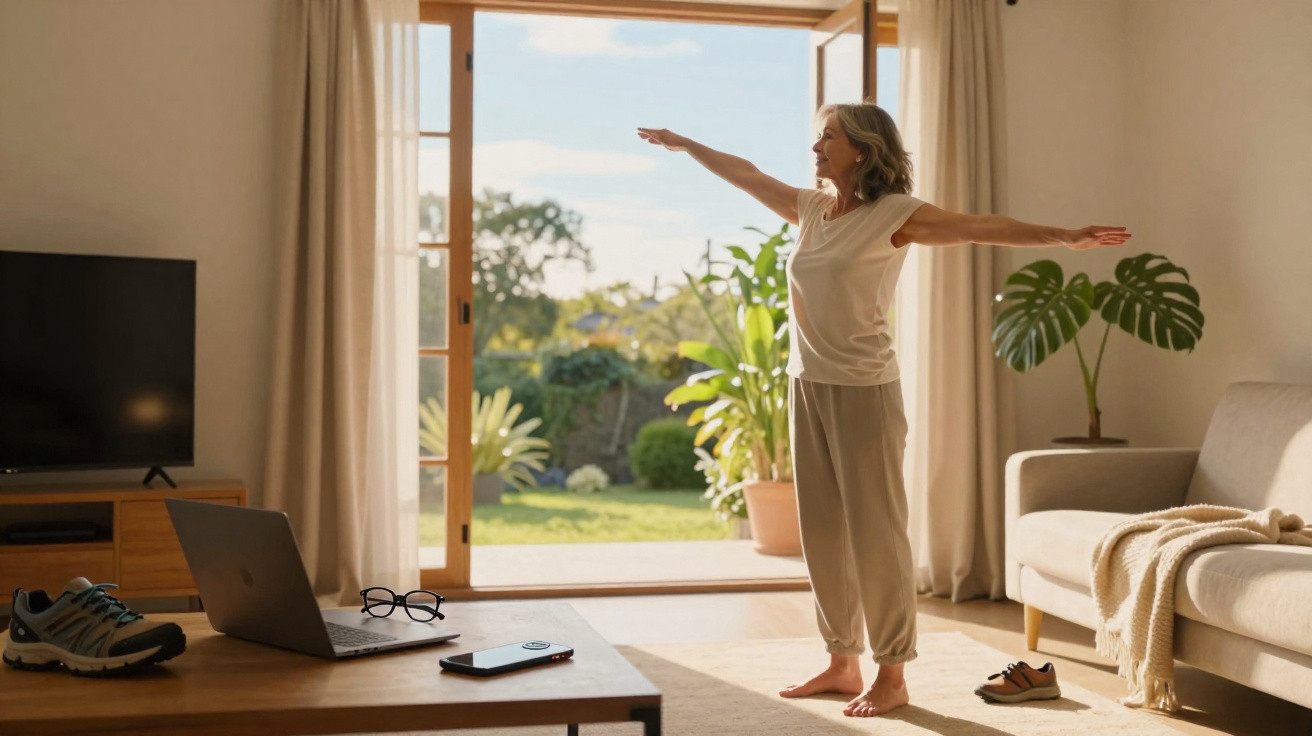
As work begins to wind down, the children leave home and the body starts making itself heard more often, one question can suddenly take centre stage: how can you keep your mind calm? Not through ambitious esoteric projects or complicated techniques, but in everyday life. This is precisely what many men and women in their fifties and sixties describe: four small habits that noticeably strengthen their peace of mind.
Why small everyday routines can have such a big impact
Psychologists have spoken for years about the power of micro-habits: tiny behaviours repeated consistently that give daily life structure and ease the mental load. Especially in midlife, when so much is changing, these routines can provide stability.
People over 50 report remarkably often: it is not one major change that brings calm, but many small habits maintained consistently.
Interestingly, hundreds of users described what genuinely helps them in a large online discussion. Four points repeatedly stood out in these personal accounts – all easy to put into practice, without apps, expensive courses or years of therapy.
1. Stop giving online provocateurs an audience
Whether in comment sections, social-media groups or forums, many people find themselves drawn into heated exchanges every day. For many over 50, frustration is growing at how aggressive and stubborn some users can be.
The key shift in perspective is this: not every falsehood needs correcting, and not every provocation deserves a response. Anyone who repeatedly enters digital trench warfare pays for it with their mood – and often with sleep and concentration too.
Most people are not online to change their opinion, but to reinforce their position. Discussions bounce off them, while weighing on everyone else.
Many people who have deliberately become more relaxed follow straightforward rules:
- Do not write “revenge comments”, even when your pulse is racing.
- Consistently ignore accounts that exist only to provoke.
- Leave a discussion as soon as the tone becomes personal.
- Use the block function rather than letting yourself be annoyed repeatedly.
Studies show that negative comments on social media produce measurably more anxiety and low mood than neutral posts. Reducing these triggers protects the nervous system, and after only a few weeks many people notice a calmer underlying mood in everyday life.
2. Create distance from people who continually drain your energy
By their mid- or late fifties, many people begin to reassess their social circle. It becomes clearer who is good for them – and who regularly leaves them feeling depleted. This is particularly difficult when the people concerned are not acquaintances but close friends or relatives.
Here, many respondents describe a painful yet liberating realisation: being related by blood, or sharing a long history, does not justify constant disrespect, manipulation or emotional blackmail.
Inner peace often begins only when you accept that not every relationship can be saved – but you can protect yourself.
Typical steps people take at this stage include:
- Honestly acknowledging that a relationship has become destructive.
- No longer excusing aggressive behaviour as a “difficult childhood” or “that is just how he is”.
- Arranging meetings less often and only in groups, rather than having lengthy one-to-one conversations.
- Stating clear boundaries: “I am not discussing this subject any more” or “I will end this conversation if you speak to me in that tone”.
Large-scale relationship research analyses show that frequent belittling, controlling or passive-aggressive behaviour significantly raises the risk of depression and anxiety. People who consciously review their contacts noticeably reduce this strain – often for the first time in decades.
3. Deliberately make your news and social-media mix less stressful
Many people in their fifties and sixties now say: “I am not too old for social media – I am too old for constant stress in my head.” The difference rarely comes down to technology, but rather to the content they choose.
Rather than deleting everything radically, many opt for a practical middle ground: they keep platforms that are useful or enjoyable, while uncompromisingly filtering out what brings them down.
Digital everyday life is like a constant diet for the mind: if you consume nothing but negativity, you feel poisoned inside. Choosing more consciously brings a greater sense of lightness.
In practice, this often means:
- Unfollowing accounts that constantly complain, dramatise or spread fear.
- Following ongoing political outrage through just one reliable news source, rather than 20 channels at once.
- Removing time-wasting apps from the home screen or uninstalling them entirely.
- Prioritising accounts that share knowledge, inspire or simply make you feel good.
Intervention studies have shown that people who reduce or use social media more purposefully report less stress and fewer depressive symptoms after only a few weeks. People in midlife are especially sensitive because work, family and health already place considerable demands on them.
| Digital habit | Typical effect on mood |
|---|---|
| Endless scrolling through negative headlines | More unease and a sense of helplessness |
| A short, focused daily news slot | Better overview and less constant alarm |
| Comparing yourself with “perfect” profiles | Reduced self-esteem |
| Following realistic, down-to-earth accounts | A sense of normality and connection |
4. Move your body every day
Almost all of the personal accounts agree on one point: people who exercise regularly feel more mentally steady. This is no longer just about weight or sporting excellence – quite the opposite.
For many people over 50, movement is no longer about appearance, but a form of daily therapy for the nervous system.
A short walk, a few exercises in the living room or light strength training in the park: just 10 to 15 minutes can be enough to reduce stress hormones. A major study in the British Journal of Sports Medicine shows that regularly active adults report significantly fewer depressive symptoms and anxieties – and this effect is independent of age.
People who establish an exercise routine in the second half of life often follow these principles:
- Begin with mini-sessions instead of overwhelming yourself with grand plans.
- Choose an activity you genuinely enjoy: dancing, swimming, cycling, gardening or yoga.
- Set regular times, such as every morning after breakfast or after work.
- Define a personal, emotional reason: “I want to climb stairs with less pain”, “I want to be able to play energetically with my grandchildren”, “I do not want to get out of breath so quickly”.
Many say it is this personal reason that gets them up on tired days – not the number on the scales.
How the four habits reinforce one another
These strategies become particularly effective when they are combined. People who argue less with provocateurs and tidy up their digital consumption often sleep better – which in turn gives them more energy for exercise and clear conversations in real life. At the same time, they gain a clearer view of the relationships that do them good.
Psychologically, this creates a positive cycle: less sensory overload, more self-determination and a more noticeable impact from one’s own decisions. This strengthens the sense of having control over your own life, a central building block of inner calm in middle and later life.
Practical starting ideas for the next seven days
Knowing the theory is often not enough; putting it into action can be where people struggle. Here are some manageable steps for a first week:
- Day 1: Block or mute one especially aggressive account or channel.
- Day 2: Identify one person whose company leaves you exhausted every time – and deliberately make the next meeting shorter.
- Day 3: Introduce five minutes of brisk walking directly after lunch or dinner.
- Day 4: Spend 15 fewer minutes consuming news – choose music, a podcast or silence instead.
- Day 5: Formulate a boundary that you will state clearly in the next difficult conversation.
- Day 6: Review another five digital sources and unfollow where necessary.
- Day 7: Try a type of movement you once enjoyed – perhaps the old enjoyment will return.
What matters is not doing everything perfectly, but keeping at it and making regular adjustments. Many people over 50 report that the longer they maintain these small routines, the less important external turmoil becomes. Life rarely becomes calmer – but the way you handle it can become far more relaxed.





Comments
No comments yet. Be the first to comment!
Leave a Comment