
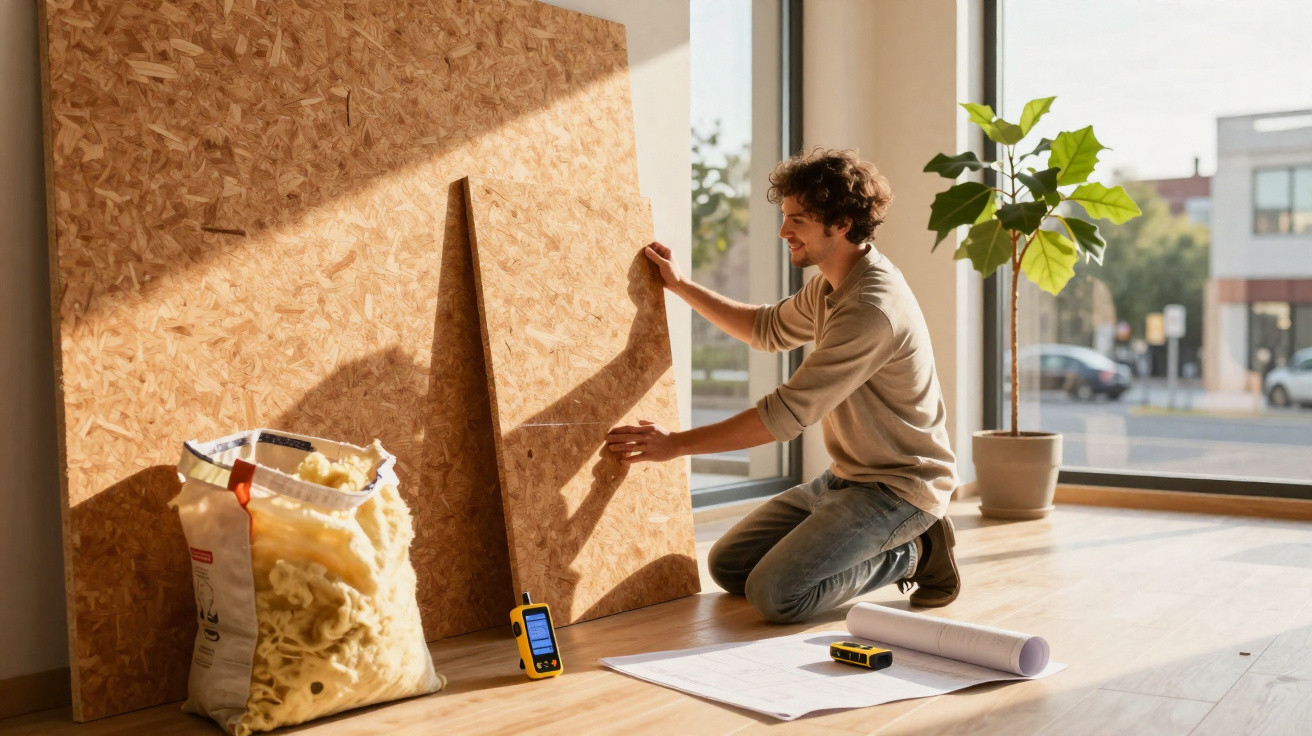
Homeowners who previously relied on fibreglass are increasingly choosing a very different insulation material: cork. Best known for wine stoppers and pinboards, this traditional material is gaining popularity as an effective, low-impact option that responds to both escalating energy prices and environmental concerns.
From glass fibres to tree bark: a shift in thinking
For many years, fibreglass led the insulation market because it was affordable and readily available. However, a growing number of households are reconsidering the balance between price, comfort and health. The irritation caused during installation, worries about micro-particles and demand for natural materials are leading many people to seek alternatives.
Made from cork oak bark, cork has filled this space. Initially, it was mainly chosen by eco-renovation enthusiasts. It is now gradually becoming part of mainstream construction, from city flats to rural cottages.
Cork offers thermal and acoustic performance on par with many synthetic products, while coming from a renewable, low-energy production process.
Why cork keeps homes warm – and quiet
Thermal performance for winter and summer
Cork contains millions of minute cells filled with air. This composition restricts heat transfer, giving the material low thermal conductivity. Put simply, it slows heat moving through floors, walls and roofs.
During winter, cork helps retain costly indoor heating. In summer, it slows the entry of heat from outside, an effect specialists refer to as “thermal phase shift”. Rather than rooms becoming too hot by midday, cork can postpone the temperature peak by several hours, often until the evening when outdoor temperatures are already falling.
The longer the heat takes to pass through the building envelope, the more stable and comfortable indoor temperatures remain throughout the day.
This makes cork especially appealing in areas experiencing increasingly regular heatwaves. Whereas conventional insulation is often focused on winter efficiency, cork provides a more even response to climate pressures throughout the year.
Natural sound absorption
The dense yet elastic structure of cork also makes it an effective acoustic insulator. Instead of bouncing vibrations back, it absorbs them, reducing traffic sounds, footsteps from neighbouring homes and echoes within rooms.
- In flats, cork beneath flooring reduces impact noise between storeys.
- On outside walls, it dampens the noise of nearby roads and busy streets.
- Within the home, it helps control reverberation in open-plan spaces.
The benefit is therefore not limited to reduced energy bills: it also creates a quieter setting, something many homeowners now value as much as thermal comfort.
Cork’s environmental benefits
A renewable material harvested without felling trees
Cork is taken from the bark of cork oak trees, which are found chiefly around the Mediterranean. Trained workers remove the outer bark every nine to twelve years without cutting down the tree. Over its long lifespan, the bark regenerates again and again.
As a result, cork is a renewable resource, while the tree continues to capture carbon and sustain local biodiversity. Cork oak landscapes are recognised as valuable wildlife habitats and providers of rural employment.
Producing cork insulation is generally less energy-intensive than manufacturing many synthetic alternatives. It normally requires only limited processing and frequently avoids aggressive chemicals and added resins.
Cork can be renewable, recyclable and biodegradable, giving it a smaller environmental footprint than many traditional insulators.
End-of-life options without a toxic legacy
When a building reaches the end of its life, cork can be reused, milled into material for new products or allowed to biodegrade naturally. It does not break down into persistent microplastics. For homeowners seeking to limit the lasting effects of renovation decisions, this full lifecycle can matter almost as much as in-use performance.
More uses for cork than just wine stoppers
Unlike fibreglass rolls, which are largely used in lofts and cavity walls, cork is available in several useful formats. This range allows it to suit both new-build properties and more complex renovation work.
| Form of cork | Typical use |
|---|---|
| Rigid boards | Internal or external wall insulation, flat roofs, under screed |
| Rolls or sheets | Underlay for floors, thin internal lining, acoustic treatment |
| Granules | Loose fill for cavities, sloping roofs, irregular spaces |
For walls, cork boards may be attached directly to masonry or timber frames before being finished with plasterboard or render. In roof applications, they are positioned beneath the waterproof layer, helping control temperature fluctuations as well as noise from rain or aircraft.
Used beneath floors, cork underlay increases comfort and acoustic insulation, particularly below hard finishes such as laminate or tiles.
Durability beyond short-term fixes
Cork is naturally resistant to decay. Occasional exposure to moisture does not cause it to deteriorate easily, and it resists mould, insects and rodents without requiring intensive chemical treatment.
Its structure remains stable for decades, meaning its insulating properties do not slump or collapse within wall cavities. That longevity is central to the financial case for choosing it.
Once installed correctly, cork can perform for many decades with little or no maintenance, spreading its higher upfront cost across a long lifespan.
Cork also has relatively low flammability. In a fire, it generally forms a charred surface instead of bursting into flames, and it does not usually emit the same range of toxic gases linked with certain synthetic materials. This quality offers additional reassurance to households focused on safety.
The cost question: higher initially, lower over time
Per square metre, cork typically costs more than fibreglass. For families already managing substantial renovation costs, the difference may seem difficult to justify.
However, energy consultants emphasise that insulation should be treated as a long-term investment rather than a single expense. Year after year, cork’s thermal performance reduces heating and cooling requirements. In carefully planned projects, this can noticeably lower energy bills, especially in older homes with poor insulation.
Property value is another consideration. Buyers are increasingly searching for low-energy, “healthy” homes. Estate agents say that natural, high-performance materials can contribute to a higher selling price or a quicker sale, particularly in urban markets where eco-friendly features stand out in property listings.
Where cork is most suitable
Older, draughty properties and noisy areas
Cork is particularly appropriate for solid-wall homes dating from the 19th and early 20th centuries, where insulating internally or externally is often the only solution. It can also work well in loft conversions, garden offices and timber-frame extensions that need effective sound control.
Properties close to busy roads, railway lines or schools gain two advantages: lower heat loss and substantially quieter interiors. For many residents, that combination makes the greater upfront cost worthwhile.
Health-conscious renovation projects
Those with allergies or respiratory conditions often look for materials that do not contain irritating fibres or require strong chemical treatments. Although no product is entirely risk-free, cork’s natural source and limited processing appeal to people aiming to reduce synthetic components inside their homes.
Practical checks before choosing cork insulation
Anyone looking at cork insulation should assess more than marketing claims. Important factors include:
- Thermal resistance (R-value) per thickness, for comparison with other materials.
- Moisture behaviour, particularly in older solid walls that must remain breathable.
- Compatibility with existing finishes and structural components.
- Local supply and the experience of available installers.
In certain climates, using cork alongside other materials may be sensible. For instance, it can be combined with wood fibre boards or cellulose to balance performance and cost, or used within a layered system designed to manage moisture as well as sound.
Key concepts worth knowing
Two technical principles commonly arise in discussions of cork insulation. The first is thermal conductivity, which indicates how readily heat travels through a material. Lower conductivity delivers better insulation at the same thickness.
The second is thermal phase shift: the lag between peak external temperatures and the warming of interior surfaces. Materials with a high phase shift, including cork, help keep rooms cooler during daytime heat, reducing dependence on air conditioning and making bedrooms more comfortable overnight.
A straightforward home energy simulation carried out with an architect or energy assessor can reveal the effect of replacing fibreglass with cork. In many instances, the model will show reduced heating demand, steadier temperatures and greater acoustic comfort, giving homeowners a clearer view of what they gain by moving from glass fibres to tree bark.




Comments
No comments yet. Be the first to comment!
Leave a Comment