
A bizarre, spiny form was attached to a marina piling, a place normally occupied only by barnacles and seaweed. Within hours, however, local officials were on the dock with clipboards and anxious expressions, discussing “containment” and “rapid spread”. News travelled more quickly than the tide: something unfamiliar had turned up somewhere it clearly should not have been.
By evening, the alert was everywhere - on mobile phones, local radio stations and even notices taped to café doors. Images began appearing online, all showing the same unusual creature in the same unsuitable setting. From afar, it might have seemed like a curiosity, but it soon began to feel like a danger to all those who lived and worked along that part of the coast.
One remark from a coastal officer broke through the chatter and stayed with people. It was a restrained statement with serious implications.
“We’ve never seen this here before”: a first-of-its-kind sighting that changed the mood in hours
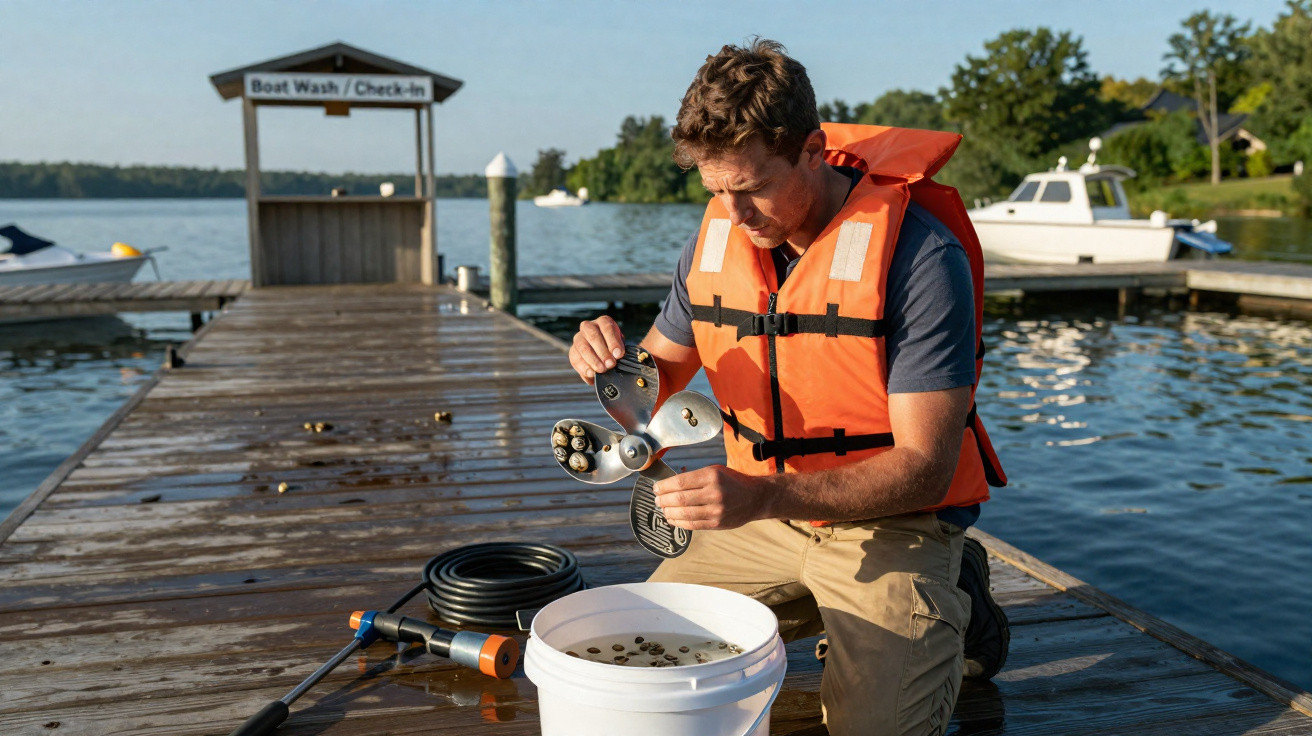
Shortly after dawn, a harbour worker in a small Atlantic town made the call. While inspecting the mooring lines of a charter boat, he noticed that the underside of its hull seemed wrong, as though armour had appeared overnight. Closer inspection revealed that the “armour” was a thick mass of zebra mussels - an invasive freshwater species with no place on a salty pier.
Within an hour, officials had arrived, crouching on the wet boards to photograph and scrape the shells. Their initial curiosity quickly gave way to concern. Zebra mussels are notorious for blocking pipes and overwhelming native species in lakes and rivers. Finding them in a brackish coastal marina was an unwelcome first-of-its-kind development. One biologist quietly removed his glasses, stared towards the horizon and said, “If this sticks, everything changes.”
The news moved swiftly. A local fishing skipper returned from a brief outing and hauled up his pots to discover the same striped shells stuck fast to them. A paddleboard-hire business owner retrieved boards that had been in the water for only a few days and saw the beginnings of the same pattern. In less than 24 hours, the town’s group chats were full of blurred photographs, anxious messages and one difficult conclusion: this isn’t just one weird boat.
For local people, the change was as emotional as it was technical. Practically speaking, zebra mussels can make clean infrastructure abrasive, obstruct cooling systems and lead to millions in clean-up costs. More personally, they put at risk the quiet water-based routines people depend on - an early swim, a weekend sail or a family pontoon that has stood for generations. Officials understand that these unseen connections are what make people pay attention, so their instruction was direct: report every sighting, do not transfer equipment between waterways, and clean anything that has touched the harbour. The underlying message was clearer still. A few days without action could establish an unwelcome new reality for years.
What officials are asking people to do right now – and what actually makes a difference
Officials’ first practical request sounded simple: “If it goes in the water, clean it like you mean it.” This applies to boats, kayaks, fishing equipment, waders and even dog toys. People were urged to follow the “Clean, Drain, Dry” routine whenever they leave the harbour, rather than only after extended trips.
Wash hulls and equipment with high-pressure water well away from storm drains. Empty bilges, live wells and every other compartment where water may remain. After that, allow everything to dry fully for at least 48 hours before taking it elsewhere. For many residents, this required changing habits formed over a lifetime. No more moving the same kayak from the marina to a nearby lake during a single afternoon. No more lending crab pots between cousins living in separate towns. These may seem like small inconveniences, but they are precisely the gaps through which invasive species spread.
Officials also acknowledged something the public does not often hear: they needed residents’ phone cameras just as much as their co-operation. They launched a straightforward reporting form and telephone hotline, allowing anyone to submit photographs of suspicious clusters found on docks, rocks or equipment. Within days, they had built a map of high-risk areas, created not through satellites or laboratory models but by people walking their dogs or washing paddleboards. On a good day, that sort of community monitoring can gain vital weeks in the response to an invasive outbreak.
Why zebra mussels can spread so quickly
Biologists also explained the technical reason that a small number of mussels can become millions in a single short season. Every adult zebra mussel can release hundreds of thousands of microscopic larvae into the water, which cannot be seen with the naked eye. The larvae drift, settle and develop into sharp-edged shells that adhere to any hard surface - including pipes, rocks and other mussels.
This is why manually removing the shells is only part of the solution. Scraping mussels from a boat or piling is useful immediately, but the situation remains urgent if larvae have already drifted into the next cove. Prompt, thorough cleaning slows this unseen stage of the invasion. It also enables scientists to determine whether the species can genuinely live in slightly salty water, or whether this first-of-its-kind sighting is an anomaly caused by a warm season and unusual currents. For now, no one is prepared to assume it will “just go away”.
“We’re not asking people to become marine biologists,” one coastal officer said. “We’re asking them to notice when their normal is off – and tell us fast.”
- Rinse and scrub equipment as soon as it has been used, away from drains and natural water.
- Allow boats and equipment to dry completely for at least 48 hours before moving them.
- Take photographs and report any thick striped clusters found on hulls, docks, rocks or ropes.
- Do not move firewood, bait buckets or plants between separate lakes or harbours.
How this affects everyday life – and why the warning isn’t just “for other people”
In the days following the warning, activity around the harbour continued, but its pace was different. Boat ramps that had once been quiet places for people to come and go became informal self-check points. Teenagers carrying wakeboards stood beside retired people with fishing skiffs, all feeling along hulls and grumbling about “these things the size of a fingernail that can wreck everything”.
At first glance, it could have looked fussy. In reality, people were adopting a new shared practice. One marina manager put out inexpensive scrubbing brushes and a hose alongside a handwritten notice: “Use me, I’m cheaper than a full infestation.” Another attached a print-out of mussel photographs beside the fuel dock, with the shells marked by red circles. On a good day, strangers could be heard exchanging experiences: “Saw some on my brother’s boat upriver. Took us an hour to scrape them off.” This quiet, mildly frustrated sense of solidarity was exactly what officials had hoped to encourage.
Everyone has had the thought, “I’ll deal with it next time, it’s probably nothing.” When invasive species are involved, that reaction gives the problem exactly what it needs. Let’s be honest: nobody really does this every day. People miss washes, hurry or simply forget. That is why some of the most useful guidance was so bluntly practical. If you cannot manage the entire routine after every outing, focus on the moments with the greatest risk: before leaving the harbour for another body of water, after spotting anything unusual, or when equipment has been left in one place for a long period.
Officials presented the decision in simple terms: spend a few additional minutes at the ramp now, or face increased water bills, closed beaches and harmed fisheries later. This is not alarmism; it follows the pattern seen in lakes throughout North America where zebra mussels were left unchecked for one season too long. Filters become blocked. Power stations pay enormous maintenance costs. Swimmers cut their feet on sharp shells that had not existed there the previous summer. Nobody wants the local pier to be closed off behind a “Risk of Injury” sign because no one stopped to wash a trailer in June.
One marine ecologist expressed the point in a way that remained with residents.
“Most invasions don’t start with a villain,” she said. “They start with a nice family boat that didn’t get washed.”
- Create a habit trigger: connect the cleaning routine to something you already do, such as locking the trailer or packing the cool box.
- Keep a basic kit in the car: a firm brush, gloves and a spray nozzle speed up the task.
- Look out for “firsts”: the first visit to a new harbour, the first warm weekend or the first sign of strange growth are all occasions to take extra care.
- Discuss it with children and visitors so that cleaning becomes part of the trip rather than an optional task.
| Key point | Details | Why it matters to readers |
|---|---|---|
| Recognising zebra mussels on equipment | Small, triangular shells (up to 4 cm), normally marked with dark and light stripes, which form dense, crunchy clusters on hard surfaces including hulls, ropes, ladders and rocks. | Identifying them early means you can remove and report them before they reach new coves, lakes or water systems you use. |
| “Clean, Drain, Dry” in practice | Wash boats and equipment with high-pressure water away from drains, empty every compartment, then leave everything to dry fully for 48 hours before launching in another location. | It turns a general warning into a clear, manageable routine that greatly reduces the chance of unknowingly transporting larvae. |
| When to report a sighting | If striped mussel clusters appear in saltier water than usual, on new docks or in places where they have never been locally recorded, take clear photographs and contact your local environmental agency or harbour authority. | Prompt reports allow scientists to establish whether this coastal sighting is isolated or the beginning of a long-term invasion that could affect bills, beaches and local employment. |
FAQ
- Could zebra mussels really survive in a coastal marina? In certain brackish locations, they may persist longer than anticipated, particularly during warm, low-rainfall spells when the water is less salty. This is why scientists are concerned by this first coastal-style sighting rather than dismissing it.
- What should I do if I find them on my boat? Take photographs of the clusters, report the sighting with the precise location, then move the boat onto dry land and scrape the mussels into a bin rather than back into the water. Wash the area thoroughly and allow the hull to dry before launching elsewhere.
- Can I still take my kayak from the harbour to a nearby lake? Yes, but only after cleaning it properly. That involves rinsing the hull, inspecting footwells and handles, and allowing it to dry completely. Taking a craft that is “just a little wet” between two bodies of water is one of the main ways invasive species cross the gap.
- Are zebra mussels dangerous to swimmers? They do not attack people, but their sharp shells can make sandy or rocky areas hazardous for bare feet. In badly infested lakes, cuts and infections caused by walking on mussel-covered rocks are frequent complaints.
- Does a single sighting mean the ecosystem is already lost? Not always. Early, contained occurrences can sometimes be controlled or even eradicated, particularly when the public reports them quickly and follows cleaning advice. The greatest damage usually occurs when a new arrival remains unnoticed for several seasons.
The feeling around the harbour has moved from shock towards something calmer and more determined. People still launch their boats, fish at sunrise and watch children skim stones across the same water beside which they grew up. What has changed is the few minutes before and afterwards - turning on the hose, scrubbing the hull and taking a quick look beneath it rather than simply driving away.
Situations such as this reveal how vulnerable everyday routines can be. One small shell in the wrong setting reminds people that their local coast is not isolated from the wider effects of ballast water, trailered boats and warming currents. The officials’ alert is not merely a bureaucratic response; it is a request to pay attention to the details of a place people believed they knew intimately.
Some people will dismiss the warning and continue as they did before. Others will quietly put a brush in the back of the car and add another step to their launching routine. In a few years, the result will depend on thousands of small decisions that never become headlines. That is the unusual force of a “first-of-its-kind” sighting: it asks one straightforward question in public - what sort of water do we want to live beside, and what are we prepared to do today to keep it that way?






Comments
No comments yet. Be the first to comment!
Leave a Comment