
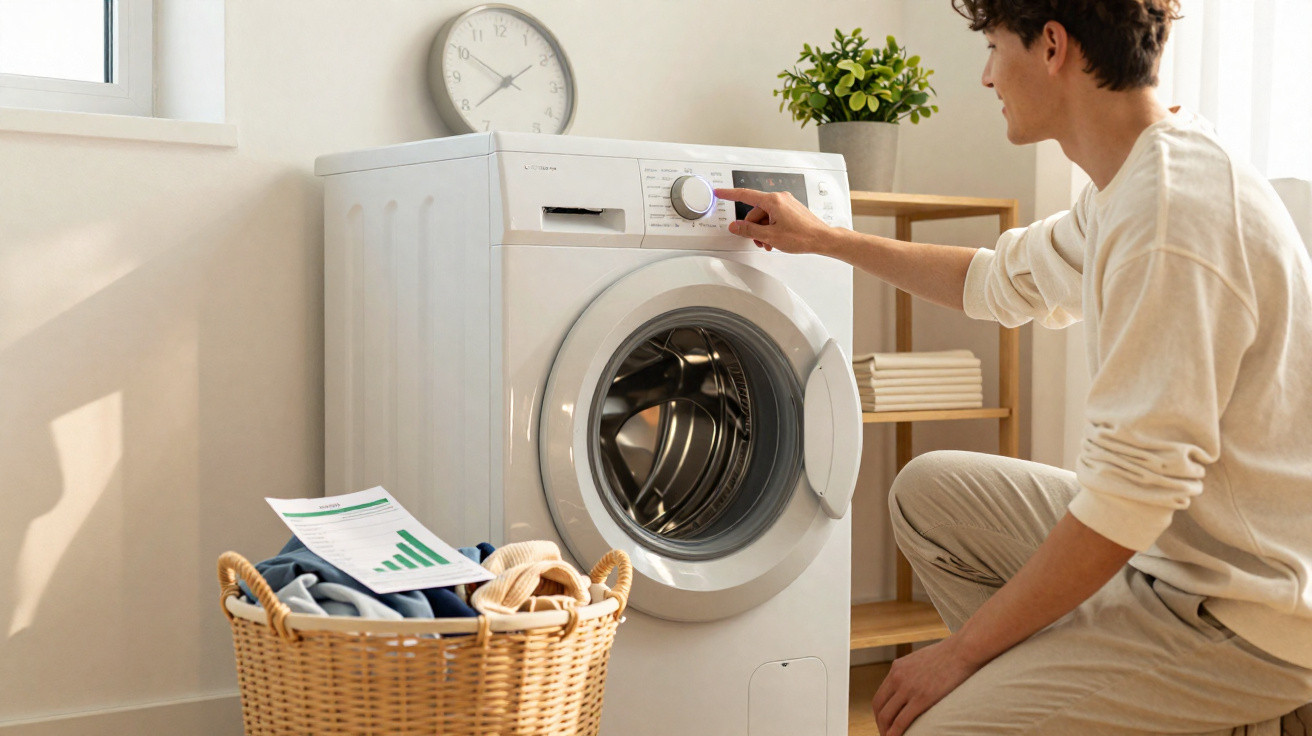
On a Tuesday evening, the laundry basket is overflowing, the children need a clean jumper for the next day, and the washing machine’s familiar “Eco” button is sitting there, almost automatically ignored. Many households opt for the quick setting, a 40 °C cotton wash, or the cycle claiming to deliver clean clothes in an hour, because time is short and the thought of running a washing machine for three hours feels unreasonable. Yet, over a year, that instinct can prove costly. According to several surveys into household habits, almost 9 in 10 French people avoid the Eco programme, despite the fact that it can use up to half the energy of conventional cycles. There is no magic involved: it simply washes differently.
The Eco programme seems too long, but it heats far less
Everyone knows the feeling of watching the washing machine timer barely move: one hour passes, then two, and perhaps nearly three hours for a few towels and T-shirts. On the display, the Eco programme appears to require saintly patience, while the “Mixed” or “Daily” cycle promises to finish well before dinner. That extended running time is exactly why it is unpopular. Many people assume that a lengthy programme must consume more energy. In fact, the opposite is generally true: a washing machine uses most of its electricity heating the water, rather than gently rotating the drum.
The figures may be surprising. On some newer appliances, an Eco 40-60 °C cycle uses about 0.5 kWh, whereas a standard cotton programme can exceed 1 kWh, depending on the load, chosen temperature and age of the machine. With three washes a week, the difference initially appears tiny, but it can gradually make a noticeable difference to the annual bill. For a family of four, this decision can save several tens of euros without changing detergent or buying a new appliance. That matters when every household cost is under scrutiny.
The Eco programme extends soaking and tumbling time while restricting sharp rises in temperature. Clothes spend longer in contact with the water and detergent, allowing satisfactory cleaning with less heat: the machine works slowly so that it does not have to work hard. This is the practical paradox: a longer cycle does not mean the motor runs at full power for three hours. For much of the programme, the drum moves in short bursts, using far less energy than most people expect.
How to use Eco without feeling that it takes over your day
The easiest approach is to start the Eco programme when nobody will need the washing within the next hour: before leaving for work, after the evening meal, or just before bed if the noise will not disturb anyone. The machine can run while everyday life continues. If your electricity tariff includes off-peak hours, using delayed start can combine energy savings with a financial benefit. It may sound obvious, but this changes how those two or three displayed hours are perceived: they no longer feel restrictive.
Another sensible principle is to keep Eco for normally soiled items, which account for the bulk of family laundry. Bed sheets, clothes worn for a day at the office, pyjamas and lightly marked towels are all well suited to it. By contrast, heavily sweat-soaked sportswear, a dried-on sauce stain or clothing worn by a child after a muddy outing may need a pre-wash or targeted stain treatment. Realistically, nobody carefully scrubs every stain every day. However, treating only the affected areas avoids overheating an entire wash load.
A common mistake is packing the drum until there is no space left, out of concern that running a wash might be “wasteful”. A useful guide is the hand test: you should be able to fit a hand above the laundry without forcing it, so that water can circulate and the tumbling action can work effectively. A properly filled drum is not a tightly packed drum. Manufacturers regularly make this point, and it remains true even when using the most economical programme.
“The Eco programme is designed for normally soiled cotton laundry; its longer duration reduces the energy used to heat the water.”
- Sort washing primarily by colour and degree of soiling, rather than simply following habit.
- Use the right amount of detergent for the water hardness and volume of laundry.
- Clean the filter and detergent drawer regularly to keep the machine working efficiently.
- Avoid repeatedly running half-loads: where possible, wait until there is enough laundry for a full wash.
The best habit is not always the one that looks fastest
The popularity of express cycles reflects something very human: we want to cross a task off the list quickly. Starting a wash at 7 pm and seeing it finish at 8 pm offers the reassuring sense of regaining control of an already busy day. However, that immediate convenience can conceal higher energy use, particularly when short programmes at 40 °C or 60 °C are used several times a week. A quick cycle is still useful for an occasional need; it simply should not become the household’s default setting.
Choosing Eco does not mean poorer washing results or accepting dull-looking clothes, despite a persistent belief to the contrary. Appliances often assess and adjust the water level, drum movement and programme length according to the selected cycle, while modern detergents are formulated to work at lower temperatures. Heat is no longer the only measure of cleanliness. For underwear, household linens and certain delicate fabrics, labels and hygiene guidance must of course be followed. For most everyday clothing, however, 30 or 40 °C is more than sufficient.
Ultimately, the Eco programme raises a straightforward question: would you rather save an hour this evening, or reduce your spending and energy consumption a little throughout the year? Nobody has to be perfect to change a routine. Switching just one wash in two to Eco mode, then checking the results, is already a worthwhile test at home. You can also pay attention to the actual duration, noise level, condition of the laundry and, a few months later, the bill. These small household decisions may go unnoticed, but they shape a different routine: one that is less rushed and often more sensible.
| Key point | Detail | Benefit for the reader |
|---|---|---|
| The Eco cycle is long but economical | It mainly cuts the energy used to heat the water. | Energy consumption can be up to two times lower, depending on the programme and appliance. |
| Eco suits everyday laundry | It is designed for normally soiled clothes and textiles. | An easy change to make without overturning established laundry habits. |
| Timing matters | Delayed start makes it possible to run the machine when the duration is not inconvenient. | Less everyday stress and, depending on the tariff, better control of electricity costs. |






Comments
No comments yet. Be the first to comment!
Leave a Comment