
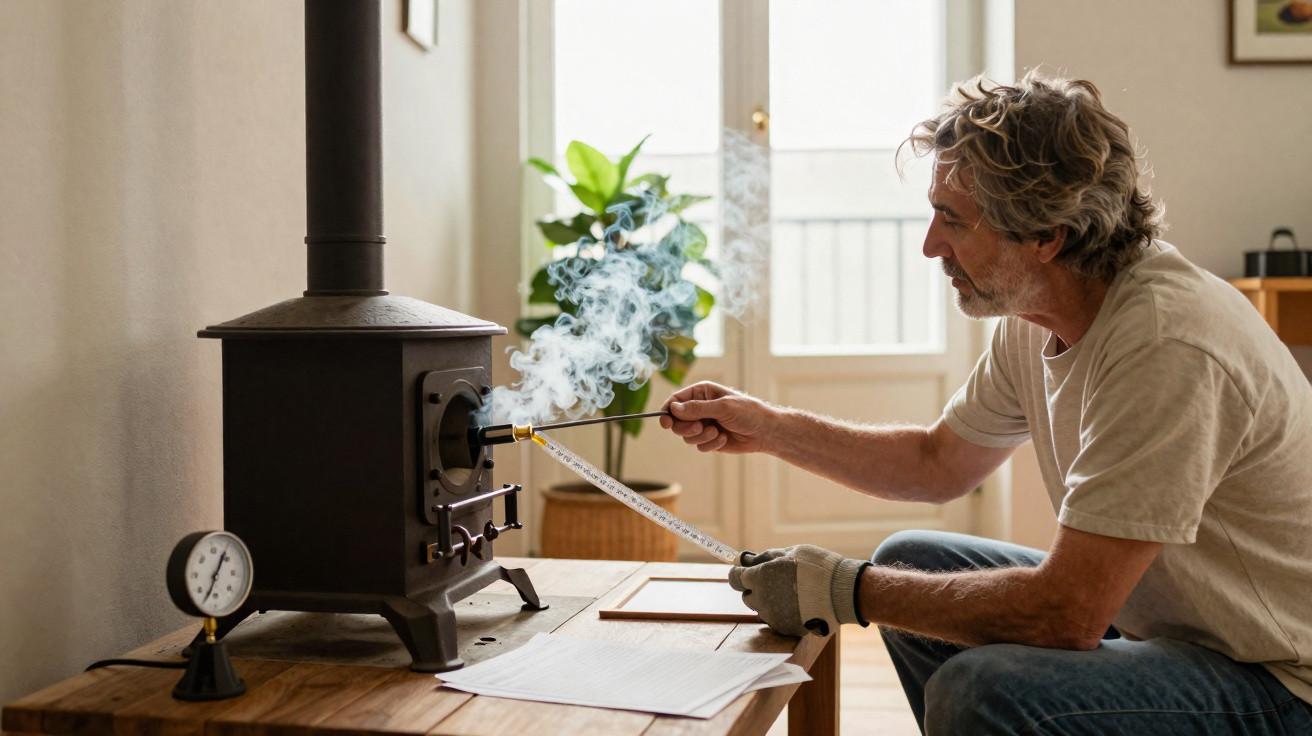
Across mountain hamlets and tightly packed city neighbourhoods, councils are clamping down on how households heat their properties, phasing out ageing wood burners and steering people towards cleaner kit.
The ban: what changes on 1 January 2026?
From 1 January 2026, people living in 297 communes in the Isère department in eastern France will no longer be permitted to heat with certain wood-burning appliances. The restriction focuses on enclosed wood-burning systems - mainly stoves and inserts - that were installed before 2002.
The rule applies in large built-up areas such as Grenoble Alpes Métropole, Le Grésivaudan and Pays Voironnais, as well as many smaller towns and villages where wood is still a central source of heat. Officials present the move as a public air-quality decision rather than a challenge to rural ways of life.
In the affected communes, any enclosed wood heater installed before 2002 will have to be replaced or permanently taken out of service by 1 January 2026.
The decision comes after years of monitoring indicating that domestic wood burning accounts for more than 70% of fine particle pollution in Isère. Although traffic and industry often dominate the news agenda, much of the region’s winter haze is linked to thousands of flues operating in the evenings and overnight.
Why pre‑2002 stoves are being singled out
Wood heating still carries real cultural appeal in France: it is comparatively affordable, can provide a degree of energy independence and creates a comforting atmosphere. The issue is less the fuel than the engineering of older appliances. Stoves and inserts installed before 2002 were not built to match today’s expectations for combustion efficiency and particle reduction.
Based on local estimates, these older enclosed fireplaces can release up to five times more fine particles than modern certified models. On cold, windless winter days, that gap becomes stark as smoke hangs over valleys and basins.
Authorities had already begun tightening standards by prohibiting open fireplaces in 123 communes from October 2024. Those open hearths send most of the warmth - and most of the smoke - straight out through the chimney. The next step targets “closed” fireplaces that may still appear up to date to owners, yet do not come close to current environmental benchmarks.
An old “closed” insert that looks efficient can, in practice, pollute almost as much as a traditional open fire, according to local air-quality data.
Put simply, newer stoves burn the same log more thoroughly, convert more of its energy into usable heat and emit fewer unburnt particles. Older units squander that potential and discharge a larger proportion of soot and other harmful compounds into the air.
Which areas are affected and who needs to act?
The selection of the 297 communes was not arbitrary. They sit within zones where concentrations of fine particles repeatedly exceed regulatory limits. That includes low-lying urban areas such as Grenoble, narrow valleys that trap pollution during winter inversions, and mountain communities where almost every home relies on wood.
For homeowners, the policy essentially leaves three routes: replace the outdated stove, move to another heating solution, or continue using an existing compliant appliance if an upgrade has already been made in recent years.
Typical households most exposed to the ban
- Families in detached houses using a pre‑2002 wood stove as their main heat source.
- Owners of second homes in the mountains equipped with an old closed insert.
- Landlords renting flats with outdated wood heaters still listed in the inventory.
- Multi-generational homes where an elderly relative depends on a single stove in winter.
Residents are being urged to confirm when their appliance was installed, which is often recorded on an invoice or on the rating plate. If the date is unclear, local energy advice services and chimney specialists can help determine whether a device is covered by the ban.
Financial help: how the “Prime Air Bois” works
Swapping out a wood heater can be costly, particularly for people on low incomes or pensioners. To soften the impact, the region and several inter-municipal bodies provide a grant called “Prime Air Bois”. The payment can be as high as €2,400 per household when an old appliance is scrapped and replaced with a modern, labelled stove or insert that meets strict performance requirements.
The grant is reserved for residents of the listed communes who replace a pre‑2002 wood appliance with a certified, low‑emission model installed by a qualified professional.
Rules differ slightly from one area to another, but the usual requirements include:
| Condition | Typical requirement |
|---|---|
| Place of residence | Address within one of the 297 communes |
| Type of equipment | Existing closed wood heater installed before 2002 |
| New appliance | Certified high-efficiency, low-emission stove or insert |
| Installer | Recognised professional meeting local standards |
In most cases, households must submit their application before signing a contract or beginning any work. Local energy offices and heating firms are increasingly spending time on guidance and paperwork, as applications are expected to climb steeply during 2025.
Beyond money: practical hurdles and planning
For some properties, a like-for-like replacement will not be enough. Chimneys may need lining or rebuilding, flues might fail to meet modern fire-safety rules, and ventilation often has to be improved to suit higher-efficiency stoves. While these extra tasks can increase the overall cost, they can also raise safety standards.
Because demand for suitably qualified installers typically surges as deadlines approach, residents are being encouraged to start early rather than waiting until autumn 2025. Leaving it late raises the likelihood of higher prices, longer lead times and, in the worst case, being unprepared when the ban takes effect.
Health and environmental gains expected
Isère’s authorities tie the policy directly to health outcomes. Fine particles produced by incomplete wood combustion can travel deep into the lungs and enter the bloodstream. Recurrent winter spikes are associated with higher hospital admissions linked to asthma, chronic bronchitis and cardiovascular conditions.
Using modern equipment is expected to reduce emissions from each replaced stove by a factor of five, based on figures shared by the municipalities. The improvement should be most noticeable first in densely populated valleys and city districts where wood heating is widespread and air becomes stagnant.
Lower winter peaks of fine particle pollution mean fewer respiratory crises, fewer vulnerable residents confined indoors and lower long-term health costs for local communities.
Households may also notice benefits indoors. Newer appliances reduce the risk of back-draughts and smoke leakage, create less ash and soot, and maintain temperature more consistently. For anyone accustomed to smoky rooms and frequent winter cleaning, that can meaningfully change day-to-day living.
Recommended actions for households
- Check whether your wood stove or insert predates 2002.
- Ask a certified installer to assess the condition and compliance of the system.
- Contact local services to map available grants and tax advantages.
- Plan the replacement before the 2025–2026 winter to avoid last-minute congestion.
- Talk with neighbours and relatives who may not yet know about the upcoming ban.
A number of communes have already launched public meetings, advice helplines and online tools to help households model the cost of different choices and see potential savings in wood use and energy bills.
What this French case says about heating trends more broadly
For readers outside France, the Isère decision is a window into a broader shift. Regions across Europe and North America are wrestling with the same question: how to retain the comfort and resilience of wood heating without embedding high pollution levels.
Across the US and UK, many cities have begun tightening controls on wood-burning stoves, particularly during smog alerts. Certification schemes and efficiency labels become more demanding year after year. In some places, councils limit new installations in dense urban areas, while rural policies often concentrate on replacing older devices.
In real terms, modern wood stoves now sit alongside heat pumps, upgraded insulation and hybrid set-ups. More households are mixing solutions: a clean wood stove for the coldest spells, a heat pump for the shoulder seasons, and a better building fabric to cut overall demand.
For homeowners, Isère underlines a straightforward point: a heater can still “work” mechanically while carrying hidden costs - affecting air quality, health and future compliance. Upgrading sooner can mean more options, more time to compare systems and a better chance of accessing subsidies before budgets are tightened.
For policymakers, the French approach acts as a live test of how to combine financial support, firm deadlines and public-health messaging. How the 297 communes handle the transition over the next two winters is likely to inform debates well beyond the foothills of the Alps.






Comments
No comments yet. Be the first to comment!
Leave a Comment