
Although they are associated with planet-shattering destruction and extinction, space rocks can also be a gift from the cosmos.
Meteorites too small to devastate Earth offer glimpses of utterly alien environments, including material far older than the solar system.
For people living millennia ago, meteorites may have been still more valuable: symbolically, and as a prized supply of iron for societies before the Iron Age.
Minoan and Mycenaean meteorite iron rings
A recent study in the Journal of Archaeological Science suggests that influential pre-Greek cultures, including the Minoans famed for the Minotaur and the Mycenaeans of the Iliad and Odyssey, wore striking meteorite-made rings to signal status and authority.
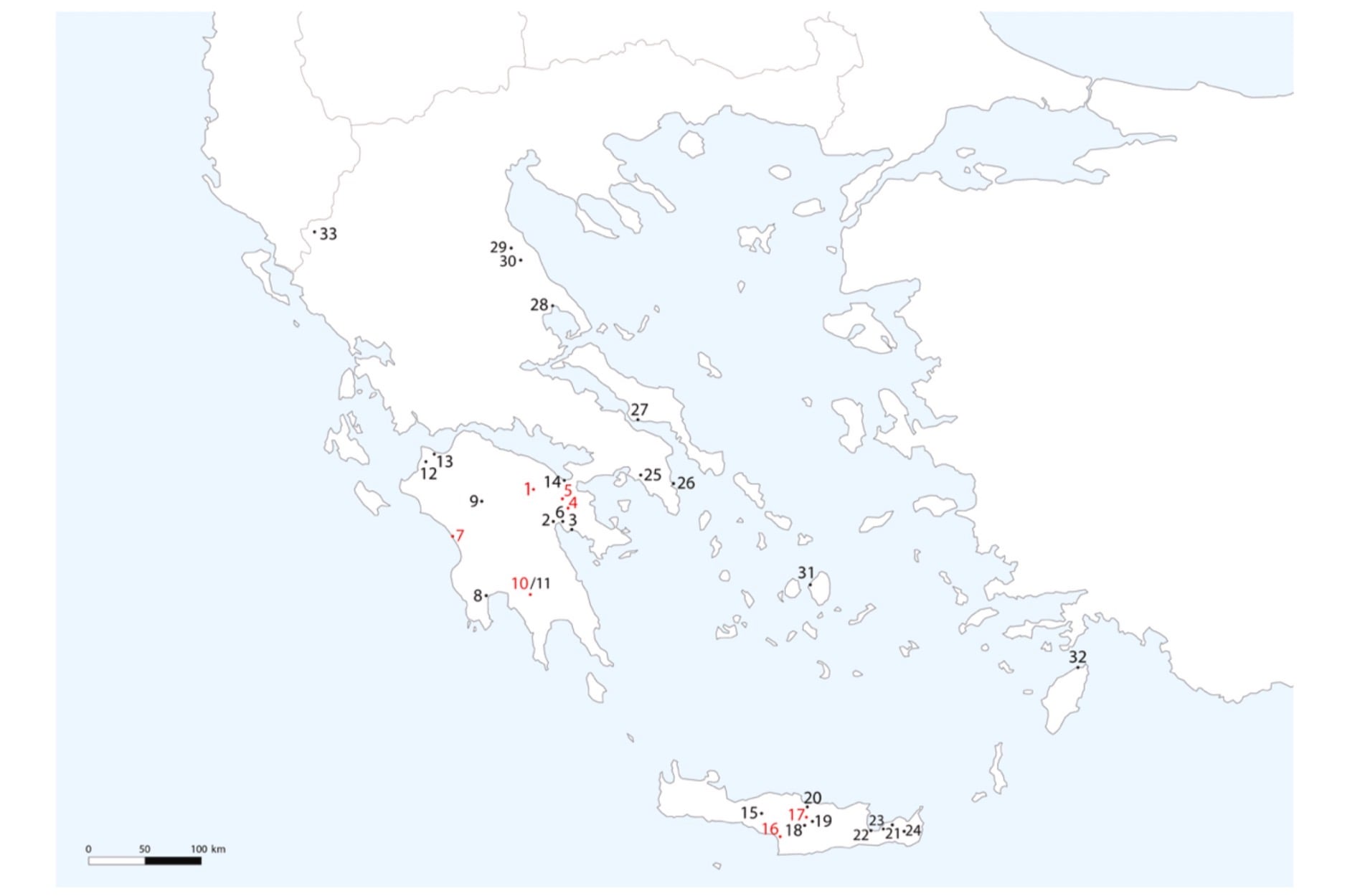
The 33 archaeological sites where the analysed items were excavated. Numbers in red show where nickel was identified in the objects, indicating meteorites. (Gounelle & Mantzourani, *J. Archaeol. Sci., 2026)*
Across history, communities worldwide fashioned meteorites into tools, weapons and jewellery: scrapers in Greenland; axe-like votive objects in China; jewellery in pre-Columbian America; and lucky talismans used to safeguard herders and their camels in Egypt. Egypt is also home to King Tut's famously tantalizing space dagger, which remains a source of fascination.
Such objects, however, appear to be absent from Bronze Age Greece.
Researchers therefore investigated two broad questions. Did the Minoans and Mycenaeans likewise use meteoritic iron in their varied, skilfully made artefacts? And when did these mighty metallurgical workers first begin to smelt iron?
Over their 'five-year odyssey', the team examined the chemical composition of more than 100 artefacts from present-day Greece. Their focus was 91 iron objects - chiefly rings, bracelets and knives - from the Bronze Age, roughly 3,800 to 3,000 years ago.
Non-destructive X-ray fluorescence revealed nickel in 13 of these objects, suggesting they may have been made with iron from meteorites.
Meteorite rings as elite symbols of power
Notably, all 13 items were elaborate, Skyrim-worthy finger rings incorporating other metals, including gold or silver. The rings also had bezels that may once have held signets, such as royal seals.
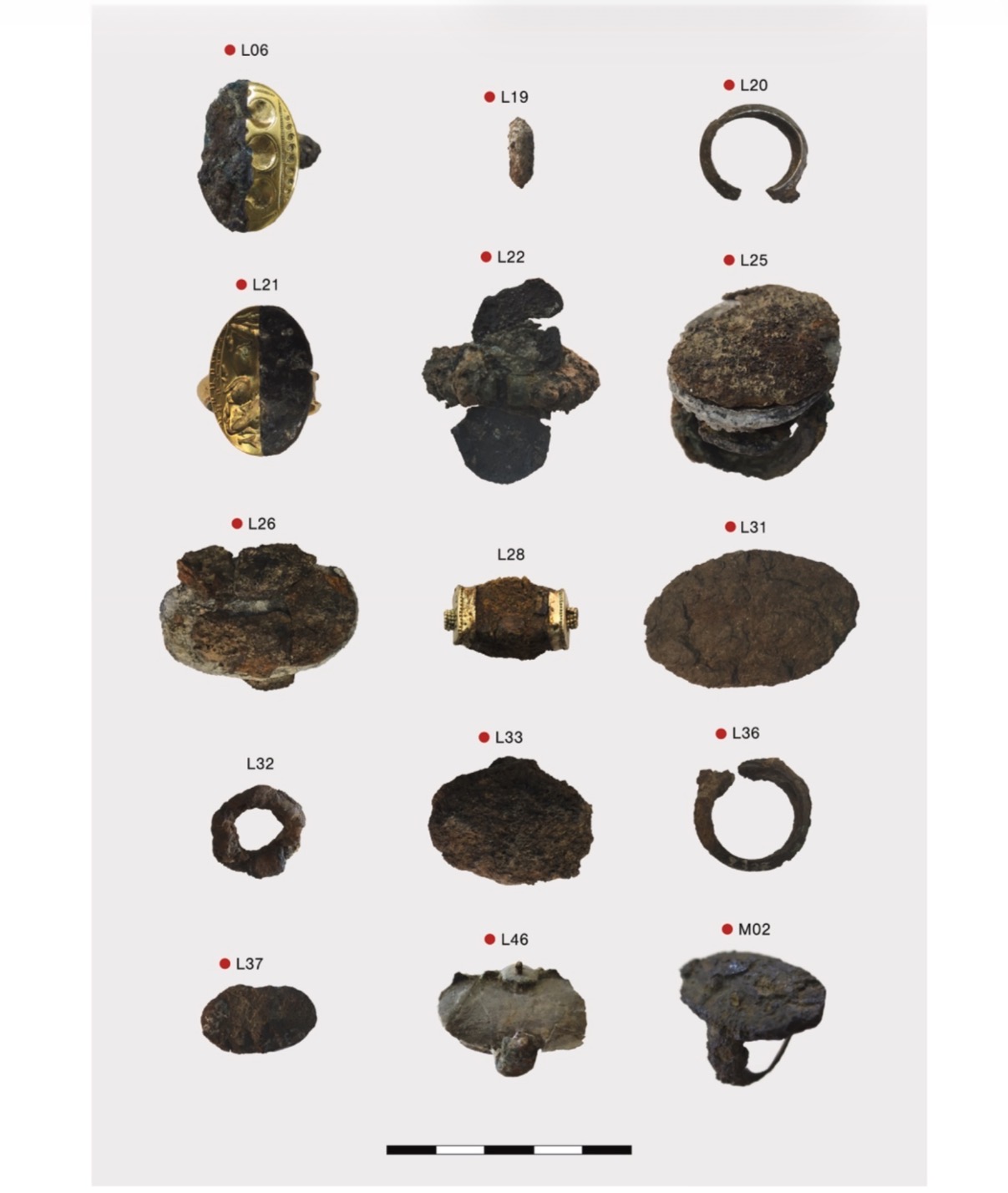
A selection of the items analysed in this study. Those with red dots are likely to incorporate iron from meteorites. (Gounelle & Mantzourani, *J. Archaeol. Sci., 2026)*
Most of the rings also came from lavish burial sites, including tombs at Mycenae. In a fittingly fantastical detail, one ring was found in a Minoan necropolis, still on the finger of an alleged high priest.
"These observations led us to speculate that rings likely made out of meteorites may have been popular power symbols among prominent individuals, members of the Minoan and Mycenaean palatial elite," the researchers explain.
Rather than having been found locally, the meteoritic iron may have been imported from Egypt. Greece's geography is unfavourable for meteorites, which may break down or disappear into the sea.

Egypt's dry deserts, which shield meteorites from oxidation and dissolution, are far better environments for their accumulation.
When smelted iron appeared in Bronze Age Greece
The researchers further found that 78 iron objects were made from smelted, rather than cosmic, iron. These smelted-iron objects may have appeared as early as 1400 BCE in the Bronze Age, although just two - a pendant and a ring - pre-date 1200 BCE.
Compared with discoveries in Anatolia, "the use of man-made iron seems to have been somehow delayed in Greece," the researchers note, raising the possibility that the objects had been imported from areas such as Cyprus.
Related: A Pregnant Teenager's 9,000-Year-Old Burial Was Just Uncovered in a Swedish Cave
The fashion for meteorite rings continued until about 1200 BCE, perhaps ending for several reasons: difficulties with supply or demand, or the most straightforwardly human explanation of all, changing fashions.
It's "possible that the meteoritic finger ring fashion, almost exclusive to Minoan and Mycenaean Late Bronze Age, has 'naturally' faded away as does any fashion," the researchers conclude.
This research was published in the Journal of Archaeological Science.
This article was fact-checked by Rachel Garner and edited by Rebecca Dyer. While we take pride in our process, we are only human. If you notice an error, please let us know.






Comments
No comments yet. Be the first to comment!
Leave a Comment